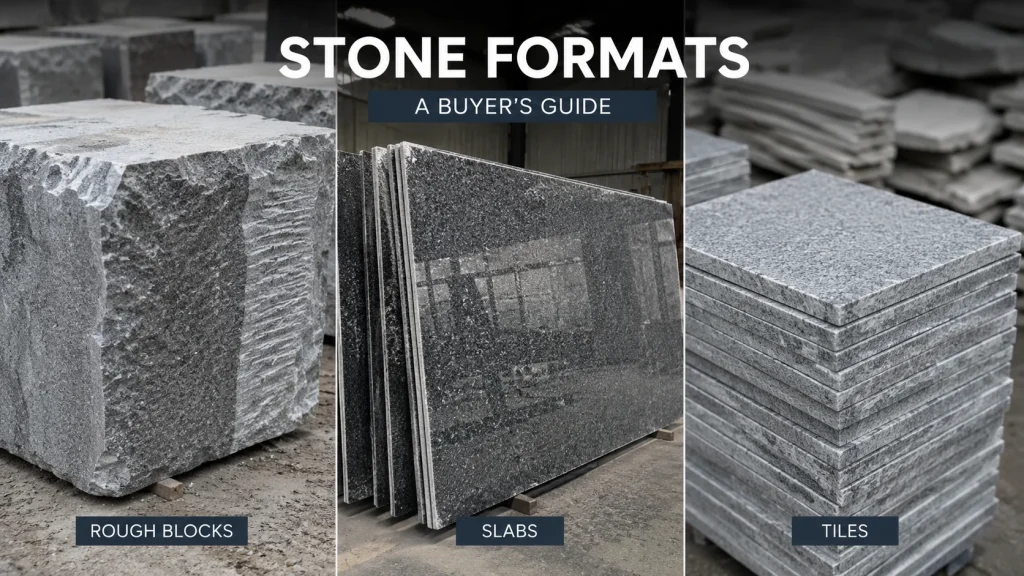
Importers choose between rough blocks, slabs, and tiles based entirely on where they want to absorb yield risk and what processing machinery they operate in their domestic facilities. Buying blocks maximizes your per-cubic-meter material volume but requires heavy milling capacity and forces you to absorb all natural fissure risks, while importing finished tiles shifts all production waste to the origin factory at a premium per-square-meter cost. Slabs sit in the middle, offering visual certainty of the finished face while leaving edge profiling and cut-to-size flexibility to the local fabricator.
How Does Procurement Format Dictate Your Bottom Line?
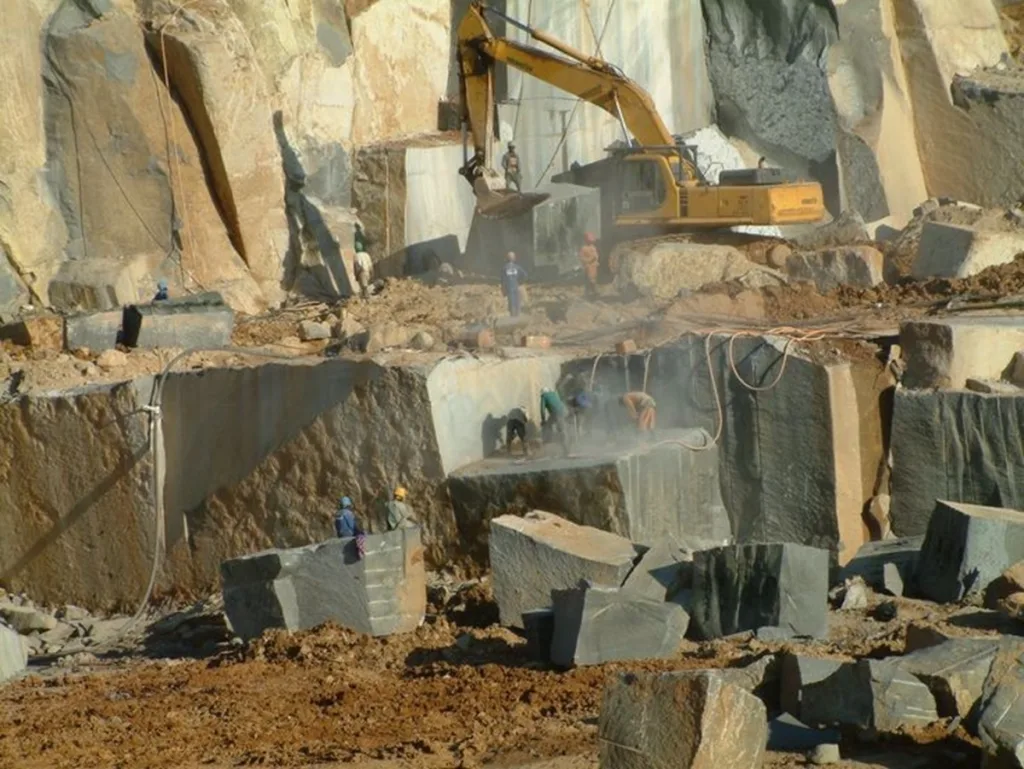
Your facility’s infrastructure dictates your procurement format long before you look at a material’s color or origin. If you run Pellegrini stationary wire saws or massive multi-blade gangsaw setups, you possess the capital machinery to exploit the cheap volumetric pricing of raw blocks. You pay the absolute minimum for the stone itself but take on the heavy burden of ocean freight for material that will eventually become waste—specifically the outer crust of the block and the dust generated by the blade kerf.
If you operate standard bridge saws, CNC routers, or waterjets, large-format sheets are your operational ceiling. You pay a premium for the origin factory to slice, resin, and polish the material, but you ship zero manufacturing waste across the ocean. Every square meter you pull out of a container is sellable material, minus your localized cut-to-size offcuts.
Understanding exactly what size sheets fit your machinery is non-negotiable, so reviewing our comprehensive breakdown of standard industry dimensions for natural stone sheets prevents you from ordering material too tall for your facility’s gantry cranes or A-frames. Furthermore, importers buying pre-cut material must know precisely how the origin factory processed the block, which is why we clearly outline the structural and size variations between material cut by massive multi-blade saws versus smaller circular blades.
The Raw Economics of Importing Unprocessed Quarry Material
Purchasing unshaped material straight from the quarry face is the traditional route for massive fabrication plants. You are securing raw mass. When you browse our entire inventory of unprocessed quarry stones, you are looking at material that gives you total control over the thickness of every single cut, allowing you to pivot between 2 cm residential counter stock and 15 cm monumental pieces from the same boulder.
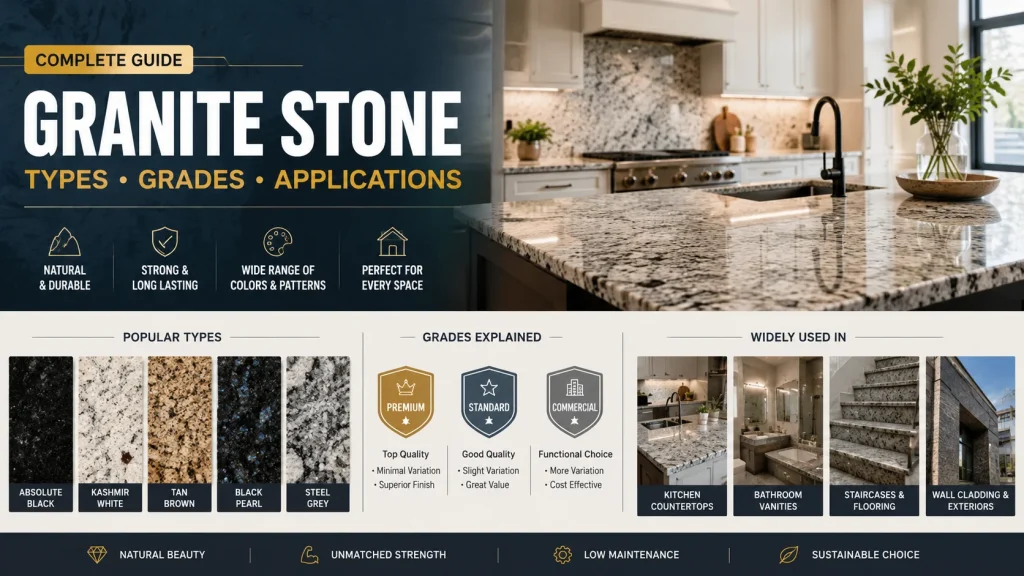
For high-demand, dense materials, bringing in heavy granite masses ready for gangsaw processing keeps your per-ton cost incredibly low. You load a heavy-duty 20-foot container up to the 27-metric-ton legal limit with just two or three massive blocks. Conversely, sourcing unprocessed calcareous stones directly from the mountain requires a sharp eye for reading natural fault lines. Soft stones contain hidden mud seams and internal fracturing that only reveal themselves once the block is on your saw, making the yield calculation highly variable.
High-end exotic materials, like raw blocks of intensely hard metamorphic rock with quartz intrusions, carry a massive premium because diamond wire wear during local processing destroys profit margins if you do not have specialized tooling. Similarly, importing translucent, cryptocrystalline stone in its raw quarried state is a massive financial gamble on interior color distribution that only experienced fabricators with vacuum-epoxy lines should take.
We see distinct purchasing patterns for classic regional stones based on end-use. Monument builders and thick-profile architectural fabricators often load containers with large-scale quarried cubes of dark reddish-brown stone with prominent black patterning or opt for the absolute consistency of deep black, fine-grained unpolished blocks sourced from eastern Indian quarries. Because these materials lack heavy veining, the internal consistency is nearly guaranteed, reducing the risk of a wasted block.
For high-volume commercial projects requiring predictable yield, greenish-grey quarried masses with medium grain structure process reliably on local circular saws without catastrophic blade deflection. Structural builders heavily favor vibrant red, dense granite boulders shaped for immediate cutting alongside pure black quarried blocks known for zero color variation and high density. If you are running high-volume commercial production for exterior paving or large-scale cladding, nothing beats the yield consistency of raw, unshaped masses of grey stone with distinctive metallic-looking flakes.
The stakes change entirely with luxury quartzites. When you bring in uncut masses of icy, semi-translucent white metamorphic stone or raw boulders featuring dramatic black, gold, and white brecciated formations, you are absorbing the risk of natural fissures that might snap a slab during your local handling. Origin factories often heavily resin and wrap these blocks in fiberglass mesh before they even touch a saw—if your facility lacks the infrastructure to replicate this structural reinforcement, do not import quartzite in block format.
Balancing Yield Certainty With Fabrication Flexibility Using Slabs
Most mid-to-large importers prefer receiving containers loaded with pre-cut, resin-treated, and polished faces. This eliminates the risk of hidden quarry defects ruining your yield. By stocking finished 2cm and 3cm calcareous stone sheets, you offer immediate visual selection to architects and contractors, allowing them to dry-lay their kitchens or hotel lobbies visually before a single cut is made.
The global market heavily splits between locally quarried white and green metamorphic sheets from India and premium European and Middle Eastern imported sheets ready for fabrication. Domestic Indian varieties often provide harder crystalline structures suited for heavy foot traffic, while the imported European varieties command premiums for classical historical aesthetics. For backlit bar tops and luxury feature walls, holding bookmatched translucent sheets of banded calcite or porous, layered hot-spring limestone sheets filled and honed ensures you capture high-margin architectural specifications.
Granite remains the volume driver for the majority of the trade. Securing factory-polished igneous rock sheets packed in wooden bundles guarantees precise thickness calibration, critical for seamless countertop joints. Buyers often balance exotic, heavily patterned igneous sheets brought in from Brazil or Norway against highly consistent, densely packed sheets quarried across southern and northern India to build a diverse inventory portfolio.
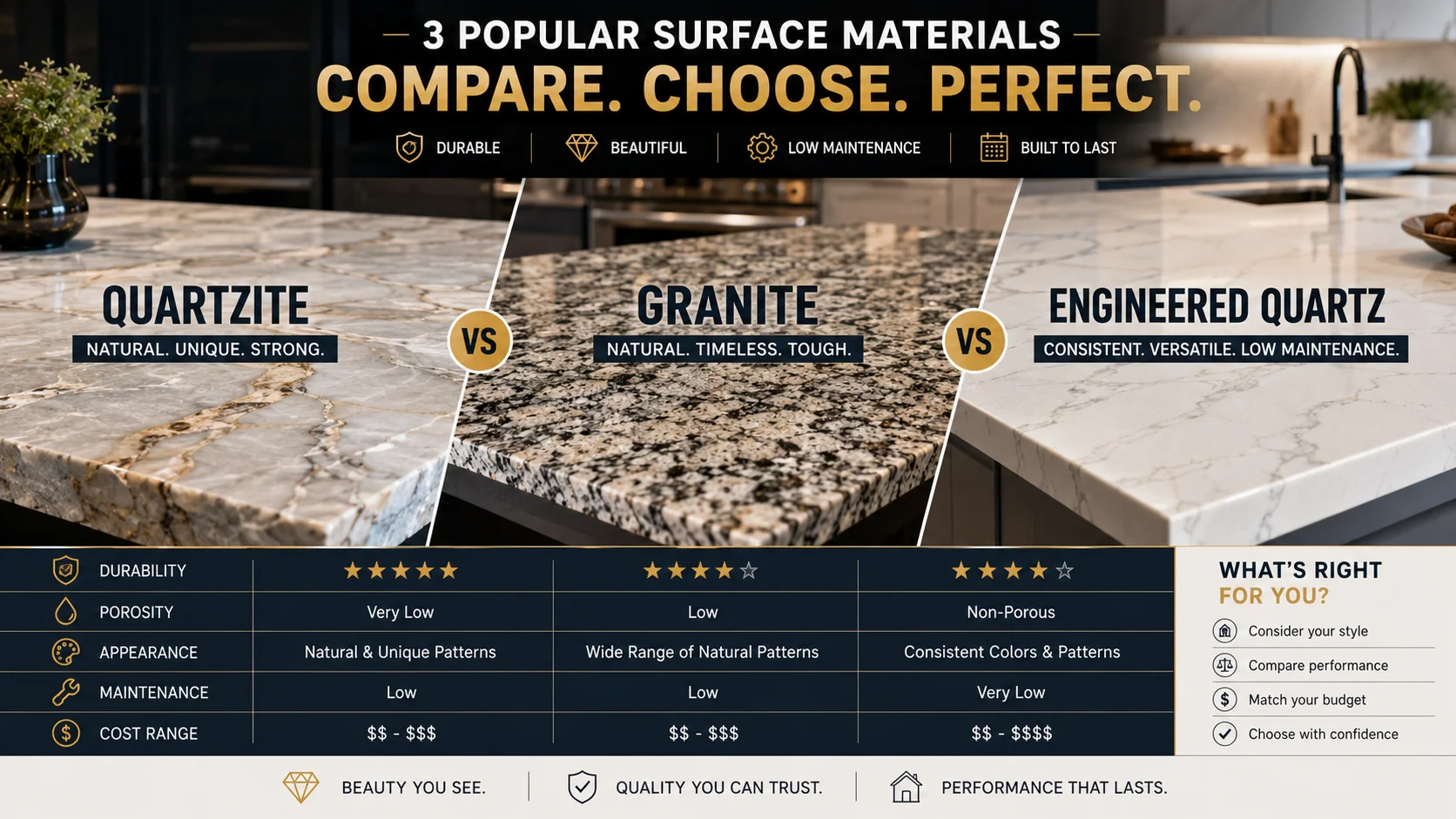
Quartzite requires distinct handling due to its immense density. Because of its hardness rating (often 7 on the Mohs scale), importing pre-polished sheets of naturally crystallized sandstone is almost always more profitable than cutting it yourself. The origin factories have already invested the immense diamond tooling costs, blade wear, and epoxy vacuum time required to stabilize the material and bring it to a high-gloss finish.
We also see a massive shift toward engineered surfaces for specific project types. Stocking manufactured slabs blending resins with natural aggregates, specifically ultra-dense, zero-porosity crystallized glass sheets and engineered surface sheets composed of 90% crushed quartz, provides absolute color consistency for multi-unit residential builds where natural variation is viewed as a defect by the developer. For exterior cladding and subtle interior floors, large format sheets of sedimentary rock with matte finishes remain a staple for high-end architectural specifications requiring a muted, organic aesthetic.
How Does Stone Type Change The Import Format Math?
Certain stones dictate their own ideal import format based entirely on their geological makeup. Some materials ship beautifully as fragile 2cm sheets, while others will arrive at your port as a container of expensive gravel if not backed, resined, or shipped as raw block.
For high-volume residential work, light-grey slabs with burgundy garnets sourced from Tamil Nadu and consistent pale sheets with subtle grey movement and blackberry spotting are incredibly stable during transit. They do not require exotic fiberglass backing to survive ocean swells. When projects demand vivid color, striking blue-grey sheets cut with heavy white veining from Andhra Pradesh load safely into standard wooden A-frames, much like dense red granite slabs with a blue-grey background tint and pale grey sheets with pinkish-white waves ideal for large flooring runs.
If you need an alternative to standard whites, creamy white igneous sheets with faint grey and pale green waves offer a highly durable structure that resists cracking under tension during offloading. For dark aesthetics, black granite sheets characterized by striking white chalk-like veins process smoothly without the brittleness common to other heavily veined dark stones, allowing you to import them confidently in thinner profiles.
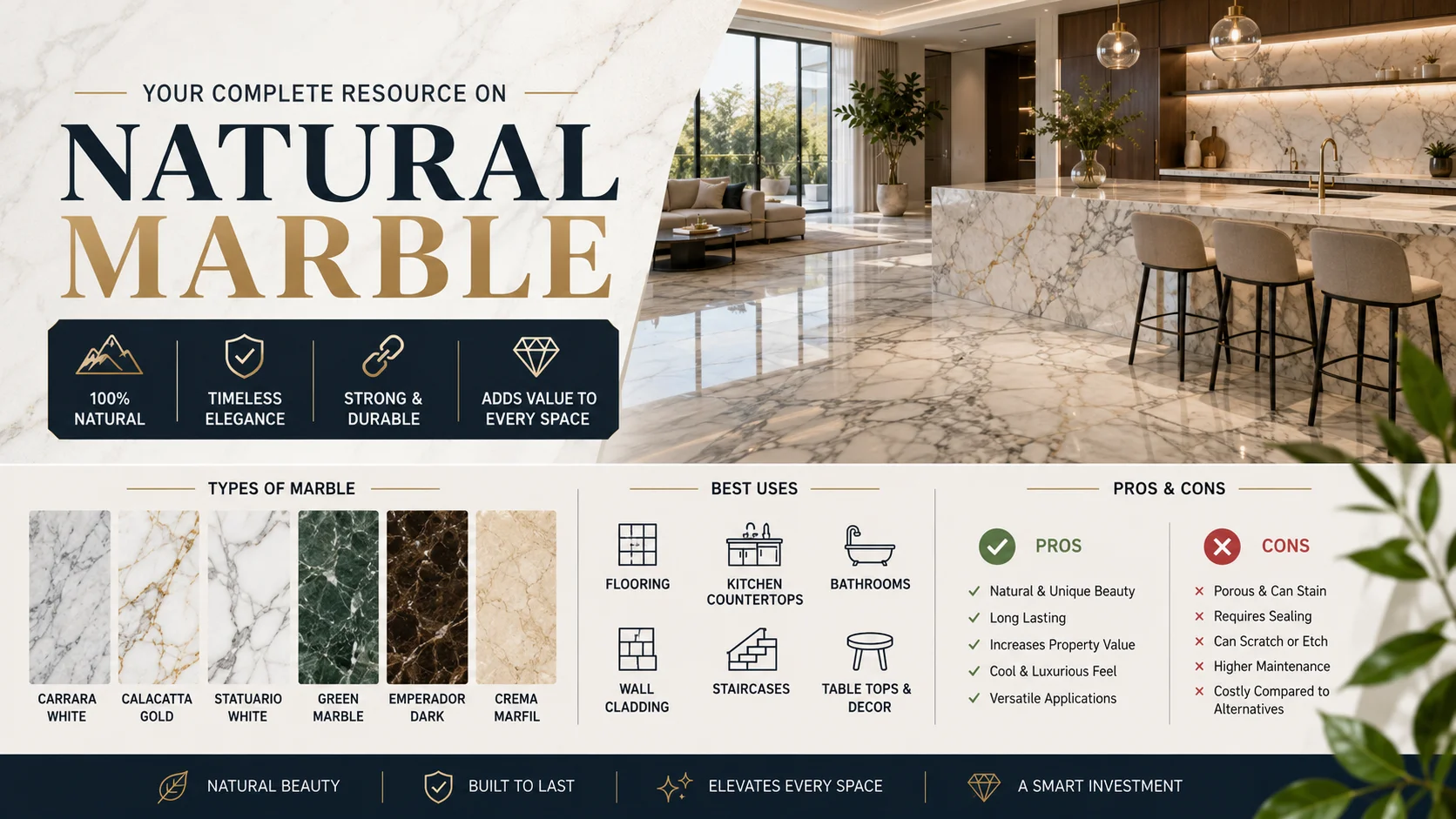
Marbles require stricter netting and resining protocols before shipment. Sourcing dark green metamorphic sheets featuring a web of stark white veins or deep forest green slabs with subtle black and lighter green shading means ensuring the origin factory applies heavy fiberglass backing. Dark marbles contain serpentine structures that are notoriously brittle. The same structural rules apply to banded sheets of white, green, and pink calcite from Salumber and classic Greek white slabs with diagonal grey and burgundy veining.
Buyers looking for pure, unblemished surfaces often struggle with natural material, which is why flawless, ultra-white crystalline sheets imported from Southeast Asia and engineered, perfectly uniform white glass-based slabs have taken over the commercial specification market for pure white designs. For warm earth tones, dark brown marble sheets with intersecting light brown and white veins provide excellent structural integrity for complex edge profiles, rarely requiring heavy reinforcement. Soft sedimentary materials like creamy beige, fossil-flecked Portuguese stone sheets should be shipped honed rather than polished and carefully packed with dense interleaving foam to prevent surface scratching from container vibration.
Quartzites are structurally demanding and unforgiving. We heavily advise importing these exclusively as finished sheets unless you run a specialized block processing facility. Shipping translucent white sheets of incredibly hard quartz structure, intensely colored teal and green metamorphic sheets with feldspar inclusions, or fiery red and deep orange heavily crystallized sheets requires the origin factory to handle the massive blade deflection and breakage risks inherent in cutting these ultra-dense materials. You pay a high premium per square meter, but you guarantee 100% usable material upon arrival.
Eradicating On-Site Processing With Tiles and Cut-to-Size
Importing finished tiles (usually 10mm to 15mm thick), or complex interlocking mesh-backed patterns made from small stone offcuts, completely removes heavy fabrication from your local facility. You pay for the precise square meterage you plan to install.
The trade-off for this convenience is zero flexibility. If a container shifts violently during a storm and tile edges chip, or if the on-site architect changes a lobby dimension mid-project, you cannot simply cut a new piece from a block or slab in your yard. You must re-order from the origin factory and wait six weeks for ocean transit.
Furthermore, tiles require dense styrofoam interleaving, individual cardboard wrapping, and heavy wooden crate packing to survive ocean freight. This intensive packaging significantly increases the shipping cost relative to the actual volume of stone inside the container. You are shipping a lot of wood and foam. However, for massive hospitality projects featuring thousands of identical hotel room bathrooms, the cost of origin-factory cut-to-size processing is drastically lower than local union labor rates for fabrication, making pre-cut tiles the only viable economic choice for high-rise commercial work.
Analyzing Freight, Yield, and Wastage Across Formats
Understanding the exact distribution of risk is the only way to accurately forecast your landed costs. The table below breaks down the operational realities of importing each format.
| Format | Ocean Freight Efficiency | Local Fabrication Required | Yield Risk Factor | Best Suited For |
| Rough Blocks | High (Maximum weight per container, zero packaging space lost) | Extreme (Multi-blade saws, heavy gantry cranes, massive water recycling) | High (Hidden natural fissures, heavy blade kerf loss, crust waste) | Monument builders, massive regional fabrication plants, wholesalers. |
| Slabs (2cm / 3cm) | Medium (A-frame wooden bundles consume container volume) | Moderate (Bridge saws, CNC routers, edge polishers) | Low (Visible surface, pre-resined, pre-netted by origin factory) | Local countertop fabricators, mid-size distributors, architectural suppliers. |
| Tiles / Cut-to-Size | Low (Heavy crating and styrofoam protection limit total volume) | Zero (Ready for direct mortar installation) | Zero (You only pay for the exact dimensions loaded in the crate) | Hotel developers, large-scale commercial flooring contractors, multi-unit housing. |
Frequently Asked Questions by Bulk Importers
How much usable slab volume can I extract from a standard granite block?
You must deduct the uneven outer crust (dressing waste) and the blade kerf (the physical width of the diamond blade turned to dust). A standard block yields roughly 25 to 28 square meters of 2cm slabs per cubic meter of raw block. If a block measures exactly 3 cubic meters, expect between 75 and 84 square meters of finished 2cm material, assuming zero internal fractures are discovered during cutting.
Do origin factories apply epoxy resin to all slab formats before shipping?
No. Dense, structurally sound granites often receive standard abrasive polishing without any resin. Heavily fissured materials, soft marbles, and brittle quartzites undergo a vacuum epoxy process where resin is pulled deep into the micro-fractures before the final polish. If you are buying cheap commercial granite, do not expect resin treatment.
What is the maximum block weight a standard 20ft container can hold?
Global shipping regulations generally cap heavy-duty 20ft containers at 27 to 28 metric tons of gross cargo weight. Because granite weighs roughly 2.7 to 3.0 tons per cubic meter, you can fit a maximum of 9 to 10 cubic meters of raw stone in a single container. You hit the weight limit long before you run out of physical space inside the box.
Why are some quartzite blocks priced per ton while others are priced per cubic meter?
Irregularly shaped boulders heavily favor per-ton pricing because measuring exact cubic dimensions on a rounded, natural face is inaccurate. Dimensionally cut blocks, which have been wire-sawn into perfect rectangles at the quarry, are priced per cubic meter because the exact volumetric yield is mathematically undeniable.
Does the risk of ocean freight breakage increase with 2cm slabs compared to 3cm?
Yes. 2cm material is significantly more prone to snapping under the torsional stress of a rolling cargo ship. To combat this, factories pack 2cm slabs much tighter in the wooden bundles, relying on the sheer mass of the slabs pressing against one another to prevent individual movement. Single slabs of 2cm material should never be shipped without rigorous A-frame reinforcement.
Before you finalize any container order based strictly on raw square meterage estimates, you must account for grain matching, blade kerf, and natural edge waste. Stop guessing at your purchase orders and run your blueprints through our step-by-step guide on computing exact material requirements including waste margins.