Marble forms when limestone gets pushed deep enough underground to recrystallize under heat and pressure, and that recrystallization is exactly what gives marble its veining — mineral impurities trapped in the original limestone get pulled into thin streaks as the calcite crystals reorganize around them. That’s also why marble behaves so differently from granite: it’s softer, more porous, and reacts to acid in ways granite simply doesn’t. None of that makes natural marble a worse material. It makes it a different one, with its own rules for where it belongs and how to look after it.
What Marble Actually Is, and Why It Behaves Differently From Granite
Marble is almost entirely calcium carbonate. That single fact explains most of its personality. Calcite is a soft mineral compared to the quartz and feldspar in granite, which means marble scratches more easily and takes a sharper polish — the same softness that makes it easy to carve also makes it vulnerable to abrasion from grit or sand tracked across a floor. Calcite also dissolves slowly in acid, so anything citrus, vinegar-based, or alcohol-heavy can etch a dull patch into a polished marble surface within seconds if it sits there. This isn’t a flaw to hide from buyers — it’s information that changes where you’d put marble versus where you’d put granite instead.
Marble Types: Reading Color, Veining, and Background Tone
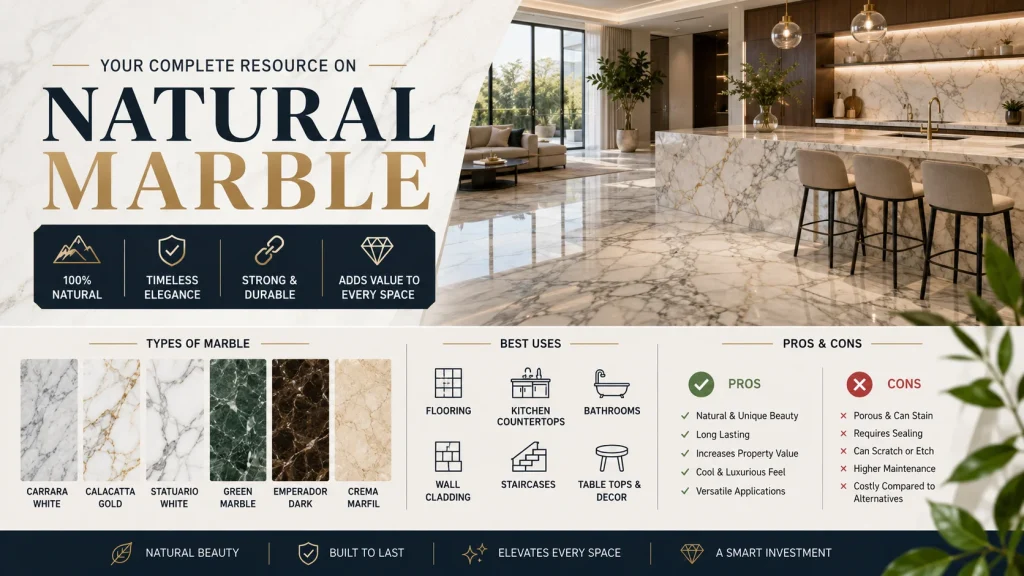
White marble carries the most variation of any color family, and the differences between types come down to background tone and vein character rather than just “white.” Ice White Marble runs toward a cooler, brighter field with finer veining. Indian Statuario Marble and Volakas Marble both show the bolder, more dramatic grey veining that’s become associated with high-end interiors, though the two differ in how dense and continuous that veining runs across a slab. Vietnam White Marble tends toward a softer, warmer white base, and Nano White Marble gives a tighter, more uniform grain with less dramatic movement — a useful option when you want the marble look without strong pattern variation competing with other design elements in a room.
Onyx-family marble — Himalayan Onyx Marble and Lady Onyx Marble — behaves differently from standard marble in one important way: it’s translucent enough in thin sections to be backlit. That’s why you’ll see onyx used in feature walls and bar fronts with LED panels behind them rather than as flooring; the visual payoff comes from light passing through the stone, not just reflecting off it.
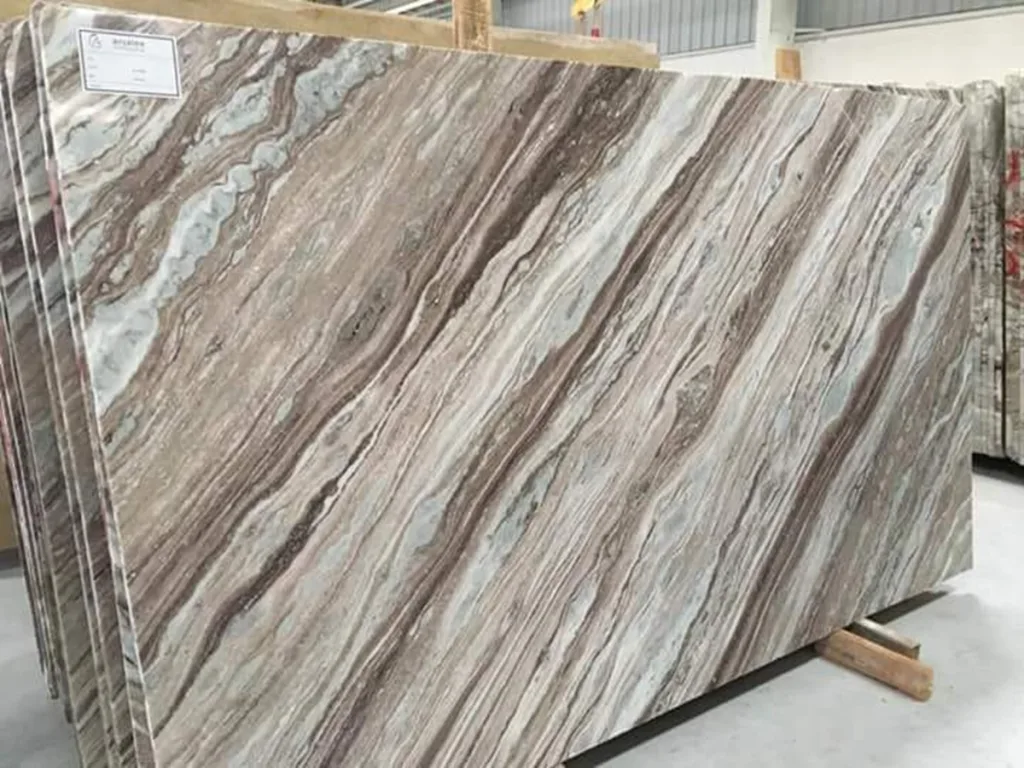
On the color side, Fantasy Brown Marble and Toronto Brown Marble both bring warm, earthy backgrounds with contrasting veining, while Green Forest Marble, Spider Green Marble, and Verde Guatemala Marble each carry distinct green tones — Spider Green in particular shows a denser, web-like vein network that gives the variety its name. River Blue Marble is a rarer choice in the blue range, with a cooler grey-blue field running through it. For smaller-format work, Marble Mosaic Tiles let you use marble’s color range in patterned floor or wall installations without cutting full slabs.
No two slabs of any of these types come out identical, even from the same block — the vein pattern is a one-time geological accident, not a repeatable print. If you’re trying to understand why a sample chip never quite matches the full slab you end up with, the explanation of why marble veining patterns are never identical goes into the geology behind it.
Slabs or Tiles: Decide the Format Before You Decide the Color
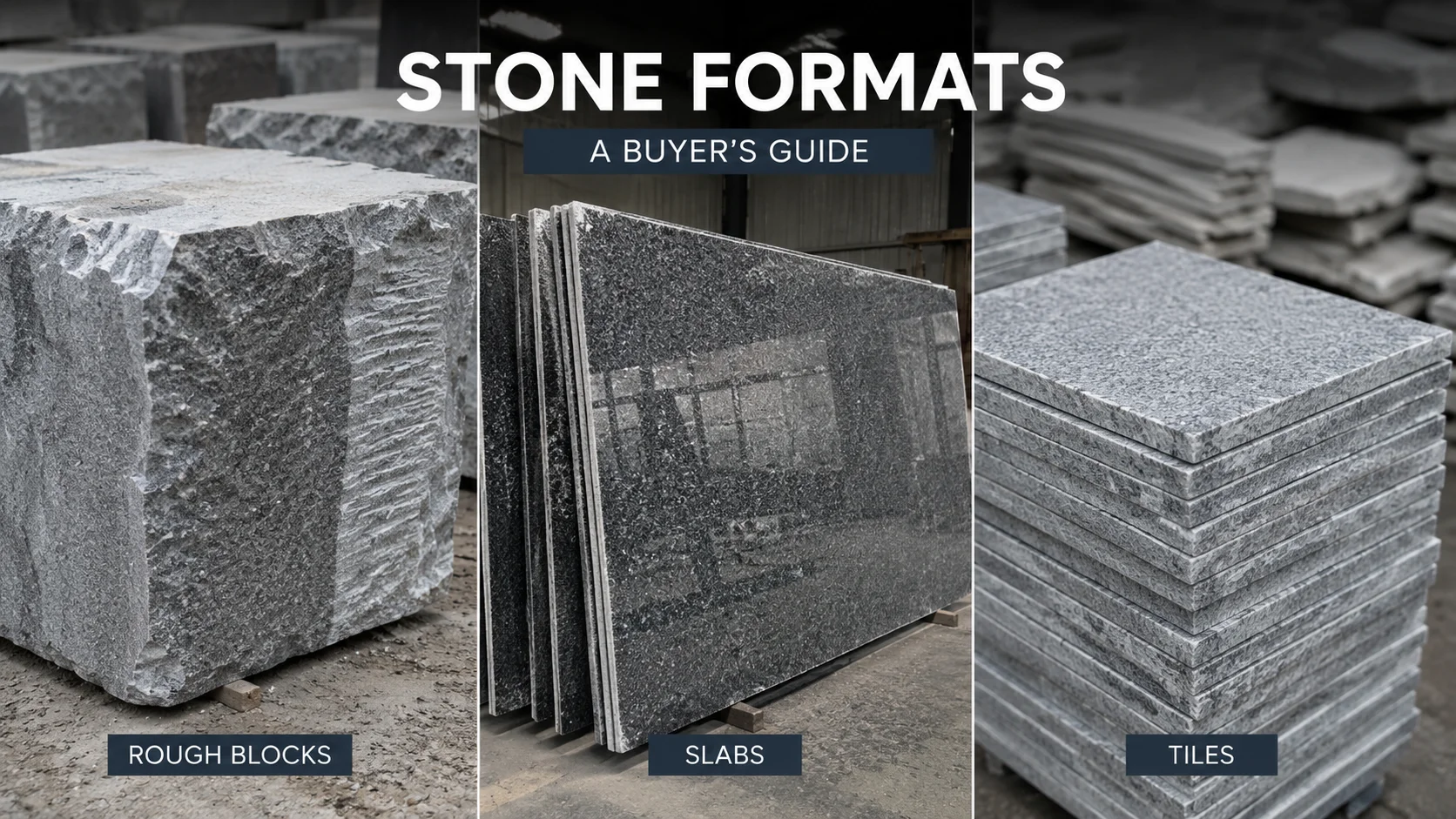
Before getting attached to a specific marble type, settle whether the project calls for slabs or tiles, because that decision affects layout, seam visibility, and cost in ways that color choice doesn’t. Slabs give you continuous veining across large surfaces — a kitchen island or a feature wall reads as one unbroken pattern. Tiles are easier to ship, handle, and replace individually if one gets damaged, but the trade-off is visible grout lines breaking up the vein flow. Large-footprint commercial floors often default to tile for exactly that maintenance flexibility, while residential statement pieces lean toward slab. The full slab-versus-tile comparison breaks down which format suits which project type and budget range.
Where Marble Performs Well, and Where It Doesn’t
Marble flooring in low-traffic, low-acid environments — lobbies, hallways, formal living spaces — is where the material does its best work. It stays cool underfoot, which matters in warm climates, and the polished surface reflects light in a way that makes smaller rooms feel larger. Wall cladding and accent pieces are another strong fit, especially with onyx varieties used for backlit features.
Kitchens are trickier. Marble countertops look the part, but daily contact with citrus, wine, and oil means etching is a real maintenance issue, not a hypothetical one. Many fabricators steer marble toward kitchen islands or backsplashes rather than the primary work counter, where acid exposure is constant.
Bathrooms sit in a similar gray area — humidity and standing water create their own porosity concerns, separate from acid etching, and not every marble type handles that combination equally well. The breakdown of whether marble is good for bathrooms, including the trade-offs and alternative options covers which applications within a bathroom make sense and which ones invite trouble.
Marble’s Pros and Cons, Without the Sales Pitch
The honest case for marble: nothing manufactured fully replicates the depth and randomness of natural veining, the surface stays noticeably cooler than engineered alternatives, and a properly sealed and maintained marble surface can last for decades. It also takes a higher polish than most other natural stones, which is part of why it’s stayed the default choice for formal interiors for centuries.
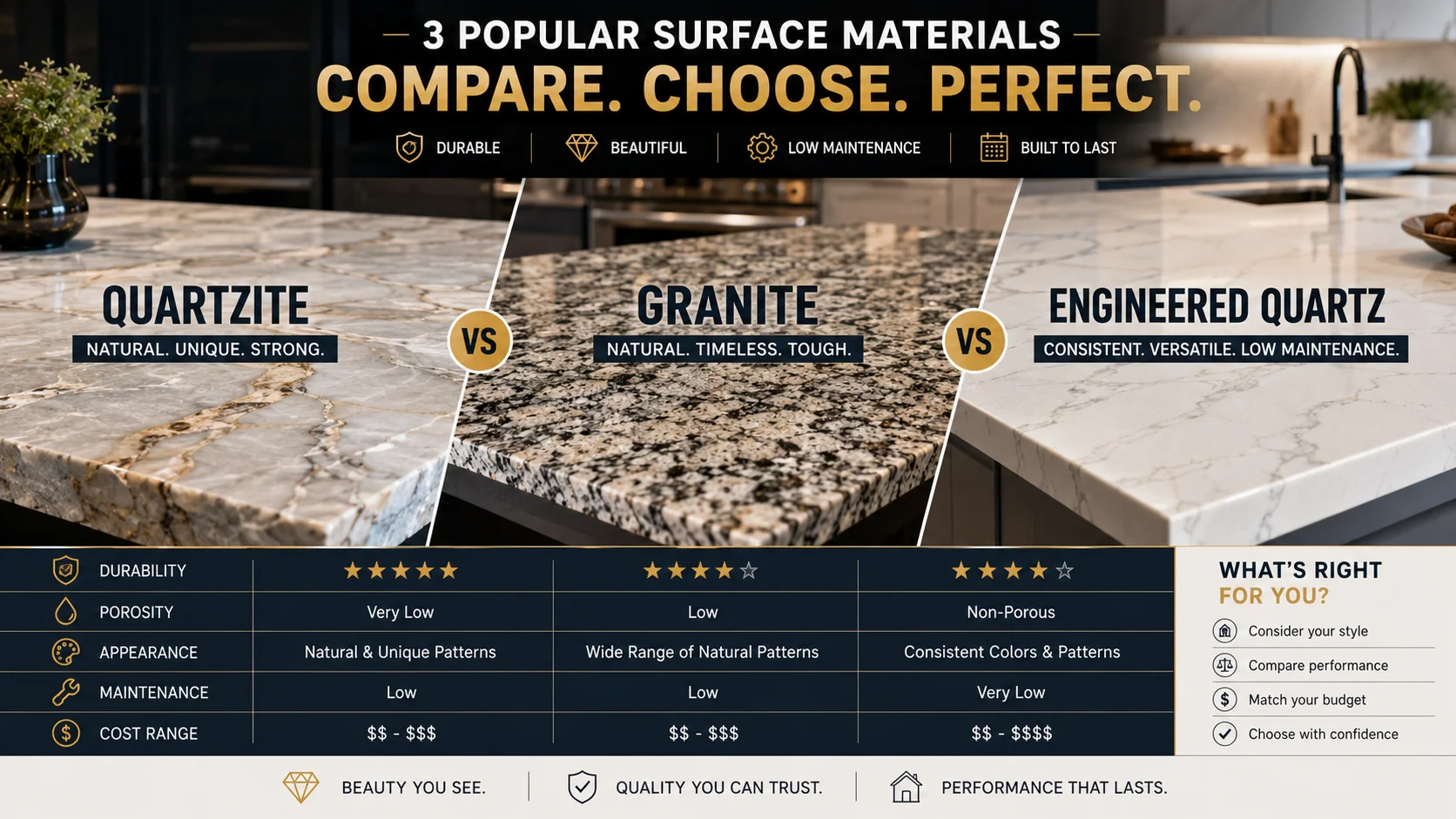
The honest case against it: marble is porous and needs periodic sealing to resist staining, it etches under acid contact regardless of sealing, and it scratches more readily than granite or quartzite under heavy grit exposure. Buyers who skip the maintenance routine end up disappointed within a year or two, not because the stone failed, but because it was treated like a low-maintenance surface when it isn’t one. The step-by-step guide to cleaning and maintaining marble flooring covers the specific cleaning products to avoid and the resealing schedule that actually keeps marble looking right.
White Marble vs. Black Marble: A Quick Style Comparison
White and black marble get compared constantly in design conversations, and the right choice usually comes down to how much contrast a space can handle and how visible staining would be in daily use.
| Factor | White Marble | Black Marble |
| Visual effect | Brightens space, reflects light | Adds depth and contrast, absorbs light |
| Vein visibility | Veining reads clearly against pale base | Veining can be subtler or more dramatic depending on contrast |
| Staining visibility | Stains and etching show more obviously | Stains can be less visible, but water spots and dust show more |
| Best paired with | Light or neutral interiors, formal spaces | Bold, modern interiors wanting contrast |
| Common use | Flooring, feature walls, accent pieces | Feature walls, accent surfaces, statement pieces |
The deeper comparison — including how each performs under different lighting conditions and which works better for specific room types — is covered in the full white marble versus black marble breakdown.
Indian Marble vs. Italian Marble Style: What the Comparison Is Really About
“Italian marble” and “Indian marble” get used as shorthand in the trade for two different aesthetic traditions — one associated with classic, high-contrast veining patterns, the other with a broader range of color families and pattern types. These are style categories buyers reference when describing a look they want, not a guarantee of where any specific slab actually came from. What matters more in practice is matching the vein density, background tone, and finish to the room, rather than treating either label as an automatic quality signal. The full Italian marble versus Indian marble comparison goes through how to evaluate marble on its actual characteristics instead of relying on a regional label alone.
Buying Marble Without Overpaying for the Wrong Slab
A common mistake among first-time buyers is choosing a marble type from a small sample chip and assuming the full slab will look identical. It won’t — veining shifts dramatically across even a single block, let alone across different blocks of the same marble type. Ask to see full-slab photos before committing, and if you’re buying for a large continuous surface, ask whether the slabs come from the same block lot so the veining transitions look intentional rather than mismatched. For smaller, pattern-heavy installations, Marble Mosaic Tiles sidestep this issue almost entirely, since the tile format is designed around repeating small-scale patterns rather than single large veins.
Marble rewards buyers who treat it as a long-term surface requiring occasional upkeep, not a one-time install-and-forget material — and that distinction is usually what separates a marble floor that still looks sharp after a decade from one that doesn’t.
Frequently Asked Questions
Is marble more expensive than granite?
Pricing varies by type, slab grade, and finish rather than by the material category alone. Some marble types cost less than premium granite, and some granite costs less than entry-level marble, so it’s worth comparing specific products rather than assuming one category is universally pricier.
Can marble be used outdoors?
Marble can be used outdoors in some applications, but its porosity and sensitivity to acidic rain or pollutants make it a riskier choice than granite for exterior flooring or cladding exposed to weather year-round. Indoor or covered applications are generally a safer fit.
Does all marble need sealing?
Yes, marble’s porosity means sealing is recommended for most installations, particularly for floors and countertops exposed to liquids. How often resealing is needed depends on the specific marble type, the finish, and how much daily exposure the surface gets.
Why does my marble slab look different from the sample I saw?
Marble veining shifts naturally across a block, so a small sample chip rarely represents the full pattern of a large slab accurately. Asking for full-slab photos or viewing the actual slab before purchase avoids this surprise.
What’s the difference between polished and honed marble finishes?
Polished marble has a high-gloss, reflective surface that highlights veining contrast, while honed marble has a matte, low-sheen finish that shows fewer scratches and etch marks over time. Honed finishes are often chosen for floors with heavier traffic for exactly that reason.