
+91 (988) 774-4007

info@bbvimpex.com
Find Us On

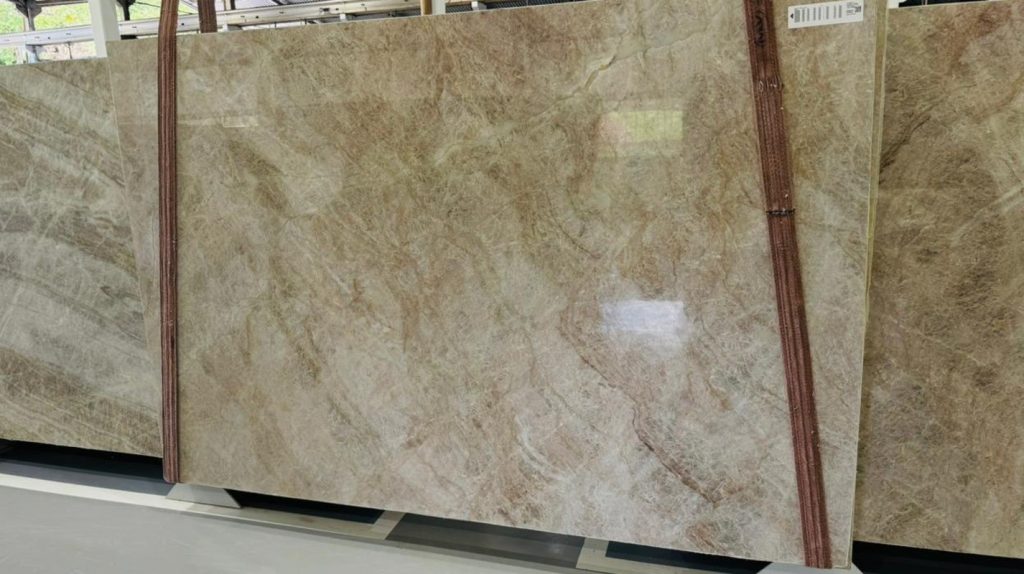
Quartzite Slabs Supplier & Exporter for Europe & the Middle East Regions
Quartzite slabs offer a distinct combination of natural strength, quartz clarity, and flowing veining for modern interior and architectural projects. At BBV Impex, we export wholesale natural quartzite slabs to fabricators, interior designers, architects, and stone importers across Europe, the UAE, Saudi Arabia, Qatar, and the wider Middle East. Whether you are sourcing material for residential kitchen worktops or large commercial wall cladding, our collection includes popular varieties in various finishes and custom thicknesses. Browse our quartzite range below, request high-resolution slab photos, or contact our export team today for a tailored quotation.
Quartzite Slabs by Colour
Choosing the right natural quartzite slab starts with selecting a colour and movement pattern that matches your architectural design. Every block quarried yields unique variations in crystal density, veining, and undertone.
White & Light Quartzite Slabs
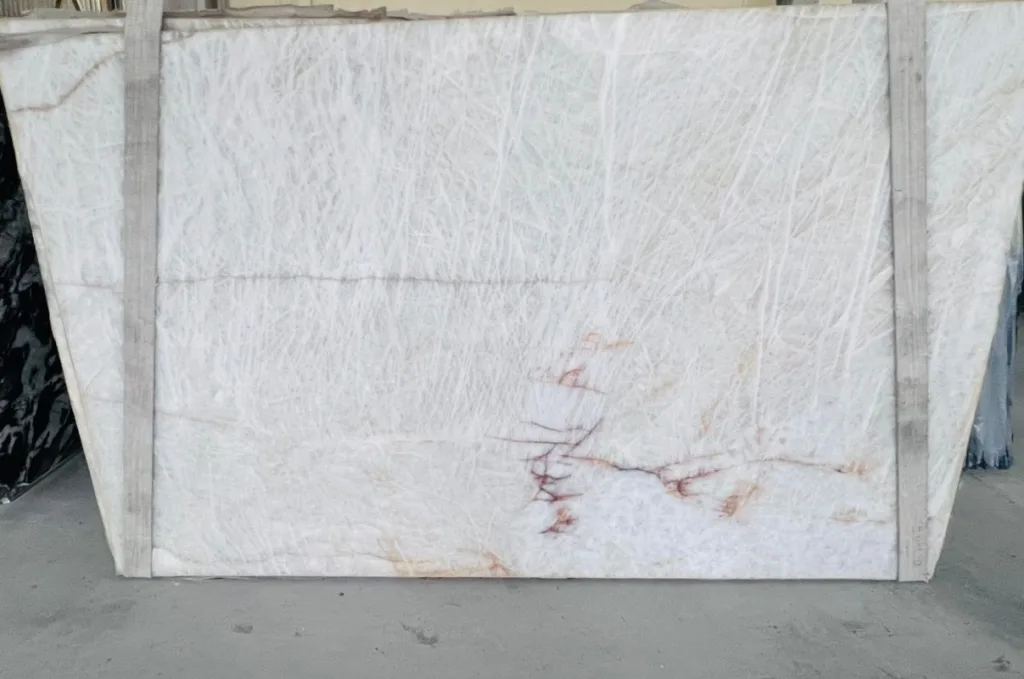
White quartzite slabs provide a clean, luminous aesthetic similar to white marble, coupled with natural quartz grains. Varieties such as Cristallo Quartzite and Taj Mahal Quartzite display soft ivory, grey, and cream background tones with delicate directional veining, making them ideal for kitchen worktops, vanity tops, and minimal interior schemes.
Green & Exotic Blue Quartzite Slabs
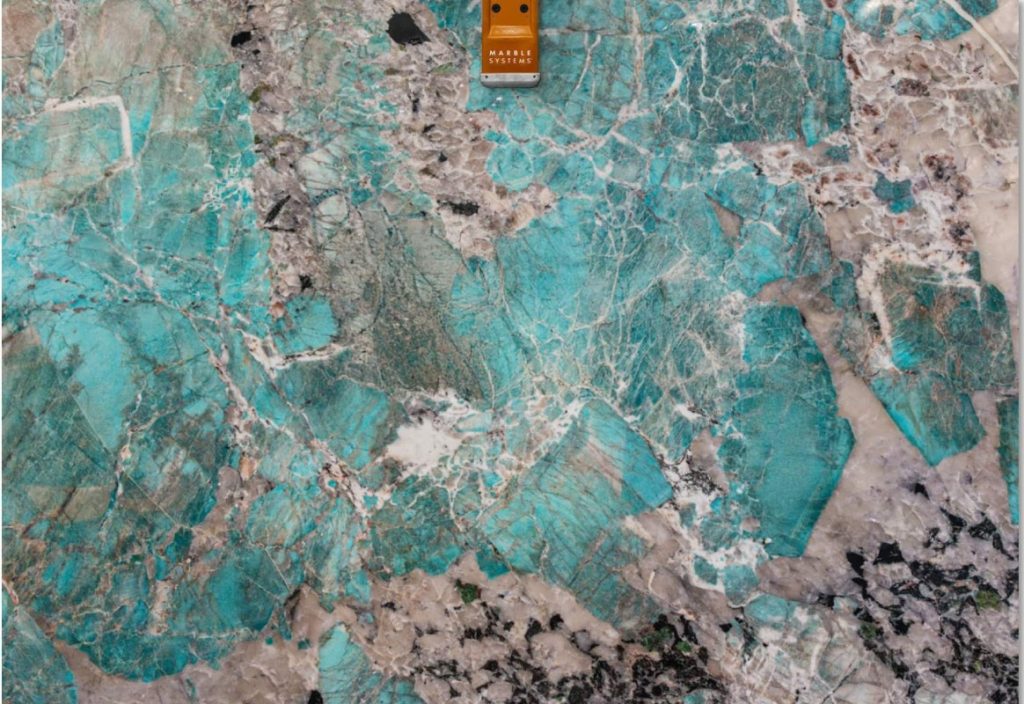
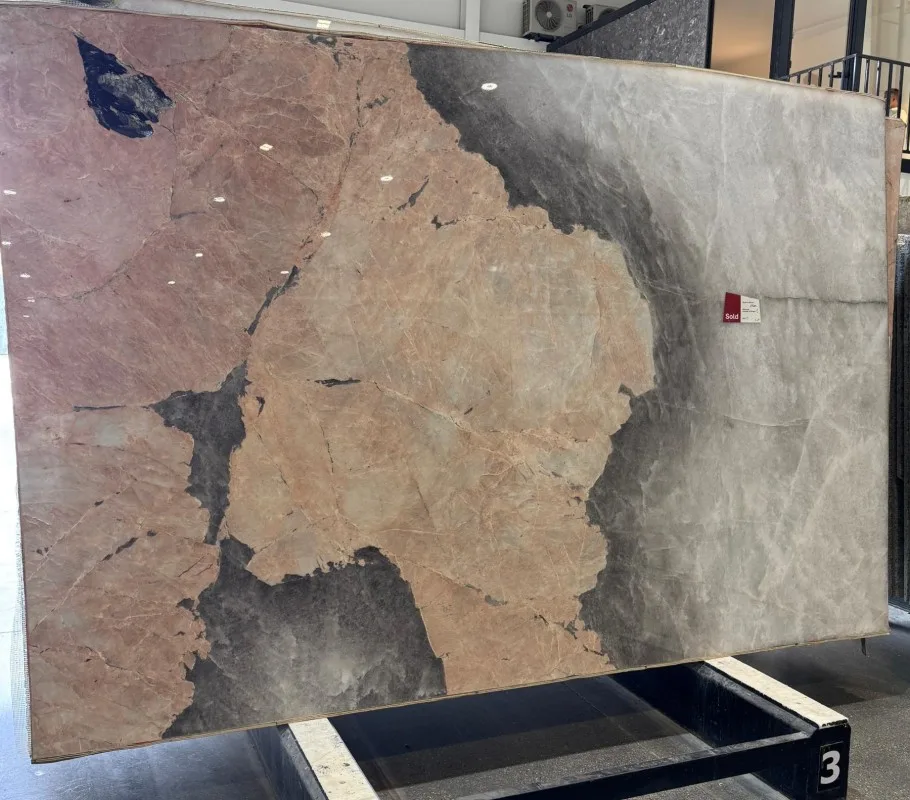
Exotic varieties like Amazonite Quartzite feature intense turquoise-green hues, copper-toned veining, and rich mineral contrast. Patagonia Quartzite combines soft cream segments with translucent quartz pockets and dramatic dark grey or gold veins. These striking slabs are frequently selected for book-matched feature walls, reception desks, and luxury island worktops.
Red, Gold & Multicolour Quartzite Slabs
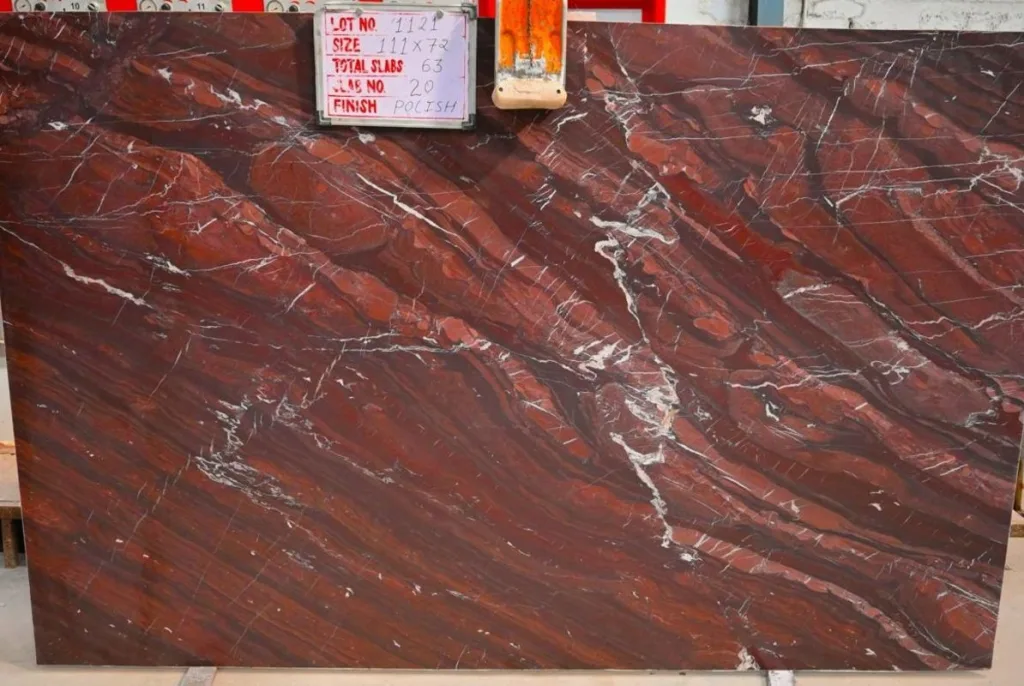
For bold interior focal points, Jasper Red Quartzite delivers warm crimson and deep rust tones laced with natural mineral lines. Warm gold and multicolour options bring earthiness to flooring, hotel lobbies, and wall features, providing strong visual contrast against modern wood, metal, or concrete finishes.
| Stone Name | Primary Colour & Veining | Finishes Available | Classification Status | Treatment Options | Best Applications |
| Amazonite Quartzite | Vibrant green/blue with cream and copper veining | Polished, Honed, Leathered, Brushed | Confirmed Quartzite | Resin-filled / Mesh-backed (on request) | Feature walls, vanity tops, backlit panels |
| Cristallo Quartzite | Translucent white/crystal with subtle grey lines | Polished, Honed, Leathered | Confirmed Quartzite | Resin-filled / Mesh-backed (on request) | Backlit bars, kitchen islands, vanity tops |
| Jasper Red Quartzite | Deep rust red with white/grey mineral movement | Polished, Honed, Leathered, Brushed | Confirmed Quartzite | Resin-filled / Mesh-backed (on request) | Commercial features, wall cladding, flooring |
| Patagonia Quartzite | Cream, beige, translucent quartz, grey veining | Polished, Honed, Leathered | Confirmed Quartzite | Resin-filled / Mesh-backed (on request) | Book-matched walls, islands, hotel lobbies |
| Taj Mahal Quartzite | Soft cream and ivory with warm bronze/grey veins | Polished, Honed, Leathered | Confirmed Quartzite | Resin-filled / Mesh-backed (on request) | Kitchen worktops, flooring, bathroom walls |
What Is Quartzite, and How Does It Differ from Quartz, Granite and Marble?
Understanding the geological nature of quartzite helps specifiers and buyers make informed material decisions for residential and commercial fit-outs.
What Quartzite Is
Quartzite is a natural metamorphic stone formed when quartz-rich sandstone undergoes extreme heat and tectonic pressure deep within the earth’s crust. During this process, individual quartz grains recrystallise and fuse together into a dense interlocking mineral structure. Natural quartzite consists predominantly of quartz (silica), giving the material its characteristic hardness, mineral sparkle, and resistance to everyday wear. Because it is a natural stone, no two slabs are identical; variations in veining, colour shade, and crystal distribution are inherent characteristics of every lot.
Natural Quartzite vs. Engineered Quartz
One of the most frequent points of confusion in the stone trade is the difference between natural quartzite and engineered quartz.
- Natural Quartzite: Quarried directly from the earth in solid blocks, sliced into slabs, and finished. It contains 100% natural stone minerals and withstands high temperatures.
- Engineered Quartz: A manufactured composite made from crushed quartz particles held together with synthetic polymer resins and pigments.
While engineered quartz offers pattern uniformity, it cannot match the depth, translucent crystal structure, or heat tolerance of authentic natural stone slabs. (To explore manufactured composites, visit our Artificial Stone Slabs page.)
Hard Quartzite vs. “Soft” Quartzite
In the international commercial stone market, the trade name “quartzite” is sometimes loosely applied to stones that contain calcitic minerals alongside quartz. True “hard” quartzite consists almost entirely of fused silica and resists scratching from steel tooling. Conversely, stones categorized in the trade as “soft quartzite” or dolomitic marble may react to household acids or scratch more easily. At BBV Impex, all five of our featured varieties—Amazonite, Cristallo, Jasper Red, Patagonia, and Taj Mahal—are classified as quartzite.
| Property / Feature | Natural Quartzite | Engineered Quartz | Granite | Marble | Porcelain Slabs |
| Origin | Natural Metamorphic | Manufactured Composite | Natural Igneous | Natural Metamorphic | Manufactured Ceramic |
| Pattern Variation | Unique per slab | Uniform / Repeatable | Varied / Speckled | Unique / Veined | Printed surface |
| Scratch Resistance | Very High | Moderate to High | High | Low to Moderate | Very High |
| Acid Etch Resistance | High (in true quartzites) | High | High | Sensitive to acids | Excellent |
| Heat Tolerance | High | Low (resin burns) | High | Moderate | Very High |
| Sealing Required | Depends on stone density | Never | Recommended | Mandatory | Never |
| Outdoor Suitability | Excellent (UV stable) | Poor (resins yellow) | Excellent | Varies by climate | Excellent |
| Primary Uses | Islands, cladding, floors | Interior worktops | High-traffic floors | Bathrooms, features | Cladding, thin tops |
How to Choose the Right Quartzite Slabs
Selecting quartzite slabs requires balancing visual design preferences with technical project specifications, fabrication considerations, and logistics.
Stone Type and Classification
Because stone terminology varies globally, buyers should always verify a stone’s technical classification before purchasing. Request laboratory reports or supplier confirmation to verify whether a material is true quartzite or a calcitic variety. This distinction affects fabrication tooling costs, sealing requirements, and long-term performance in wet or high-traffic settings.
Colour, Veining and Natural Variation
Natural stone slabs feature either linear, directional veining or open, flowing mineral patterns. When ordering quartzite slabs for a single continuous area—such as a large kitchen island or contiguous wall cladding—all slabs should ideally be sourced from the same quarried block or bundle lot. Fissures, colour shifts, and natural crystal pockets are inherent features of natural quartzite and should be inspected and approved via high-definition slab photos before order confirmation.
Finish Selection
The chosen surface finish transforms both the appearance and tactile feel of the stone:
- Polished: Enhances colour depth, reflectivity, and crystal translucency; ideal for worktops and feature walls.
- Honed: Provides a smooth, matte aesthetic that reduces glare and conceals light surface marks.
- Leathered / Brushed: Imparts a subtle textured surface that highlights natural veining while offering improved slip resistance for flooring, coping, and exterior applications.
Thickness, Slab Size and Book-Matching
Standard slab thicknesses are 20 mm and 30 mm, with custom thicknesses produced upon request. Jumbo slab dimensions allow fabricators to execute large island tops with minimal seams. For dramatic feature walls or bathroom vanities, adjacent slabs sliced sequentially from the same block can be mirror-matched (“book-matched”) to create continuous symmetrical patterns.
Treatments and Enhancements
Depending on buyer preferences, quartzite slabs can be supplied untreated, factory-sealed, resin-filled to reinforce natural surface micro-fissures, or mesh-backed with fiberglass netting for added structural support during transit and fabrication.
Factors Affecting Quartzite Slab Pricing
Several commercial variables influence the square-metre price of wholesale quartzite slabs:
- Block rarity and mineral composition (e.g., crystal-rich translucent varieties).
- Slab thickness (20 mm vs. 30 mm vs. custom cut-to-size).
- Surface finish and custom factory treatments.
- Yield loss during book-matching or complex fabrication.
- Packaging (crating vs. bundles), freight destination, insurance, and import duties.
Is It Really Quartzite? How to Check the Stone, Test Reports and Documents Before You Buy
Verifying material authenticity and quality before shipment guarantees that your stone performs as expected on-site.
Ask What the Stone Is
Always request formal written confirmation from your supplier regarding the technical classification of the stone. Trade names can occasionally be misleading, so confirming whether the material has been geologically identified as true quartzite protects your investment.
Test a Sample
Buyers can request physical samples to inspect natural colour tone, texture, and finish options. To test performance, a spare sample piece can be exposed to common household liquids (lemon juice, vinegar, oil) or scratch-tested with a stainless steel blade. Note that small sample tests serve as a preliminary indication; official laboratory test data provides definitive technical proof.
Reviewing Test Reports
For commercial fit-outs and architectural specifications, buyers may request test reports covering key physical properties:
- Water Absorption & Density: Lower absorption rates indicate greater resistance to liquid staining.
- Flexural & Compressive Strength: Critical data for elevated wall facades and high-traffic commercial flooring.
- Abrasion & Slip Resistance: Important for public floor installations, wet rooms, and stairs.
Origin and Treatments
Confirming where the stone was processed and whether any factory resin, mesh backing, or surface sealers were applied ensures transparency. Detailed documentation helps fabricators choose the correct adhesives, cutting blades, and installation methods.
Pre-Shipment Inspection & Delivery Checks
At BBV Impex, we support client peace of mind by providing detailed pre-shipment photos and videos of the exact slab bundles, complete with bundle lot numbering. Upon delivery at your destination port or warehouse, crates should be inspected before signing off, and stored upright on standard slab A-frames.
Best Uses for Quartzite Slabs
Due to its visual elegance and mineral hardness, natural quartzite is suitable for a diverse range of interior and architectural applications.
Kitchen Worktops and Islands
Quartzite worktop slabs are a popular choice for high-end residential and commercial kitchens. Natural quartzite offers strong resistance to everyday scratching, heat, and impact. Using chopping boards, trivets, and wiping spills promptly remains good practice to protect the surface finish over time.
Bathrooms and Vanities
With its moisture resistance and marble-like aesthetic, quartzite is widely specified for luxury vanity tops, walk-in shower walls, and bath surrounds. Honed or textured finishes are often preferred for wet room flooring to enhance underfoot traction.
Flooring and Stairs
Large-format quartzite floor tiles and cut-to-size slab stairs create seamless, high-traffic flooring in residential villas, executive offices, and boutique hotels. Proper surface finishing ensures appropriate slip resistance according to local building codes.
Wall Cladding, Feature Walls and Facades
Vertical wall cladding with quartzite slabs adds texture and depth to interior reception areas, lift lobbies, and exterior building facades. Structural anchoring systems and slab weight calculations must be verified by a structural engineer prior to installation.
Backlit Panels
Semi-translucent varieties such as Cristallo Quartzite and Patagonia Quartzite allow light to pass through quartz crystal zones. When paired with integrated LED backlighting, these slabs serve as striking illuminated bar tops, reception counters, and feature walls.
Hotels, Retail and Commercial Projects
For large-scale commercial fit-outs, sourcing consistent material from single quarry lots ensures colour harmony across expansive floor plans and multi-room installations.
Where Quartzite May Not Be the Best Choice
Projects requiring completely uniform, non-varying colours or extremely tight material budgets may be better served by alternative surfaces, as natural quartzite exhibits inherent pattern variations and higher fabrication tooling costs.
Quartzite Slabs in Hot, Cold and Wet Climates
Natural stone installations must account for local environmental factors, ambient temperatures, and moisture exposure.
Gulf and Hot Climates (GCC Region)
In high-temperature environments across the UAE, Saudi Arabia, Qatar, and the wider Middle East, quartzite remains stable under intense sun exposure and indoor air conditioning without warping or discolouring. For outdoor wall cladding or villa courtyard paving, lighter quartzite shades help minimize thermal absorption.
Europe and Cold Climates
In Northern and Central Europe, exterior stone applications face severe frost, rain, and freeze-thaw cycles. Low-absorption, highly dense quartzite varieties resist moisture penetration, preventing frost cracking when correctly installed with appropriate expansion joints and sealants.
Pools, Wet Areas and Underfloor Heating
Quartzite slabs conduct heat efficiently, making them suitable for interior floors with integrated underfloor heating systems. For swimming pool copings and wet decks, selecting textured finishes (leathered or brushed) ensures safe underfoot grip.
Fabricating, Installing, Sealing and Caring for Quartzite Slabs
Proper handling, specialized diamond tooling, and routine care ensure successful installation and long-term surface preservation.
Fabrication Safety & Silica Compliance
Natural quartzite contains high concentrations of crystalline silica. Machine operators and stone fabricators must strictly follow local occupational health regulations. Wet-cutting machinery, industrial dust extraction systems, and certified respiratory protective equipment (RPE) must be utilized during all cutting, grinding, and edge profiling operations to eliminate airborne silica dust.
Cutting and Tooling
Because true quartzite is exceptionally hard, fabricators should utilize specialized diamond blades, slower feed rates, and continuous water cooling during bridge saw or CNC processing. Factoring in slightly longer fabrication time and appropriate tooling costs ensures clean cuts without edge chipping.
Installation Best Practices
Quartzite slabs should be installed by experienced natural stone contractors. Large-format worktops and vertical cladding panels require adequate subframe support, correct movement joints, and suitable stone adhesives to accommodate natural structural loads.
Sealing Recommendations
While dense quartzite absorbs minimal liquid, applying a high-quality impregnating sealer protects the stone against oil and water-based stains. Testing the chosen sealer on a spare piece before full application confirms visual compatibility.
Daily Care and Maintenance
- Clean surfaces regularly using warm water and a pH-neutral natural stone cleaner.
- Avoid acidic, bleach-based, or abrasive household cleaners that may dull polished finishes.
- Wipe up spills (such as wine, coffee, or oil) promptly.
- Use trivets under hot cookware and chopping boards for food preparation.
Shipping Quartzite Slabs to Europe and the Middle East
BBV Impex manages international B2B stone logistics, ensuring secure packaging, export documentation, and smooth transit to major global ports.
Packaging & Protection
Slabs are packed in ISPM-15 certified heat-treated wooden bundles or crates lined with foam sheets, plastic wrapping, and corner protectors to prevent transit damage. Heavy slab loads are secured inside ocean containers using industrial steel strapping and timber bracing.
Shipping & Delivery Terms
We offer flexible Incoterms to suit our buyers’ import preferences, including FOB (Free on Board), CIF (Cost, Insurance, and Freight), and DAP (Delivered at Place) to major ports across Europe, the Gulf, and the wider Middle East.
Step-by-Step Ordering Process
- Enquiry: Submit your required stone variety, thickness, finish, and approximate square metre quantity.
- Selection: Review high-definition photos or video footage of current slab bundles.
- Quotation & Samples: Receive a detailed commercial quotation; order physical samples if required.
- Order Confirmation: Confirm payment terms (Advance TT or Irrevocable Letter of Credit).
- Quality Control & Packing: Slabs undergo final quality inspection, bundle numbering, and wooden crating.
- Export Documentation: Issuance of Commercial Invoice, Packing List, Certificate of Origin, and Bill of Lading (BL).
- Shipping & Customs Clearance: Ocean transit to your designated destination port.
FAQs
Is quartzite the same as engineered quartz?
No. Quartzite is a 100% natural stone cut directly from quarried blocks. Engineered quartz is a man-made composite produced from crushed stone particles bonded together with polymer resins and colorants. Natural quartzite offers greater heat resistance and unique pattern variation.
Is quartzite harder than granite or marble?
True quartzite consists primarily of quartz minerals, making it harder than marble and generally equal to or harder than many granites. This high mineral hardness provides excellent scratch resistance, though fabrication requires specialized diamond tooling.
How can you tell quartzite from marble?
While quartzite often resembles marble due to its elegant veining, true quartzite does not react or etch when exposed to weak household acids like lemon juice or vinegar. Additionally, quartzite is significantly harder and cannot be easily scratched by a steel blade.
Can quartzite slabs withstand direct heat?
Yes, natural quartzite is formed under extreme geological heat and tolerates warm cookware better than resin-bound engineered quartz. However, using trivets under extremely hot pans is always recommended to prevent thermal shock to the slab or surface sealer.
Ready to source premium quartzite slabs for your next architectural, commercial, or residential project? Contact the BBV Impex export team today to request high-resolution slab photos, order physical samples, or receive a competitive wholesale quotation tailored to your shipping port.