
+91 (988) 774-4007

info@bbvimpex.com
Find Us On

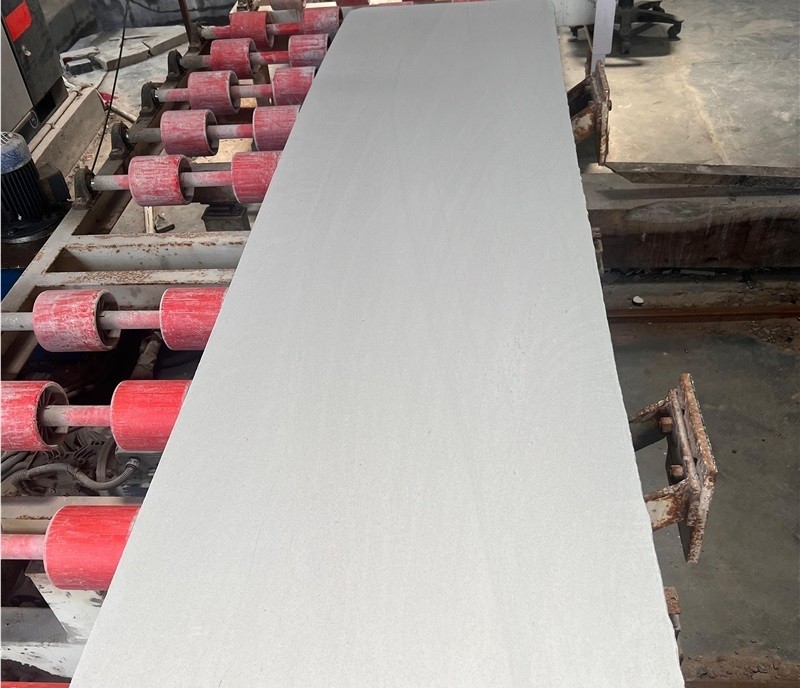
Limestone Slabs Supplier & Exporter for Europe & the Middle East Region
Natural limestone slabs bring subtle, soft tones and unique sediment textures to architectural projects across Europe, the Gulf (GCC) region, and the Middle East. At BBV Impex, we supply and export natural limestone slabs in a broad palette of beige, cream, sand, grey, blue-grey, black, white, yellow, gold etc. Whether you are specifying materials for interior residential floors, feature walls, hotel bathrooms, or exterior paving, our team provides cut-to-size fabrication, bundle packing, and pre-shipment slab inspection. Request a quote today for your project requirements or order samples to review colours and finishes in person.
Limestone Slabs by Colour and Finish
Limestone offers a natural, muted aesthetic characterized by soft background tones, delicate veining, and organic fossil details. We export a comprehensive range of colour categories tailored for international trade.
Beige and Cream Limestone Slabs
Beige and cream limestone slabs—including Moca White limestone—provide warm, neutral bases popular for indoor living area floors, hotel lobbies, and bathroom walls. These stones feature soft linear layering, occasional shell prints, and fine grain structures that reflect natural light evenly.
Grey and Blue-Grey Limestone Slabs
Grey and blue-grey limestone slabs offer contemporary coolness with subtle movement and fine fossil distributions. They are frequently specified for exterior wall cladding, modern villa flooring, and commercial reception spaces requiring a understated surface.
Black Limestone Slabs
Black limestone slabs deliver deep, dark backgrounds with subtle charcoal shading and occasional white calcite lines. Used widely for interior feature walls, steps, and outdoor paving, these slabs develop a rich character over time when finished correctly.
White Limestone Slabs
White limestone slabs present clean, bright backgrounds with light organic flecks and subtle clouding. They are ideal for luxurious wall cladding, bathroom vanities, and low-traffic interior flooring projects seeking a bright, open feel.
Yellow and Gold Limestone Slabs
Yellow and gold limestone slabs provide rich, sunny tones with distinct grain patterns and clay movement. These slabs add warmth to traditional or Mediterranean-style paving, pool surrounds, and decorative cladding features.
| Stone Variety / Colour | Natural Features | Finishes Available | Recommended Applications | Key Limits |
| Beige & Cream | Fossils, fine shells, light clouding | Honed, Brushed, Tumbled, Sandblasted | Interior floors, wall cladding, vanities | Sensitive to acidic liquids |
| Moca White | Parallel grain lines, uniform tone | Honed, Brushed, Polished, Sandblasted | Exterior facades, interior walls, flooring | Requires lot matching for grain direction |
| Grey & Blue-Grey | Subtle veining, calcite points, fossils | Honed, Bush-Hammered, Flamed, Antique | Villa floors, wall cladding, patios | May show water marks before sealing |
| Black | Charcoal base, subtle white veining | Honed, Brushed, Tumbled, Antique | Feature walls, steps, outdoor paving | Can fade slightly in direct sun if unsealed |
| White | Light organic flecks, soft clouding | Honed, Polished, Brushed | Wall cladding, bathroom walls, low-traffic floors | Higher susceptibility to surface staining |
| Yellow & Gold | Warm grain lines, clay movement | Tumbled, Bush-Hammered, Sandblasted | Pool surrounds, patio paving, facades | Texture can trap dirt if unsealed outdoor |
What Is Limestone, and Why Do Limestone Slabs Vary So Much?
Limestone is a natural sedimentary rock composed primarily of calcium carbonate (CaCO3). It forms over millions of years through the accumulation and compaction of organic marine debris, such as shells, coral, and micro-fossils, or through chemical precipitation in aquatic environments. Because of its organic formation process, limestone displays natural variation in density, grain structure, and absorption across different geological deposits.
Two limestone slabs with similar colour tones can perform differently under daily wear. Fine-grained, dense limestones withstand heavy foot traffic and outdoor weathering relatively well, whereas softer, more porous varieties are better suited for vertical interior cladding or low-traffic areas. Buyers should evaluate the technical properties of the specific stone rather than relying solely on the broad term “limestone.”
Trade terminology also varies across global markets. Some hard limestones capable of taking a gloss finish are commercially offered as “marble,” though geologically they remain sedimentary stone. Conversely, travertine is technically a specialized form of limestone formed by freshwater hot springs. For projects requiring distinct geological properties, you can explore our marble slabs to compare material specifications.
How to Choose the Right Limestone Slabs
Selecting the ideal limestone slab involves balancing visual preferences with physical performance requirements.
Stone Type, Density, and Absorption
Density and water absorption vary between quarry sources. Dense limestone varieties absorb less water and resist wear effectively, making them suitable for outdoor paving and high-traffic floors. Porous limestones require careful consideration when specified for wet rooms or exterior locations in freezing climates. Always request technical test reports for the specific stone batch before confirming material selections.
Colour, Shells, Fossils, and Natural Variation
Natural features like shells, marine fossils, subtle veining, clay lines, and tiny surface pits are authentic characteristics of sedimentary stone. These are not defects, but intrinsic elements that define the stone’s appearance. To ensure visual consistency, approve physical samples and request current slab photos from the production lot. Ordering all slabs for a single project from the same block or lot minimizes shade variations.
Finish Selection
The chosen finish affects appearance, tactile feel, slip resistance, and maintenance requirements:
- Honed: Smooth matte finish; ideal for interior floors and wall cladding.
- Brushed: Softly textured surface that highlights grain structure and hides minor wear.
- Tumbled / Antique: Aged, rounded edges and weathered texture suited for rustic paving.
- Sandblasted / Bush-Hammered: Heavy anti-slip textures designed for exterior paving and pool surrounds.
- Polished: Semi-gloss surface suited for interior feature walls; highlights colour depth.
Thickness, Size, and Format
Standard slab thicknesses are usually 20 mm and 30 mm, though custom thicknesses can be processed upon request. Slabs provide fabricators with full flexibility for seamless worktops, cut-to-size cladding panels, stair treads, and pool coping. Where full slabs are not required, modular tiles, pavers, or cut-to-size pieces can be produced to match project specifications.
Filling and Factory Treatments
Depending on buyer preferences and project needs, limestone slabs can be supplied unfilled, filled with colour-matched resin, pre-sealed, or impregnated at the factory. Factory treatments are neither inherently good nor bad; filled surfaces provide a smoother finish for indoor floors, while unfilled or textured slabs preserve natural outdoor grip.
What Affects the Price of Limestone Slabs?
Pricing per square metre depends on several key variables:
- Rareness of the stone variety and block consistency.
- Slab dimensions and thickness (e.g., 20 mm vs. 30 mm).
- Applied surface finishes (e.g., bush-hammered vs. honed).
- Wastage during cut-to-size fabrication.
- Export crating, freight costs, marine insurance, import duties, and local VAT.
Limestone vs. Marble vs. Travertine vs. Sandstone vs. Porcelain Slabs
Comparing surface options helps clarify performance characteristics across typical residential and commercial settings.
| Material | Look & Variation | Porosity & Absorption | Acid Sensitivity | Outdoor & Frost Suitability | Primary Applications |
| Limestone | Soft, earthy, fine grain with shells/fossils | Low to High (varies by stone) | High (calcium-based) | Varies by stone density & absorption | Interior floors, cladding, paving |
| Marble | Distinct veining, crystalline lustre | Low to Medium | High (calcium-based) | Moderate (varies by stone) | Interior floors, vanities, features |
| Travertine | Pitted texture, linear bands | Medium to High (when unfilled) | High (calcium-based) | High (when correctly specified) | Paving, wall cladding, bathrooms |
| Sandstone | Granular texture, distinct bedding | Medium to High | Low (silica-based) | High | Exterior paving, landscaping |
| Porcelain | Printed patterns, uniform finish | Very Low ($<0.5\%$) | Inert to household acids | High | High-traffic, low-maintenance areas |
Best Uses for Limestone Slabs
Indoor Flooring
Honed or brushed limestone slabs create clean, seamless indoor floors for living areas, hotel lobbies, and corridors. Their low-reflectivity surface diffuses light smoothly. Because limestone is calcium-based, spills from acidic substances should be wiped up promptly to prevent surface etching.
Wall Cladding and Feature Walls
Limestone cladding panels add depth and organic texture to interior feature walls and exterior facades. Slab weight and structural fixing methods must be verified with the project engineer, as building codes and facade fixing requirements vary across European and Middle Eastern regions.
Bathrooms, Hammams, and Spas
The muted tones of limestone suit wet rooms, spa facilities, and traditional hammams. Selecting slip-resistant finishes like brushed or honed surfaces improves safety underfoot. Slabs used in wet zones require appropriate impregnating sealers to manage water exposure and soap scum build-up.
Stairs, Fireplaces, and Windowsills
Cut-to-size limestone slabs provide clean edges for stair treads, bullnosed risers, fireplace surrounds, and interior windowsills. Fabricators can apply edge profiles such as full bullnose, half bullnose, or pencil edge to suit the interior design theme.
Patios, Paving, and Pool Surrounds
Textured finishes—such as sandblasted, bush-hammered, or tumbled limestone—provide necessary slip resistance for outdoor patios, walkways, and pool decks. While limestone performs well in warm environments, pool chemicals and salts require proper maintenance and sealing to protect the surface over time.
Facades and Exterior Cladding
Thick limestone slabs installed as ventilated facades offer thermal insulation support and weathered durability. Suitability depends on the stone’s water absorption levels, local frost cycles, and the engineered mechanical fixing system.
Kitchen Worktops and Vanity Tops (Considerations)
While limestone vanity tops are common in residential bathrooms, kitchen worktops demand extra care. Acidic liquids like lemon juice, vinegar, and wine cause instant etching on raw calcium carbonate. For busy kitchens, daily maintenance expectations should be evaluated before installation.
Limestone Slabs in Hot, Cold, Coastal, and Wet Climates
Gulf and Hot Climates (GCC Region)
In heat-intensive environments across the UAE, Saudi Arabia, Qatar, and the wider GCC, exterior natural stone surfaces endure strong sun exposure, ambient heat, sand abrasion, and coastal air salinity. Light-coloured limestone slabs (beige, sand, cream) naturally maintain lower surface temperatures underfoot compared to darker stones. However, windblown sand can wear unsealed surfaces, and airborne sea salts in coastal areas can enter porous stones if left unsealed.
Europe and Cold Climates
In Northern and Central Europe, exterior limestone installations face freeze-thaw cycles. Water trapped inside porous stone expands when frozen, potentially causing spalling or surface micro-cracking over time. Outdoor paving or cladding in cold zones requires dense limestone options with documented low water absorption figures.
Pools, Wet Areas, and Underfloor Heating
Limestone slabs conduct heat efficiently, making them compatible with indoor underfloor heating systems when installed with appropriate expansion joints. In wet pool environments, non-slip textured finishes should be selected, and compatibility with salt-water chlorination systems should be verified prior to installation.
How to Check Quality, Test Reports, and Documents Before You Buy
Inspecting the Slabs
Prior to shipment, buyers should request high-resolution photographs and videos of the specific slab bundle or lot. Inspect photos for natural variation, structural cracks, excessive clay lines, deep surface pits, and edge chipping caused during handling. Ensure the production lot matches the approved control sample in shade and character.
Fillers and Factory Treatments
Ask your supplier whether the slabs are supplied in their natural state, resin-filled, or pre-impregnated. Factory fills should be flush with the slab surface without pinholes or air pockets.
Technical Test Reports
International commercial projects often require validated test reports covering key physical metrics:
- Water Absorption ($EN\ 13755 / ASTM\ C97$)
- Flexural Strength ($EN\ 12372 / ASTM\ C880$)
- Apparent Density ($EN\ 1936$)
- Slip Resistance ($EN\ 14231$)
Confirm which specific test certificates are available for your chosen stone batch.
Origin and Material Naming
Because trade names are sometimes applied to stones from different quarries, confirm the precise geographical origin and lot number with your supplier to ensure consistency across multi-phase construction projects.
Inspection on Arrival
Upon delivery:
- Inspect crates and bundles before signing transport documentation.
- Record any transit damage or chipped slab edges immediately on the consignment note.
- Store slabs vertically on sturdy A-frames in a dry area protected from ground moisture, rain, and site debris.
Installing, Sealing, and Caring for Limestone Slabs
Installation Basics
Install limestone slabs using an experienced natural stone contractor. Use white, polymer-modified cement adhesives formulated specifically for natural stone to prevent dark adhesive show-through on light-coloured slabs. Substrates must be clean, flat, fully cured, and structurally sound.
Sealing Guidelines
Most limestone surfaces benefit from a high-quality, breathable impregnating sealer. Impregnating sealers penetrate into the pore structure to repel water and oil-based stains without altering the natural surface finish or trapping internal moisture. Always test any sealer on a spare off-cut before full application.
Daily Care & Cleaning
- Clean regularly using pH-neutral natural stone cleaners and clear water.
- Avoid acidic cleaners, bleach, vinegar, scale removers, and abrasive pads.
- Wipe up spills immediately, particularly acidic liquids like citrus juice, wine, and coffee.
- Use entry mats at exterior doorways to trap abrasive sand and dirt grit.
Understanding Etching vs. Staining
- Etching: A chemical reaction where acid dulls or alters the surface of calcium carbonate stone. Etching is a surface change, not a stain.
- Staining: Discolouration caused by dark liquids absorbing into unsealed pores.
Minor marks on honed or brushed surfaces can often be restored by qualified stone restoration professionals using mild polishing pads.
Safety Note for Fabricators
Cutting, grinding, or edge-profiling dry natural stone generates airborne dust containing crystalline silica. Fabricators should utilize wet-cutting machinery, localized dust extraction systems, and certified respiratory protection (P3 / N95) in compliance with local workplace safety regulations.
Shipping Limestone Slabs to Europe and the Middle East
BBV Impex exports natural limestone slabs directly to international ports across Europe, the UAE, Saudi Arabia, Qatar, and the wider Middle East.
Packaging & Protection
Slabs are bundled securely into heavy-duty fumigated wooden crates lined with protective plastic sheets and corner foam guards. Bundles are braced inside 20-foot heavy-duty containers to prevent movement during sea freight.
Payment & Trade Terms
To maintain secure international transactions, we offer globally recognized trade terms:
- Advance Payment / TT: Partial advance deposit to confirm production, with the balance cleared prior to shipment via SWIFT / Telegraphic Transfer.
- Letter of Credit (L/C): Irrevocable Letter of Credit at sight through tier-one banking channels for large volume and container-load contracts.
- Incoterms Offered: FOB, CIF, DAP based on buyer preference.
Export Documentation
Every shipment includes full trade documentation for smooth customs clearance:
- Commercial Invoice & Packing List
- Bill of Lading (BL)
- Certificate of Origin
- Fumigation Certificate for wooden packaging
Buyers should confirm specific import duty rates, local VAT requirements, and port handling charges with their local customs broker or freight agent.
FAQs
What are limestone slabs used for?
Limestone slabs are used for indoor flooring, wall cladding, bathroom vanities, stair treads, fireplace surrounds, and exterior paving. Their neutral, soft aesthetic suits both contemporary residential architectures and commercial hospitality spaces across Europe and the Middle East.
Is limestone the same as marble or travertine?
No. While all three are sedimentary or metamorphic calcium carbonate stones, they form under different geological conditions. Travertine forms in hot springs and features natural voids, while marble is limestone that has undergone extreme heat and pressure. Hard limestone is sometimes commercially classified as marble.
Which limestone finish is best for flooring vs wet areas?
Honed and brushed finishes are ideal for indoor living area floors due to their smooth, matte appearance. For wet areas, outdoor paving, and pool surrounds, heavily textured finishes like bush-hammered, sandblasted, or tumbled provide improved slip resistance.
Ready to Source Limestone Slabs for Your Project?
Whether you are sourcing material for a luxury private villa, a commercial hotel development, or wholesale distribution, BBV Impex supplies high-grade limestone slabs tailored to your technical requirements.
Request a Custom Quote – Send us your project dimensions, required finishes, and target destination for a competitive export quote.