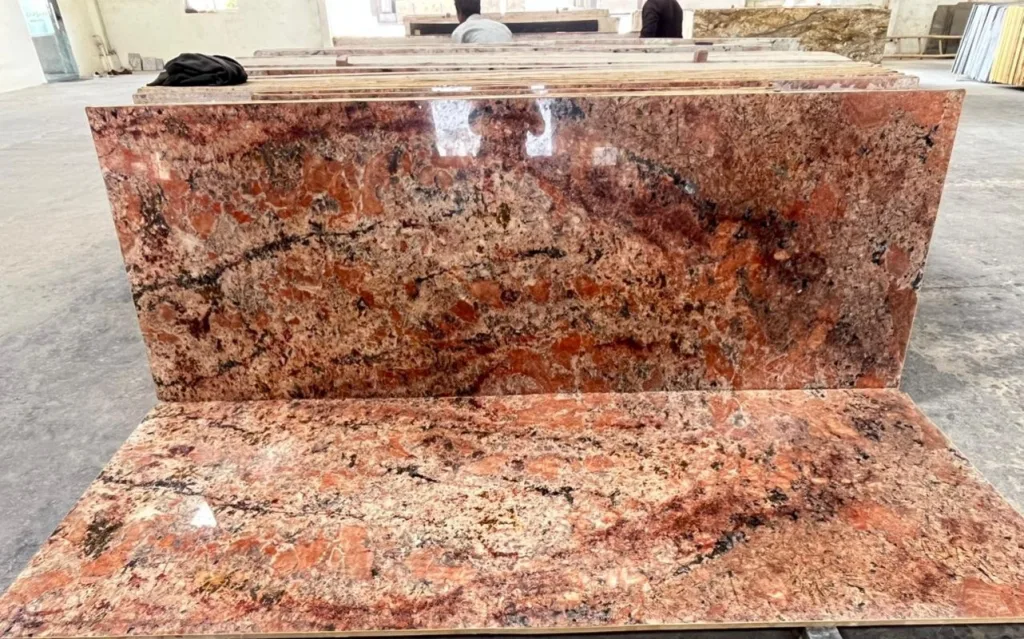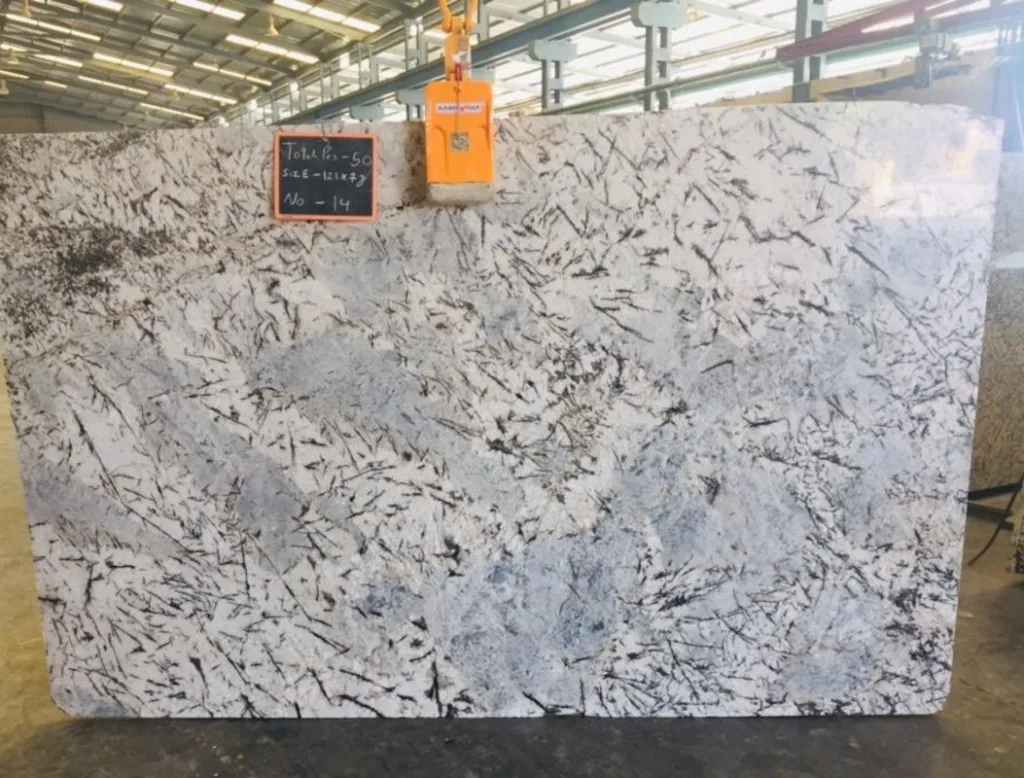
Named directly after the Kuppam region of Andhra Pradesh where it is quarried, this stone carries notable variation in colour and veining even between blocks extracted from the same quarry — a characteristic that defines the individuality of each slab. The light grey-green ground is marked by shifting clouds of darker and lighter tones, drawing a structural parallel with Viscount White Granite in terms of texture and surface behaviour. Petrologically, the stone is classified as a gneiss of the Precambrian period under European standards, distinguished by its flaser texture— a geological detail that speaks to both its age and its enduring surface hardness.


Kuppam Green Granite
Kuppam Green Granite is a premium natural stone from India, known for its rich green color with subtle black and white speckles. Ideal for kitchen countertops, flooring, bathroom vanities, wall cladding, and exterior applications, it offers outstanding durability and timeless beauty. Available in slabs and tiles, BBV Impex supplies and exports high-quality Kuppam Green Granite,…