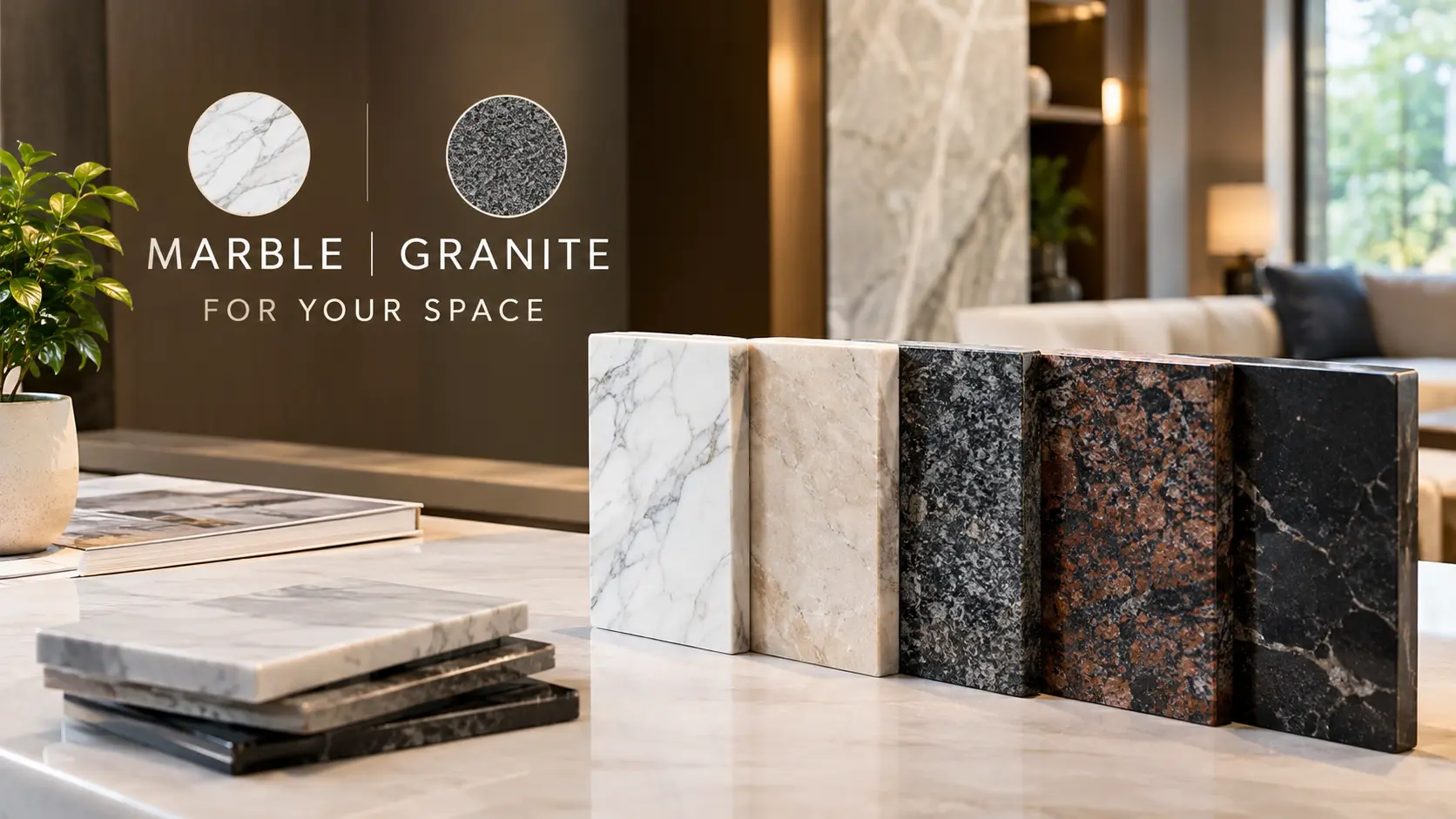

Many building projects start with a striking architectural photograph and end with an expensive, permanent compromise. Deciding between a visually soft, veined stone and a dense, granular one often happens on looks alone, and that is precisely where regret starts. Knowing how to choose the right marble or granite for your space means understanding exactly how these materials physically react to heat, moisture, heavy traffic, and daily life.
Whether you are a homeowner selecting a single slab or an architect specifying a massive commercial facade, material failures usually stem from a mismatch of stone and environment. A natural stone buying guide must look past the initial beauty of a polished surface to assess its structural reality. This practical guide will walk you through how to match the unique characteristics of quarried stone to the specific demands of your next project.
What Actually Separates Marble and Granite?
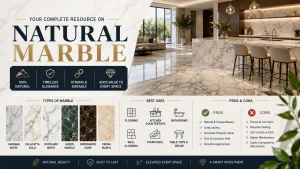
The choice between a porous stone vs hard stone comes down to mineral composition, which dictates exactly how a surface will age in your home. Marble is predominantly made of calcium carbonate, a compound that chemically reacts to acidic substances. This means an accidental spill of wine, lemon juice, or tomato sauce will etch the surface, leaving dull, rough spots that a sealer cannot prevent.
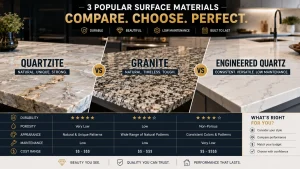
Granite, formed under intense volcanic heat, consists primarily of quartz and feldspar. This composition makes a granite slab incredibly dense, highly resistant to scratching, and immune to acidic etching. While marble maintenance requires immediate spill management and a willingness to accept a living patina, granite maintenance is generally much more forgiving in fast-paced environments.
Sizing and Workability
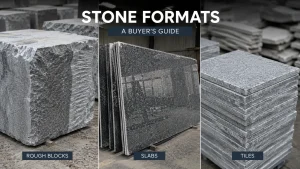
When sourcing material, the physical block size pulled from the quarry impacts your design options. Large gangsaw slabs are ideal for massive, seamless kitchen islands or continuous wall cladding. Smaller cutter slabs are highly cost-effective for bathroom vanities, staircases, or cut-to-size flooring tiles.
Your fabricator will also care deeply about the stone’s internal structure when shaping the edge profile. Highly crystalline or heavily veined imported marble requires a slower, more delicate cutting process to prevent edge chipping. Dense Indian granite takes a clean edge easily and holds its sharp geometric lines under heavy impact.
Matching the Stone to the Space
Choosing natural stone for your home or commercial project requires anticipating the specific friction, moisture, and climate conditions of each room. What works perfectly on a master bathroom wall might fail completely as an outdoor paving stone.
Kitchen Countertops and Islands
When considering marble or granite for kitchen use, you must be ruthlessly honest about your cooking habits. Granite vs marble countertops is a debate of structural durability against classic, soft aesthetics. Dense materials like Black Galaxy granite or Alaska White granite handle hot pans, sliding pots, and frequent spills without showing immediate wear.
Veined stones like Volakas marble or Indian Statuario marble look spectacular on an island, but they require a homeowner willing to treat the surface gently. If you want a soft, flowing aesthetic without the fragility, utilizing quartzite as a marble alternative—such as a Taj Mahal quartzite slab—offers superior hardness while maintaining an elegant, veined look.
Bathroom Vanity Tops and Shower Surrounds
Marble for bathroom applications is an enduring classic because these spaces see more water than harsh acids or heavy impact. A polished Ice White marble or Verde Guatemala marble adds incredible depth to a vanity top or shower surround. However, you must carefully manage moisture and specify the correct finish to ensure safety.
Using highly polished stone on a bathroom floor creates a severe slipping hazard when wet. Instead, opt for a honed or textured finish for wet-area flooring, or explore a Mosaic pattern that introduces more grout lines for natural foot traction.
Interior Flooring, Staircases, and Hallways
Identifying the best stone for flooring depends entirely on foot traffic and maintenance budgets. For a busy family home, Steel Grey granite or Colonial White granite will effortlessly hide dust, pet scratches, and daily wear. These hard materials maintain their original factory finish for decades, even in entryways.
Using a softer material like Fantasy Brown marble or Toronto Brown marble on floors provides immense character, but sand and grit tracked in from outside will eventually dull the surface. When selecting stone for high traffic areas like commercial lobbies, a polished marble floor will quickly turn matte from foot friction, making dense granite a much smarter long-term investment.
Exterior Paving, Cladding, and Monuments
Using granite for outdoor use is standard practice among contractors because environmental exposure ruthlessly destroys fragile stone. In Northern and Eastern Europe, severe freeze-thaw cycles dictate that only low-porosity materials, like an Imperial Red granite or Absolute Black granite, should be used to prevent water from expanding and cracking the stone.
In the Middle East and North Africa, intense UV rays will rapidly heat dark surfaces, meaning light-colored granite or a dense Moca White limestone is better suited for barefoot areas around pools. For memorial work and structural pillars, a dedicated Monuments grade granite provides the extreme weather resistance required to maintain crisp, legible engraving for centuries.
Statement Features and Specialty Slabs
Sometimes a material is chosen purely for its dramatic, light-manipulating properties in low-impact areas. An Onyx Marble Slab, such as Himalayan Onyx, possesses high translucency and is frequently used for backlit feature walls in upscale restaurants or living spaces. Because onyx is exceptionally soft, it should never be specified for a horizontal work surface.
If a project requires absolute uniformity, zero porosity, and a clinical white aesthetic, a Nano Glass Stone Slab or an Artificial Stone Slab can serve as an engineered stone alternative. These manufactured surfaces offer high durability for modern, minimalist environments where the natural variation of quarried stone is not desired.
The Impact of Stone Finish on Performance
The final texture applied to a stone slab fundamentally changes both its visual color and its daily functionality. A finish can either hide a material’s weaknesses or amplify them, making it a critical choice for any specifier.
Polished vs Honed Finish
A polished finish brings out the deepest colors and highest contrast in a stone’s grain or vein structure. However, a high-gloss polish on a marble surface acts like a mirror, catching the light and amplifying every single etch mark, scratch, or water spot.
Choosing a honed, matte surface diffuses light and naturally disguises these minor blemishes as the stone ages. Interestingly, a matte finish on a dark, solid material like an Indian Granite Slab hides greasy fingerprints and smudges far better than a highly polished black surface.
Leathered and Flamed Textures
Textured finishes are highly functional solutions for difficult environments. A leathered finish follows the natural contours of the stone’s softer minerals, creating a tactile surface that easily hides crumbs, water spots, and daily kitchen debris.
For exterior natural stone for commercial projects, a flamed finish is absolutely non-negotiable. Exposing a granite block to extreme heat bursts the surface crystals, creating a highly textured, slip-resistant finish essential for outdoor staircases and public plazas.
Material Recommendations by Space
| Space / Use Case | Recommended Material | Why It Works Best Here |
| Kitchen Countertop | Granite Slab or Quartzite Slab | Resists heat, scratching, and acidic etching from food prep better than reactive stones. |
| Bathroom Vanity | Marble Slab | Elegant, classic appearance; performs exceptionally well in low-impact, acid-free wet zones. |
| High-Traffic Flooring | Indian Granite Slab | Extreme density prevents foot-traffic friction from wearing down the finish or scratching the floor. |
| Exterior Facade | Imported Granite Slab | Withstands freeze-thaw cycles, heavy UV exposure, and coastal salt without degrading. |
| Backlit Feature Wall | Onyx Marble Slab | Highly translucent structure allows light transmission for dramatic, decorative focal points. |
The Natural Stone Buyer’s Checklist
Before authorizing an order or signing off on a design specification, review this practical checklist with your natural stone slab supplier:
- Assess Porosity: Determine if the stone requires heavy, frequent sealing to survive its intended environment, especially in high-humidity zones like Southeast Asia.
- Evaluate Hardness: Confirm that the material’s mineral density can withstand the specific scratching and impact risks of the room.
- Specify the Finish: Select a polished, honed, or flamed texture based on slip-resistance needs and how well it will hide daily wear.
- Acknowledge Maintenance: Ensure the end-user is actually willing to commit to the long-term upkeep required for soft, veined dimension stone.
- Check Slab Availability: Verify that enough matching blocks or gangsaw slabs are currently in stock to complete your entire cut-to-size project seamlessly.
- Align with Budget: Balance the raw material cost against fabrication difficulty, as heavily veined or fragile stones require more expensive, slower processing.
Frequently Asked Questions
Yes, but you must accept that it will inevitably etch and develop a patina from acidic foods and daily use over time.
Yes, its foundational composition of quartz and feldspar naturally makes it significantly denser and more scratch-resistant than calcium-based stones.
Yes, almost all natural stone surfaces benefit from a high-quality impregnating sealer to slow down liquid absorption, though softer stones require it more frequently.
Quartzite is an excellent quarried stone alternative that offers soft, sweeping veining alongside extreme structural hardness.
A high-gloss polish on a dark, uniform stone acts highly reflective, making natural hand oils, wet sponge streaks, and dust immediately visible.
Freezing climates require dense, low-porosity materials to prevent ice expansion cracks, while hot, sunny climates often require lighter stones to minimize extreme heat retention.
Summary and Next Steps
Choosing between marble and granite is ultimately about aligning the physical reality of a stone with the daily reality of your environment. Granite offers uncompromising durability and simple maintenance for hardworking kitchens and harsh exterior climates. Marble delivers unparalleled elegance and depth, provided it is placed in environments where it can gracefully age without being subjected to heavy abuse.
If you are ready to move past inspiration photos and make a practical material decision, we are here to help. Request physical slab samples to test against your cabinetry, share your room dimensions with us for a tailored recommendation, or ask our team for the current stock photos of your preferred color today.