
Walking into a stone yard and seeing rows of massive, beautiful slabs is exciting, but it quickly becomes overwhelming. Both materials look incredible under showroom lights, and it is easy to make a choice based purely on aesthetics. However, picking the wrong material for your specific lifestyle only becomes obvious after a year of daily use, when scratches, stains, or dull spots begin to appear.
This guide is designed to help you navigate choosing between marble and granite without the marketing fluff. We will look at how these materials actually perform in real homes, from busy kitchens with kids and pets to humid bathrooms and sun-baked outdoor patios. By understanding the physical differences between the two, you can confidently select the right marble vs granite for your home.
What Actually Separates Marble from Granite?
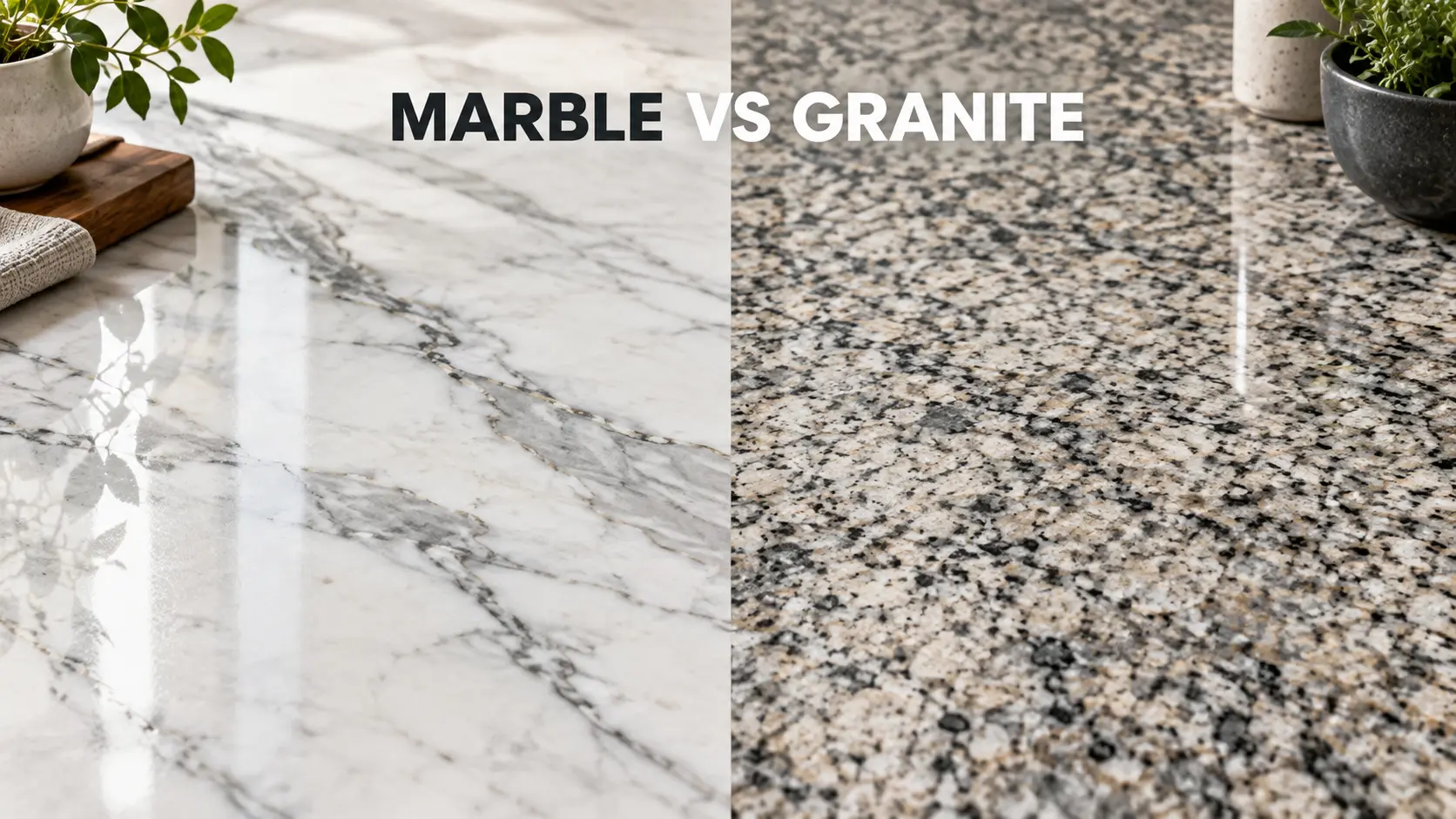
To understand how a stone will behave in your house, you have to look at how the earth made it. Granite is an igneous rock, forged from volcanic magma cooling deep underground under immense pressure. This violent geological birth creates a densely packed material rich in quartz and feldspar, which gives it incredible natural hardness and stability.
Marble, on the other hand, is a metamorphic rock that started its life as limestone before being transformed by heat and pressure. Its primary component is calcium carbonate, the exact same mineral found in chalk and antacids. This chemical makeup is the root of marble’s unique vulnerability, as calcium carbonate reacts instantly when it comes into contact with acidic substances.
The porosity of natural stone also differs significantly between the two materials. While all quarried stone has some degree of microscopic open space, granite is generally much denser and less porous than marble. This means a liquid left on the surface of a Marble Slab will seep into the stone much faster than it would on a Granite Slab, making the initial choice critical depending on where the stone will be installed.
Day-to-Day Performance: How Each Stone Handles Real Life
Dealing with Heat and Scratching
When evaluating the durability of granite vs marble, you have to look at physical wear and tear. Because granite is so dense, it easily handles the impact of daily life, meaning you can slide heavy cast-iron skillets or drop keys on it without much worry. A dark, hard material like Absolute Black granite is notoriously difficult to scratch, even if you deliberately tried with a steel knife.
Marble is a softer architectural stone that will show physical wear over time, especially in high-traffic zones. Sliding rough ceramics across a marble surface or dropping a heavy mug can leave physical scratches or small chips. For this reason, homeowners who choose marble must be comfortable with the material developing a natural patina of slight wear over the decades.
Heat resistance is a strong point for natural stone in general, but granite performs better under extreme, direct temperatures. You can typically set a hot baking sheet directly on a granite surface without causing damage or thermal shock. While marble is also heat resistant, exposing it to sudden, intense heat can occasionally cause discoloration or micro-fissures, so using trivets remains a smart habit.
Understanding Stains and Etching
Staining happens when a liquid penetrates the pores of the stone and leaves a dark mark behind. Both materials can stain if a spill like red wine or coffee is left sitting overnight, but granite gives you a much longer window to wipe it up. Sealing your stone significantly slows down this absorption process, but it does not make the material waterproof.
Etching is an entirely different problem, and it is the single most important factor when considering marble vs granite countertops. When an acidic liquid like lemon juice, tomato sauce, or vinegar touches marble, it physically dissolves the top microscopic layer of the stone. This leaves a dull, whitish watermark that cannot be cleaned away, because the stone itself has been chemically altered.
Granite does not contain calcium carbonate, so it does not etch when exposed to normal household acids. You can slice lemons directly on a Kashmir White granite counter all day, and the surface will not react or dull. This fundamental chemical difference is why many stone professionals steer heavy cooks away from marble for primary prep zones.
Room-by-Room Recommendations (Where to Put What)
Kitchen Countertops and Islands
The kitchen is the hardest working room in the house, facing daily spills, sharp knives, hot pans, and heavy traffic. When deciding on marble or granite for kitchen spaces, granite is almost always the more practical choice for a busy household. Materials like Steel Grey or Tan Brown will survive years of family dinners and chaotic holiday cooking with minimal fuss.
If you absolutely love the look of marble, consider using it selectively rather than across every surface. Many homeowners put a hardworking granite around the perimeter where the messy cooking happens, and reserve a striking Indian Statuario marble for the central island. You just have to accept that the island will require more careful use and immediate wiping of spills.
Ultimately, the best stone for kitchen countertops is the one that fits your tolerance for imperfection. If the sight of a dull etch mark from a spilled margarita will bother you, stick to granite.
Bathroom Vanity Tops and Shower Walls
Bathrooms present a different set of challenges, primarily continuous moisture, humidity, and chemical exposure from cosmetics. A marble vs granite bathroom debate usually leans toward marble, simply because bathrooms see less acidic food use and benefit from the bright, clean aesthetic of lighter stones. A classic Volakas marble vanity brings a tremendous sense of calm to a master bathroom.
However, you still need to be mindful of what you leave on the counter. Toothpaste, certain face washes, and perfumes can contain mild acids that will etch a polished marble vanity top if left sitting. If you have a chaotic shared family bathroom where things are constantly spilled, a durable Indian Granite Slab might save you from constant stressing.
For shower walls, both materials perform beautifully provided they are properly sealed to prevent water absorption. Large format marble slabs in a shower eliminate grout lines and look incredible, but require squeegeeing down after use to prevent hard water mineral buildup.
Living Room Flooring and Hallways
When choosing marble vs granite flooring, you must factor in the dirt and grit tracked in from the outside. Sand acts like sandpaper under your shoes, which will slowly dull the finish of a marble floor in high-traffic hallways. If you use a softer material like Spider Green marble, placing high-quality rugs at entryways is essential to protect the stone.
Granite flooring is virtually indestructible and handles grit, pet claws, and heavy foot traffic effortlessly. The trade-off is that granite can feel visually heavy and cold across a large living room, whereas marble naturally reflects light and brightens a space. For homes in warmer climates like the Middle East or Southeast Asia, the cool touch of a sprawling marble floor is often highly desirable.
Outdoor Patios, Steps, and Pool Surrounds
Outdoor applications test natural stone against direct UV sunlight, freezing temperatures, and standing water. Granite for outdoor use is the undisputed champion, as its density prevents water from seeping in and cracking the stone during freeze-thaw cycles. A lighter colored option like Colonial White is ideal for pool surrounds because it stays relatively cool under the summer sun.
Using marble outdoors is riskier and heavily dependent on your local climate. Rainwater is naturally slightly acidic, meaning an outdoor marble patio will slowly lose its finish and take on a weathered, antiqued look over time. If you want a softer, matte aesthetic outside, you might also look at a Limestone Slab like Moca White, though it will require significant upkeep in a wet environment.
Fireplace Surrounds and Feature Walls
Vertical applications like feature walls and fireplaces are where you can choose purely based on aesthetics, as the stone won’t face foot traffic or acidic spills. This is the perfect place to showcase a dramatic, heavily veined Imported Marble Slab. Book-matching two slabs of Fantasy Brown above a fireplace creates a piece of natural art that anchors the entire room.
Granite also works beautifully for contemporary fireplace surrounds, particularly when you want a dark, moody anchor. A material like Black Galaxy offers deep, rich tones with natural copper flecks that catch the light of the fire. Because heat from a standard residential fireplace is well within the tolerance of both stones, your decision here is strictly about the design.
Room-by-Room Decision Matrix
| Room / Application | Recommendation | Why This Works Best |
| Kitchen Perimeter | Granite | Handles heavy prep work, acidic spills, and hot pans without etching. |
| Kitchen Island | Depends | Marble is beautiful here, but only if you accept etching and wipe spills instantly. |
| Bathroom Vanity | Marble | Brightens the space and faces fewer food-related acid threats, though watch your cosmetics. |
| Indoor Flooring | Depends | Granite survives heavy grit better, but marble offers superior light reflection and aesthetic flow. |
| Outdoor Patios | Granite | Dense enough to survive freeze-thaw cycles and ignores naturally acidic rainwater. |
| Feature Walls | Marble | Zero foot traffic and no spills allow you to safely use dramatic, highly veined stones. |
How Finishes Change the Game: Polished vs Honed and Leathered
The way a stone is finished at the factory completely changes both how it looks and how it behaves in your home. A polished finish features a high-gloss, reflective surface that makes the colors pop and the stone completely smooth. While polish closes the pores slightly to help resist stains, it also highlights every single fingerprint, dust particle, and etch mark.
A honed finish is a matte, smooth surface with no reflection. Comparing a polished vs honed finish, honed is much more forgiving for daily life because it hides existing scratches and etching incredibly well. If you are set on having marble in your kitchen, ordering it honed is the best way to ensure the inevitable etch marks blend into the surface rather than standing out as dull spots.
Leathered finishes take honing a step further by adding a subtle physical texture to the stone, following its natural contours. This finish is exceptionally good at hiding crumbs, water spots, and fingerprints, making it popular for dark granites used in active homes. A leathered dark granite offers a modern, tactile feel while being one of the lowest-maintenance surfaces you can install.
Realistic Maintenance for Natural Stone
No natural material for home use is entirely maintenance-free, but caring for them is not as difficult as rumors suggest. Granite maintenance is generally as simple as wiping the counters with warm water and a few drops of dish soap. You should never use harsh bathroom cleaners, bleach, or acidic glass cleaners on any natural stone, as they will strip the protective sealer away.
Marble maintenance requires a bit more vigilance, mostly in how quickly you respond to messes. Spills must be wiped up immediately, and you should use coasters under drinks and cutting boards for all food prep. Using a dedicated, pH-neutral stone cleaner is mandatory for marble to prevent accidental dulling of the finish.
Sealing is an ongoing requirement for both materials, though the frequency depends on the specific stone and how heavily the surface is used. Think of sealer as a temporary shield that buys you time to wipe up a spill before it penetrates the stone.
Maintenance Comparison
| Task | Granite | Marble |
| Daily Cleaning | Warm water and mild dish soap. | Strictly pH-neutral stone cleaners only. |
| Spill Reaction | Forgiving; you have time to wipe up wine or coffee. | Immediate action required, especially for acids like citrus or vinegar. |
| Sealing Frequency | Typically every 1 to 3 years. | Typically every 6 to 12 months, depending on porosity. |
| Scratch Prevention | Minimal; handles sliding pans and keys easily. | Use cutting boards, avoid dragging heavy ceramics or raw metals. |
Beyond Marble and Granite: Is Quartzite a Better Alternative?
If you love the sweeping veins of marble but need the bulletproof durability of granite, you need to look at a Quartzite Slab. Quartzite is a naturally occurring metamorphic rock that formed from pure quartz sandstone. It offers the soft, flowing colors typically associated with marble, but it is actually denser and harder than most granites.
Using quartzite as a marble alternative solves the etching problem entirely. Materials like Taj Mahal or Cristallo will not react to lemon juice or wine, and they will not scratch under normal kitchen use. You get the bright, luxurious aesthetic of a high-end white marble without having to police your family’s every move in the kitchen.
The trade-off with quartzite is cost and fabrication difficulty. Because it is so incredibly hard, it takes fabricators more time and specialized blades to cut, which drives up the installation price. However, for homeowners who want zero compromises on aesthetics and performance, quartzite is often the perfect middle ground.
Budget and Availability Considerations
Pricing for quarried stone fluctuates wildly based on where it comes from, how rare the color is, and current shipping costs. Generally speaking, a standard Indian Marble Slab or granite will be more accessible and budget-friendly because of steady local supply chains. When you look at an Imported Granite Slab like Blue Bahia from Brazil, the price rises significantly due to transport and the rarity of the vivid blue minerals.
Rarity dictates price far more than the durability of the material itself. A fragile, highly porous exotic marble might cost five times as much as a bulletproof, builder-grade granite simply because the marble is only found in one small mountain in Italy. When planning your budget, remember to factor in the fabrication and installation costs, which often equal or exceed the cost of the raw slabs.
Frequently Asked Questions
Yes, granite needs to be sealed to prevent liquids from absorbing into the pores and causing dark stains. Most experts recommend resealing every one to three years, but you can test your counter by dripping water on it; if the water darkens the stone instead of beading up, it is time to reseal.
You should avoid putting hot pans directly on marble to prevent thermal shock and potential discoloration. While it is heat resistant, the sudden temperature change from a scorching cast-iron pan can cause micro-cracks in the surface.
Quartzite is a 100% natural quarried stone, while a Quartz Slab is an engineered material made by mixing crushed stone dust with plastic resins. Quartzite handles outdoor UV light and extreme heat perfectly, whereas the resin in engineered quartz can scorch under hot pans and turn yellow in direct sunlight.
No, lemon juice will not ruin or etch granite because granite does not contain the calcium minerals that react with acids. You can safely prepare acidic foods on granite without worrying about the dull watermarks that plague marble.
Yes, professional stone restorers can fix etch marks by physically polishing the top microscopic layer of the stone until it is even again. For minor etches on a polished surface, you can sometimes use specialized marble polishing powders by hand, but deep etches require professional tools.
No, pricing depends entirely on the rarity of the specific stone rather than the category. A rare, exotic granite will easily cost more than a plentiful, standard commercial marble.
Light stones can turn yellow if they absorb water that contains iron, causing the stone to literally rust from the inside out. Yellowing can also be caused by a buildup of cheap wax-based sealers or improper cleaning chemicals leaving a residue.
Your Final Decision Framework
Choosing a natural stone slab supplier and picking the perfect material comes down to a brutally honest assessment of how you live. If you want a kitchen that you can cook heavily in, spill wine in, and let kids run wild in without stressing, granite is the clear winner. If you are designing a tranquil master bathroom, a low-traffic feature wall, or you are a homeowner who finds the natural, worn patina of old-world cafes charming, marble will give you an unmatched aesthetic.
The best way to finalize your decision is to see and feel the materials in person. Request slab samples for the specific room you are renovating, and test them at home with your own lighting and a few drops of water or vinegar. If you are ready to move forward, contact our team with your room dimensions for a personalized recommendation, or ask about our current stock in your preferred color to start planning your build today.