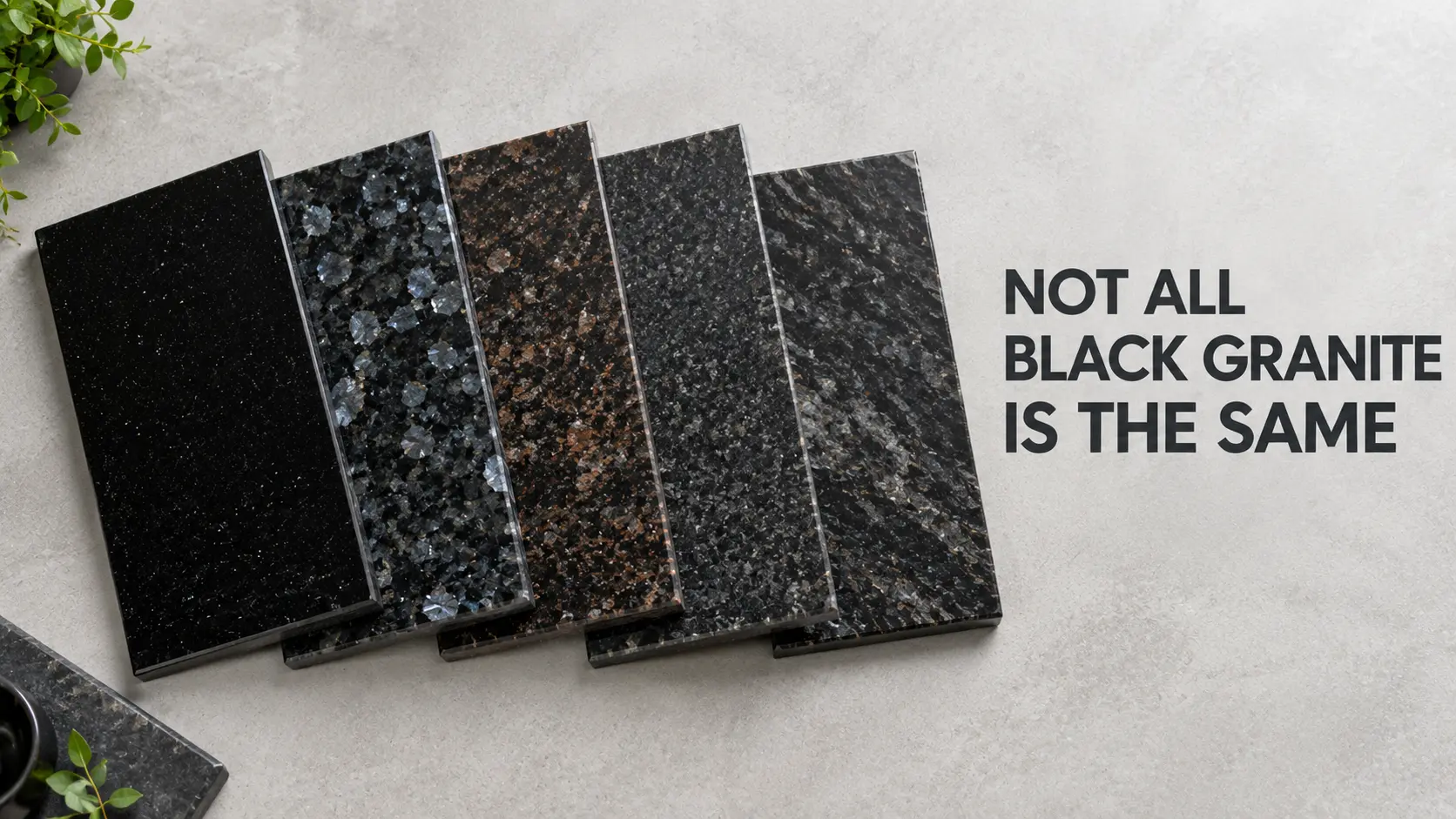

In showroom displays and lighting-adjusted digital catalogs, dark natural stones often appear virtually identical. Once installed under direct natural light or focused overhead task lighting, subtle differences in mineral structure, background tone, and crystal density become immediately noticeable.
Absolute Black Granite remains the global benchmark for deep, uniform dark natural stone across commercial and residential architecture. Choosing the right material for large-scale developments, custom interiors, or memorial carving requires understanding how this pure stone differs from speckled, veined, and near-black alternatives.
What Sets Absolute Black Granite Apart from Other Dark Stones?
Geologically classified as a fine-grained gabbro or norite rather than a true alkali granite, this igneous stone lacks the prominent quartz and feldspar variations seen in lighter natural stones. This unique mineral arrangement creates a dense, solid obsidian matrix virtually free of veining, directional movement, or high-contrast flecks.
Whether viewed from twenty feet away or two inches from the face, high-grade material maintains its consistent pitch-black appearance. Fabricators prefer working with fine-grained Indian granite slab stock because invisible seams are significantly easier to achieve across large gangsaw slab layouts.
Mineral Composition and Grain Microstructure
The tight interlocking structure of pyroxene and plagioclase minerals gives the material its exceptional physical density and low porosity. Fine grain sizes produce a darker visual field and allow the stone to accept a mirror-like shine during slab processing.
Coarser grains found in secondary grades can introduce faint charcoal undertones or tiny reflective crystals under bright lighting. Architects specifying stone for high-end retail floors, hotel lobbies, or executive boardrooms often require strict grain consistency to ensure an unbroken monochromatic field.
Comparing Absolute Black Granite to Other Black Granites
While pure dark stone provides clean uniformity, other dark options bring distinct visual texture, copper or metallic flecks, and sweeping veined movement. Selecting between them comes down to whether your project requires a quiet, solid foundation or a dramatic visual focal point.
Metallic Flecked and Speckled Variations
Black Galaxy Granite contains distinct bronzite crystals embedded in a dark matrix, producing bright golden and copper reflective flecks. Unlike solid dark material, its visual character relies entirely on light bouncing off these metallic inclusions.
G20 Bengal Black Granite features a highly durable, dark charcoal background dotted with small, evenly distributed grey micro-granules. It offers an economical, resilient alternative for extensive commercial flooring runs where solid black is not strictly required.
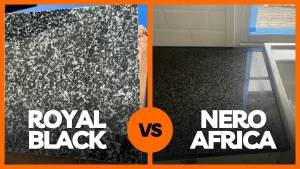
Royal Black M13 Granite displays a deep black foundation accented by tight, dark grey speckling throughout the slab. This fine-textured patterning helps disguise light surface dust and footprints better than solid black stone in busy public spaces.
Veined, Flowing, and Textured Alternatives
Titanium Black Granite delivers bold visual drama with sweeping white, ivory, and gold quartz veins traversing a dark background. Designers select this stone specifically for feature walls and waterfall islands where organic movement takes center stage.
Black Forest / Silver Waves Granite exhibits intense, swirling white and silver bands flowing across a pitch-black background. Fabricators must plan shop drawings and bookmatching carefully during layout to maintain pattern continuity across wall cladding panels.
Ash Black Granite and Thai Black Granite provide muted, dark grey to charcoal bases with soft, smoky undertones. These materials suit contemporary minimalist projects that call for a softer visual transition than pitch-black stone.
Nero Africa Impala Granite features a classic salt-and-pepper micro-pattern made of dark grey, black, and silver crystals. Its balanced grain distribution offers outstanding durability for high-traffic commercial flooring and exterior paving.
Dark Stones with Blue and Grey Undertones
Several widely used dark stones read as black in low lighting but reveal cool grey or iridescent blue tones under direct illumination. Fabricators frequently recommend these when budgets or design palettes prefer softer charcoal tones.
Steel Grey Granite displays a mid-to-dark grey background filled with varying tonal flecks and mineral structure. It creates a soft contrast against light cabinetry while concealing everyday fingerprints exceptionally well.
Volga Blue Granite presents a dark grey-black matrix enriched by shimmering labradorescent blue feldspar inclusions. Similarly, Emerald Pearl Granite exhibits deep green-black depths highlighted by reflective turquoise crystals.
Vizag Blue Granite features dynamic bluish-grey veining and swirling movement across a dark slate background. These materials serve as distinctive options for projects seeking optical depth rather than pure monochromatic dark tones.
Surface Finishes and Their Impact on Color Depth
Factory surface processing alters light reflection, dramatically changing how dark any natural stone slab appears in an installed space. Understanding these finish variations prevents unexpected shade discrepancies between approved control samples and delivered site materials.
Polished Finish
A full polish pass smooths the slab face, darkening the material and magnifying its natural color depth. On fine-grained dark stone, polishing produces a reflective, mirror-like gloss that enhances contrast against surrounding lighter finishes.
However, high-gloss dark surfaces reflect direct light sources and show fingerprints, dust, and water spots quickly. Kitchen island tops and reception counters in this finish require periodic microfiber cleaning to maintain an immaculate appearance.
Honed and Leathered Finishes
A honed finish creates a smooth, matte texture by stopping grinding passes before full gloss reflection develops. Honing lightens the perceived color of dark stone, converting deep black into an elegant, soft charcoal tone.
A leathered or brushed finish uses diamond-tipped abrasive brushes to open the surface texture, producing a soft pebble feel. Leathered slabs retain a darker tone than honed stock while hiding daily fingerprints and light surface wear effortlessly.
Flamed and Brushed Finishes for Exterior Cladding
Thermal flaming applies intense heat to rupture surface crystals, creating a rough, non-slip profile ideal for wet outdoor conditions. Flaming lightens dark stone significantly, shifting the color face to a uniform medium charcoal grey.
Brushing a flamed surface smooths sharp edges while keeping the textured grip intact, making it ideal for walkway paving and building facades. In freeze-thaw climates across Northern and Eastern Europe, this textured face prevents slip hazards without risking surface delamination.
Comprehensive Black Granite Comparison Guide
| Stone Name | Visual Character | Dominant Speckle / Vein Color | Best-Suited Applications | Polished Finish Appearance | What to Check Before Ordering |
| Absolute Black Granite | Uniform, solid, fine-grained | None; consistent dark field | Countertops, monuments, cladding | Deep obsidian mirror shine | Check for dye treatment or resin pooling |
| Black Galaxy Granite | Speckled with metallic crystals | Gold and copper bronzite flecks | Vanity tops, feature floors | Reflective midnight sky effect | Verify fleck density and background darkness |
| G20 Bengal Black Granite | Uniform micro-speckled | Fine dark grey micro-granules | Commercial flooring, paving | Consistent dark charcoal finish | Confirm batch consistency across crates |
| Royal Black M13 Granite | Fine-grained speckled | Dark grey and black mineral flecks | High-traffic counters, lobbies | Deep grey-black glossy surface | Inspect for natural mineral line consistency |
| Titanium Black Granite | Heavily veined and dynamic | White, cream, and gold quartz | Feature walls, waterfall islands | High-contrast dramatic pattern | Check vein alignment across adjacent slabs |
| Thai Black Granite | Soft, uniform charcoal field | Subtle dark grey micro-grains | Interior flooring, wall panels | Soft charcoal black tone | Check surface flatness and edge micro-chipping |
| Ash Black Granite | Smoky texture with light grain | Muted charcoal and ash tones | Modern residential interiors | Softened black with subtle grain | Confirm face color uniformity within the block |
| Nero Africa Impala Granite | Tight salt-and-pepper pattern | Dark grey, silver, and black | Commercial plazas, stairs, counters | Uniform medium-dark crystal sheen | Check crystal grain size match between slabs |
| Black Forest / Silver Waves Granite | Swirling linear waves | Silver, grey, and white banding | Feature cladding, fireplace surrounds | Bold metallic-like wave contrast | Dry-lay slabs to review vein continuity |
| Steel Grey Granite | Medium-to-dark grey flecked | Light grey and charcoal flecks | Residential counters, flooring | Mid-dark charcoal glossy field | Verify background grey depth between bundles |
| Volga Blue Granite | Iridescent crystalline matrix | Schillerizing bright blue flecks | Bar tops, luxury vanities | Dark base with vivid blue flashes | Inspect blue flash distribution on the slab face |
| Emerald Pearl Granite | Pearlescent crystalline matrix | Turquoise, green, and silver flecks | Luxury interiors, feature desks | Deep metallic blue-green shimmer | Ensure consistent reflective crystal density |
| Vizag Blue Granite | Dynamic wave pattern | Bluish-grey and dark slate veins | Statement wall cladding, flooring | Flowing dark grey-blue structure | Review slab directionality during shop layout |
How to Identify True Absolute Black Granite vs. Treated Slabs
High market demand for uniform dark stone leads some suppliers to apply surface darkening resins or black dyes to lower-grade grey slabs. While dyed stone looks dark in warehouse stacks, chemical treatments degrade over time when exposed to sunlight, citrus acids, or household cleaning sprays.
The Solvent and Acid Test
To verify slab quality prior to fabrication, apply pure acetone or a lacquer solvent to a clean white cloth and rub a section of the polished slab face firmly. If dark pigment or oily residue transfers onto the cloth, the stone has been artificially dyed.
Next, place a few drops of mild acid or lemon juice on an unsealed edge corner for three to five minutes before wiping it dry. Genuine gabbro and granite will not react; if pale ring etching appears, the slab contains chemical dyes or resin fillers.
Inspecting Unpolished Edges and Slab Backings
Examine the raw, unpolished edges and back faces of gangsaw or cutter slabs during your warehouse inspection. Quality dark stone exhibits consistent charcoal-to-black coloration through the full body thickness of the slab.
If unpolished slab edges appear pale grey while the polished face is pitch black, the stone received surface darkening resins during polishing. Look closely for dark resin drip lines or color pooling along the bottom edges of stacked granite slab bundles.
Selecting the Right Black Stone by Application
Matching material selection to real-world performance parameters ensures long-term client satisfaction and prevents costly replacement callbacks.
Kitchen Countertops and High-Traffic Interiors
For kitchen islands and vanity tops, polished dark stone creates striking visual balance alongside painted white cabinetry, light oak millwork, and brass hardware. Leathered and honed finishes are increasingly specified for main prep counters because they resist visible finger smudges.
In hotel lobbies and elevator surrounds, uniform dark slabs establish crisp, modern architectural lines. Utilizing clean dark floor tiles allows architectural lighting and light-colored wall panels to stand out without visual distraction.
Monuments, Memorials, and Lettering Work
Carving Absolute Black Granite Monuments requires material with exceptionally fine grain structure and total color uniformity. Precision diamond engraving, laser etching, and hand-carved gold lettering rely on a solid dark background for sharp visual legibility.
Mottled or coarse-grained stones break up delicate engraved lines and reduce text clarity after years of outdoor weathering. For memorial workshops, specifying high-grade monument stone guarantees smooth polishing across carved bevels and polished faces.
Exterior Facades and Climate Engineering
Exterior wall cladding in extreme climates requires careful material selection to handle environmental expansion and contraction cycles. In hot Middle Eastern and North African regions, dark exterior stone absorbs solar heat rapidly, making properly engineered expansion joints vital during facade installation.
For coastal Mediterranean sites, ocean salt air can leave light surface deposits on high-gloss polish, making textured leathered finishes much easier to maintain. In colder northern climates subject to winter freeze-thaw cycles, un-resined slabs with low water absorption prevent internal moisture freezing and face spalling.
Sourcing Rough Blocks and Managing Batch Consistency
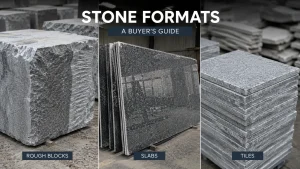
Importers, processing plants, and monument factories sourcing raw block materials must evaluate stone quality directly at the quarry level before gangsaw cutting.
Evaluating Rough Block Stock
When inspecting Royal Black Granite Blocks or G20 Bengal black granite rough blocks, check for internal hairline fissures, color banding, and micro-cracks along the squared block faces. Premium gangsaw blocks yield flat, consistent slabs with minimal material waste during factory processing.
Sourcing Steel Grey granite blocks requires verifying uniform crystal distribution across the quarry face. Ordering full project quantities from a single quarry block lot prevents subtle shade variations across large installed building elevations.
Purchasing bulk quantities through a reputable black granite slab supplier ensures proper crate packaging, bundle numbering, and consistent slab thickness tolerances for international container shipping.
Frequently Asked Questions
Yes, high-grade material features an extremely fine mineral grain structure that appears as a uniform, solid black field across the slab face.
While granite is highly scratch-resistant, mirror-polished dark surfaces reveal oily fingerprints, dust, and water spots more visibly than light or textured stones.
Wipe a clean white cloth soaked in acetone firmly across the polished face; if black pigment transfers to the cloth, the slab has been artificially dyed.
Flamed and brushed finishes provide the best slip resistance for exterior paving while maintaining durability against harsh weathering and rain exposure.
Honing creates a matte surface that scatters light reflections, causing the stone color to read visually as deep charcoal rather than pitch black.
Pricing depends on quarry yield, fine grain consistency, block extraction costs, processing difficulty, and international transport logistics.
Summary and Sourcing Checklist
Selecting between solid dark granite and speckled alternatives comes down to visual intent, maintenance expectations, and application environment. While textured stones like Black Galaxy Granite or Steel Grey Granite offer vibrant character and hide daily smudges, pure dark stone remains the gold standard for seamless architecture and monument etching.
Before issuing your final material approval or container purchase order, confirm these critical quality checks with your quarry partner or processing supplier:
- Request high-resolution dry and wet photos of the exact bundle lots currently available.
- Perform an acetone wipe test on sample swatches to verify no artificial dyes or color resins were applied.
- Confirm slab thickness tolerance (e.g., 20 mm ± 1 mm or 30 mm ± 1 mm) and surface gloss readings across the order.
- Verify block lot numbering to ensure full crate consistency across multi-container shipments.
For current container pricing, slab bundle photographs, or physical samples for project specification, submit your project drawings and material schedule to our export supply team today.