Granite forms when molten rock cools slowly underground, locking quartz, feldspar, and mica into an interlocked crystal structure. That’s why a granite slab can sit in direct sun for years without fading and take a hot pan straight off the stove without scarring. It also means every block is a one-time event — you can cut ten slabs from the same block and the veining will shift, fade, or intensify as you move through it. Whether you’re buying one countertop or sourcing a container load for resale, understanding what’s actually happening inside this stone changes how you shop for it, grade it, and put it to work.
What Makes Granite Different From Other Natural Stone
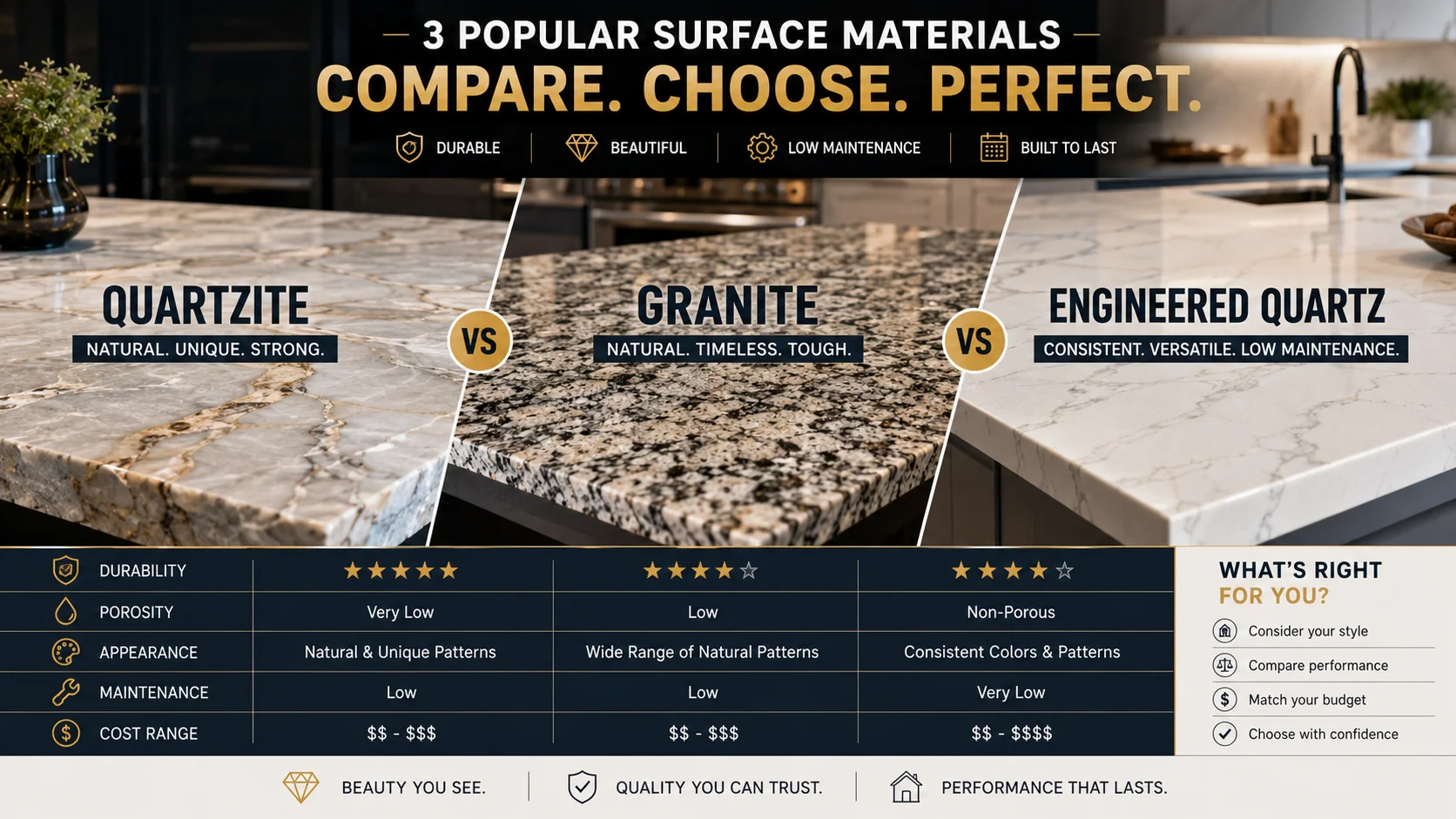
Granite is igneous — it crystallized from cooling magma, not from sediment or heat-altered rock like marble or quartzite. That origin gives it a tighter mineral structure and lower porosity than most marble, which is why granite holds up better against kitchen acids (lemon juice, wine, vinegar) without etching the surface. Quartzite sits somewhere in between: it starts as sandstone and gets metamorphosed under heat and pressure, which is why varieties like Cristallo Quartzite or Patagonia Quartzite can rival granite for hardness while showing a more crystalline, glassy surface.
For a buyer, the practical takeaway is this: granite is the safer default for heavy daily use — kitchen islands, commercial flooring, exterior cladding — because its mineral makeup doesn’t react much with what gets spilled or dragged across it.
Granite Types: Reading Color, Pattern, and Mineral Character
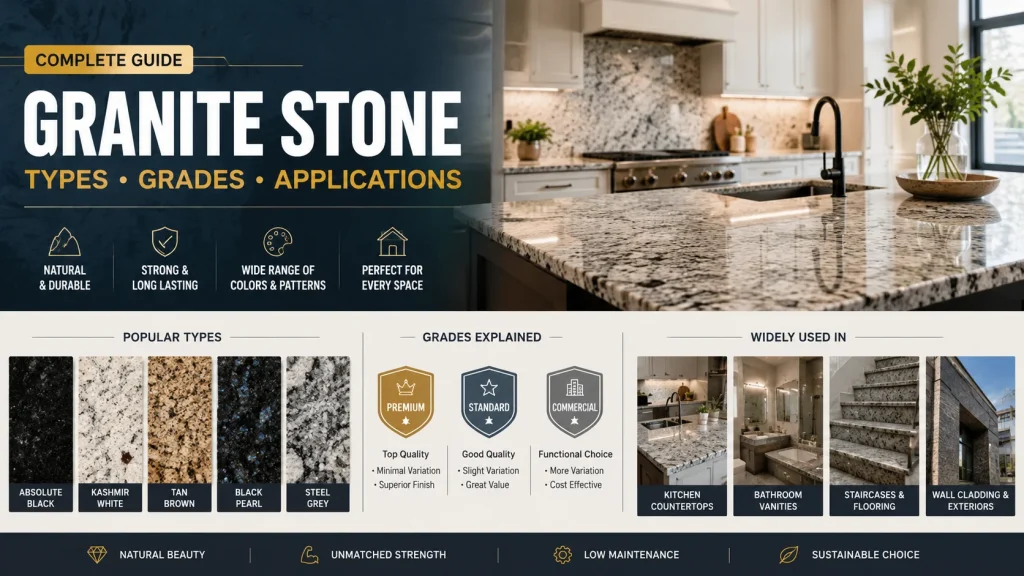
Color in granite comes down to which minerals dominate the mix, and pattern comes down to grain size and how those minerals clustered as the rock cooled. A few groupings worth knowing:
Blacks and dark neutrals range from the near-flat, fine-grained look of Absolute Black Granite (a finish often chosen for monuments and high-contrast countertop edges) to the metallic glint of Black Galaxy Granite, where flecks of mica catch light like scattered gold dust. Steel Grey Granite, Titanium Black Granite, and Ash Black Granite sit further toward speckled and mottled, which hides scratches and water spots better on busy floors.
Whites and light neutrals — Alaska White Granite, Colonial White Granite, Kashmir White Granite, River White Granite, Viscount White Granite, Thunder White Granite — each carry dark mineral flecking over a pale field, but the density and color of that flecking (charcoal versus rust versus burgundy) changes the overall mood from cool to warm.
Blues are less common in granite generally, which is part of their appeal. Vizag Blue Granite, Himalayan Blue Granite, Blue Dunes Granite, Lemurian Blue Granite, and Volga Blue Granite carry a grey-blue base tone that reads almost slate-like under indoor lighting and noticeably bluer in daylight.
Browns and golds like Tan Brown Granite and Colonial Gold Granite lean warm, with Tan Brown in particular showing dark brown-to-black undertones that work well against both light and dark cabinetry. Shiva Gold Granite and Millennium Cream Granite stay lighter and creamier.
Reds, pinks, and greens — Imperial Red Granite, New Imperial Red Granite, Jhansi Red Granite, Astoria Pink Granite, Chima Pink Granite, Hassan Green Granite, Kuppam Green Granite — bring stronger color statements, usually chosen as a feature rather than a background material.
Patterned and movement-heavy types such as Colombo Juparana Granite, Paradiso Classic Granite, Indian Aurora Granite, and Ivory Fantasy Granite show wide veining and color shifts across a single slab, closer to what people expect from marble.
Granite Grading Explained: What “Premium” Actually Means
Not every block of the same granite type yields the same quality of slab, and this is where a lot of buyers get caught out — paying premium prices for material that’s actually mid-grade, or rejecting commercial-grade stone that would have been perfectly fine for the job. Grading comes down to a handful of factors: how consistent the pattern is across the slab, how many natural fissures or pits need filling, how even the polish sits, and how close to standard thickness the slab was calibrated. None of this is about the granite type being “better” or “worse” — Tan Brown Granite, for instance, can show up in both premium and commercial grade, and the difference is entirely in slab condition, not color. For a full breakdown of what separates the two grades and which one actually fits your project, the granite grading guide for premium versus commercial grade walks through it slab by slab.
From Quarry Block to Finished Slab
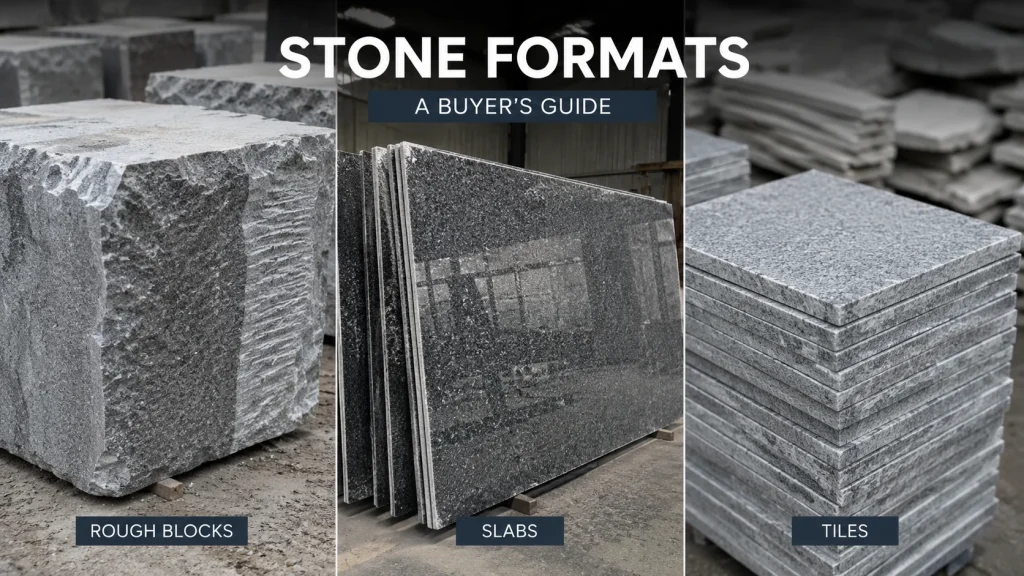
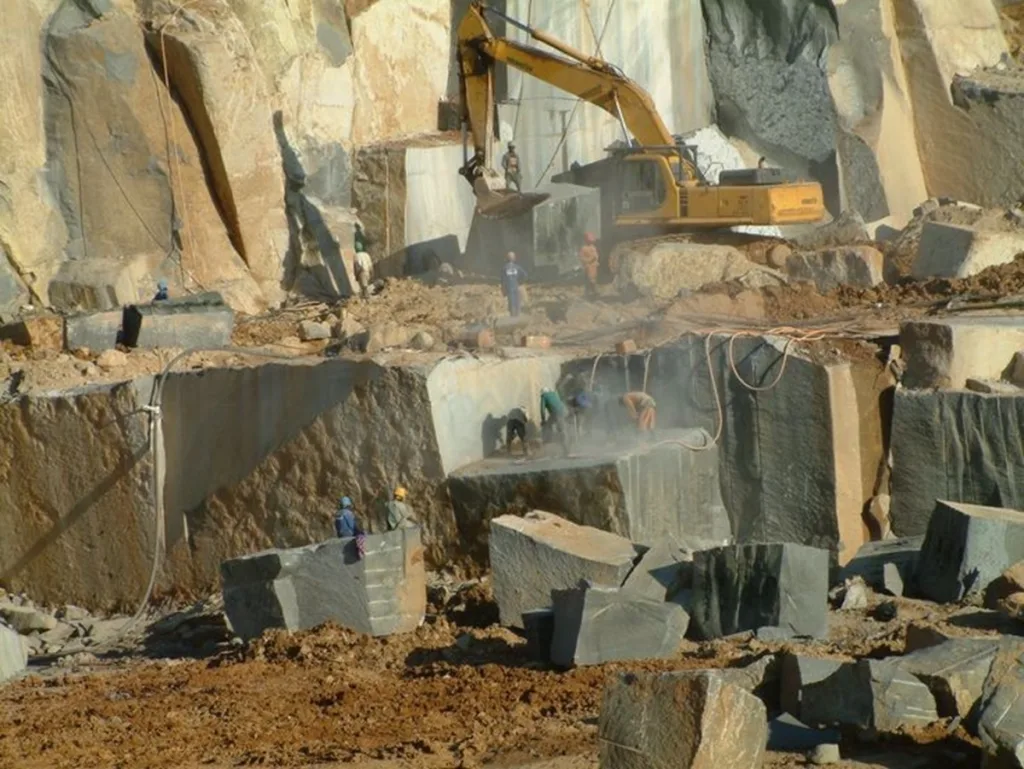
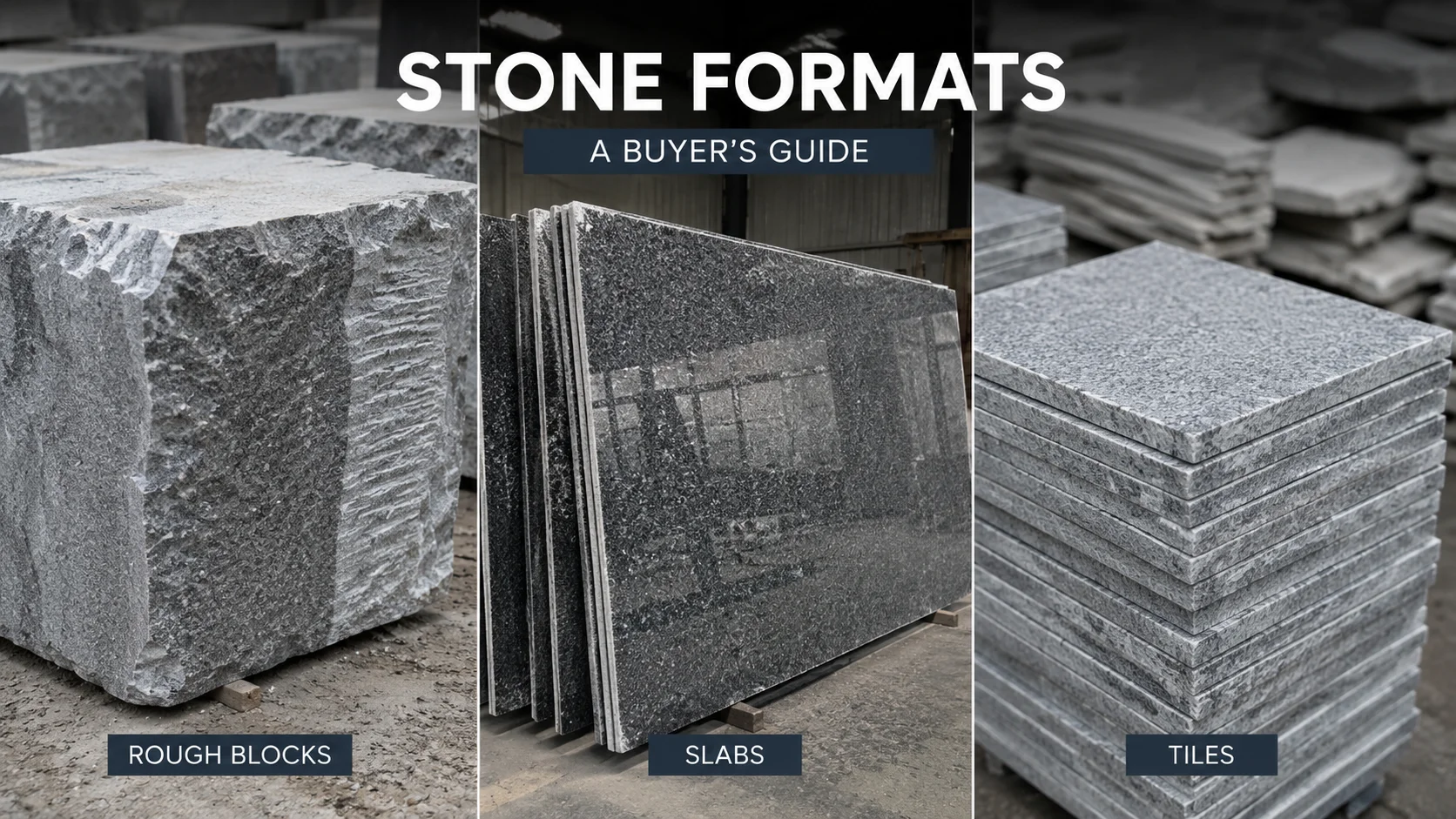
Before a granite slab reaches a kitchen or a building facade, it goes through gang-sawing, calibration, and a finishing pass that determines both its look and its performance. A high-gloss polished finish suits indoor countertops and floors where light reflection matters. Honed and flamed finishes strip that gloss back, which is exactly what you want on exterior paving or pool surrounds, since a matte, slightly textured surface grips wet feet far better than a mirror polish ever will. Buyers working with raw material — Hassan Green Granite Blocks, Steel Grey Granite Blocks, Vizag Blue Granite Blocks, and similar rough blocks — are essentially buying the starting point of this process and taking on the cutting and finishing decisions themselves. The detailed walkthrough on how granite slabs are cut, polished, and finished before export covers what happens at each stage and why finish choice matters as much as color choice.
Where Granite Actually Gets Used
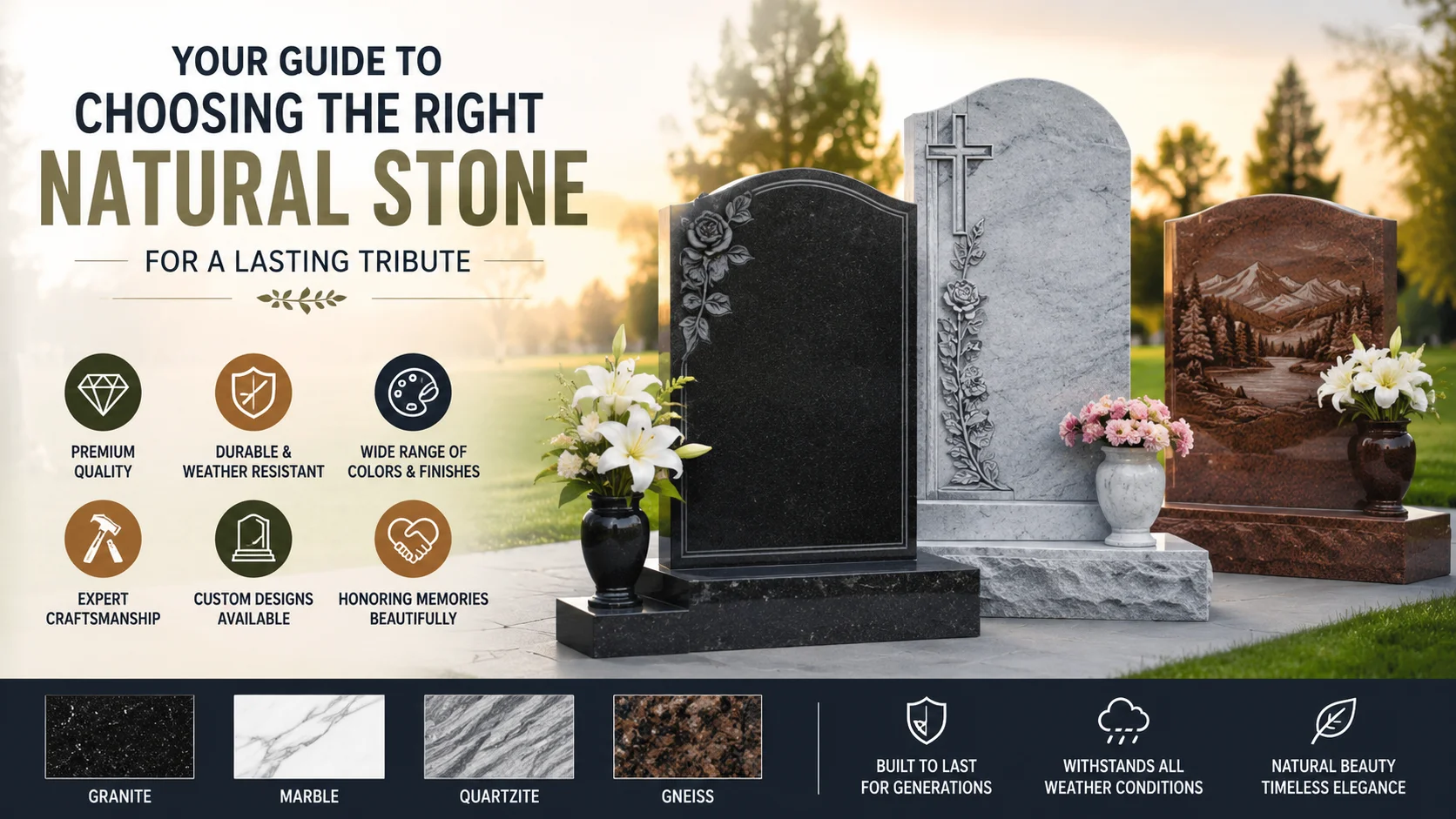
Kitchen countertops and islands remain the most familiar application, but granite’s resistance to weathering makes it just as common in flooring, wall cladding, building facades, and paving — anywhere a stone needs to survive foot traffic, temperature swings, or direct rain without sealing failures showing up within a year or two. Granite Monuments and Absolute Black Granite Monuments represent a separate, denser-grain use case: monument-grade material is selected specifically for minimal porosity and a uniform finish that holds engraving detail and color contrast over decades outdoors. If your project is exterior — patios, driveways, building entrances — the finish and slip resistance matter more than the color, and the guide to the best granite for outdoor flooring and cladding goes through which finishes and types actually perform in weather, not just in a showroom.
Granite vs. Quartz: A Quick Comparison
Quartz countertops (engineered stone, not natural quartzite) get compared to granite constantly, and the honest answer is that neither one is universally better — they trade off differently.
| Factor | Granite (Natural) | Quartz (Engineered) |
| Origin | Quarried, cut from natural blocks | Manufactured from crushed quartz and resin |
| Pattern | Unique per slab, no two identical | Consistent, repeatable pattern |
| Heat resistance | Handles direct heat well | Resin content can scorch under sustained heat |
| Scratch resistance | High, due to crystal hardness | High, but resin can show wear over time |
| Sealing needed | Yes, periodically | No, non-porous by manufacture |
| Best suited for | Buyers who want one-of-a-kind veining and outdoor use | Buyers who want uniform color and zero sealing maintenance |
For a longer look at how these two hold up in real kitchens over years of use, the full granite versus quartz countertop comparison breaks down cost positioning, install differences, and which rooms favor which material.
How to Judge Quality Before You Commit
Catalog photos and small samples hide a lot. A sample chip can’t show you how a pattern repeats — or doesn’t — across a full slab, and lighting in a showroom flatters almost anything. Before buying, ask to see full-slab photos or, better, the actual slab in natural light. Check for hairline fissures (fine, often resin-filled cracks that are normal in some granites but shouldn’t be widespread), look at the edges for chipping, and run a hand across the surface to feel for inconsistent polish — patchy gloss usually means a rushed finishing pass. For B2B buyers ordering at volume, ask about block yield and whether slabs come from the same block or mixed lots, since matching across a large floor or facade depends on that. The step-by-step guide to identifying high-quality granite before you buy covers the specific red flags worth checking slab by slab.
Keeping Granite Looking Right After Installation
Granite’s low porosity compared to marble doesn’t mean zero porosity — most granite still benefits from sealing, particularly lighter colors like Kashmir White Granite or River White Granite, where staining shows more visibly than on darker stone. How often resealing is needed depends on the specific granite’s density and how much daily exposure it gets to oil, water, and foot traffic. The granite sealing and maintenance guide lays out exactly when to reseal and how to test if a surface needs it, rather than guessing on a calendar schedule.
Durability Myths Worth Retiring
A lot of buyer hesitation around granite comes from outdated or simply wrong assumptions — that it cracks easily, that dark colors fade in sun, that all granite needs the same maintenance routine regardless of type. Some of these myths come from confusing granite with softer stones, others from one bad installation experience getting generalized to the whole category. The breakdown of common granite durability myths addresses these one by one with what actually happens to granite under real conditions.
If you’re choosing between granite types for a specific job, start with how the surface will actually be used — exposure, traffic, and finish — and let color be the second decision, not the first.