
For decades, uniformly dark stones have served as the baseline for monolithic, high-contrast surfaces in commercial and residential architecture. Absolute Black Granite has long been the default specification for projects requiring a deep, unyielding solid background. However, as design preferences shift toward materials that offer subtle textural depth without compromising a dark palette, Royal Black M13 Granite is increasingly capturing the attention of specifiers. Choosing black granite for projects now involves a nuanced evaluation of grain structure, batch stability, and how the material interacts with complex lighting.
This analysis examines the Royal Black M13 Granite vs Absolute Black debate from a practical architectural perspective. Both are premium dimension stones with exceptional durability, but they perform differently across various applications, finishes, and scales. Understanding these distinctions allows architects, interior designers, and developers to align their material selection with specific project demands, budget constraints, and fabrication requirements.
How Absolute Black Reads in a Space
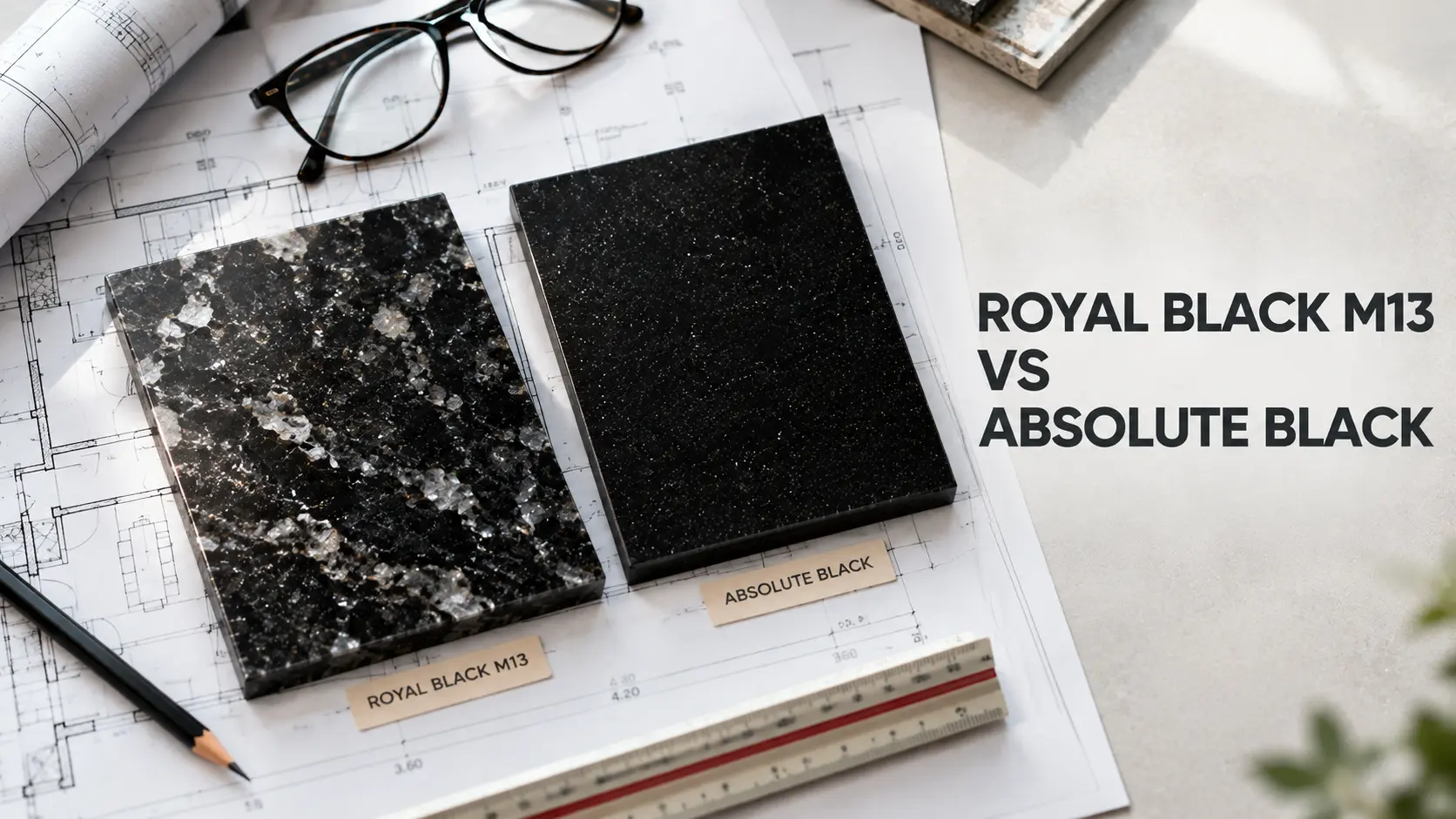
Absolute Black Granite is prized for its lack of visible movement or pronounced grain. From a distance, a polished slab of this material reads as a solid, uninterrupted void. This uniformity makes it highly desirable for ultra-minimalist designs where the architect wants the surface to act as a pure, monolithic plane.
However, this lack of texture means polished Absolute Black acts almost like a dark mirror. Specular reflection from heavy overhead lighting can cause glare on large horizontal surfaces, and the completely flat background can emphasize dust, fingerprints, and micro-scratches in high-traffic commercial environments.
The Textural Depth of Royal Black M13
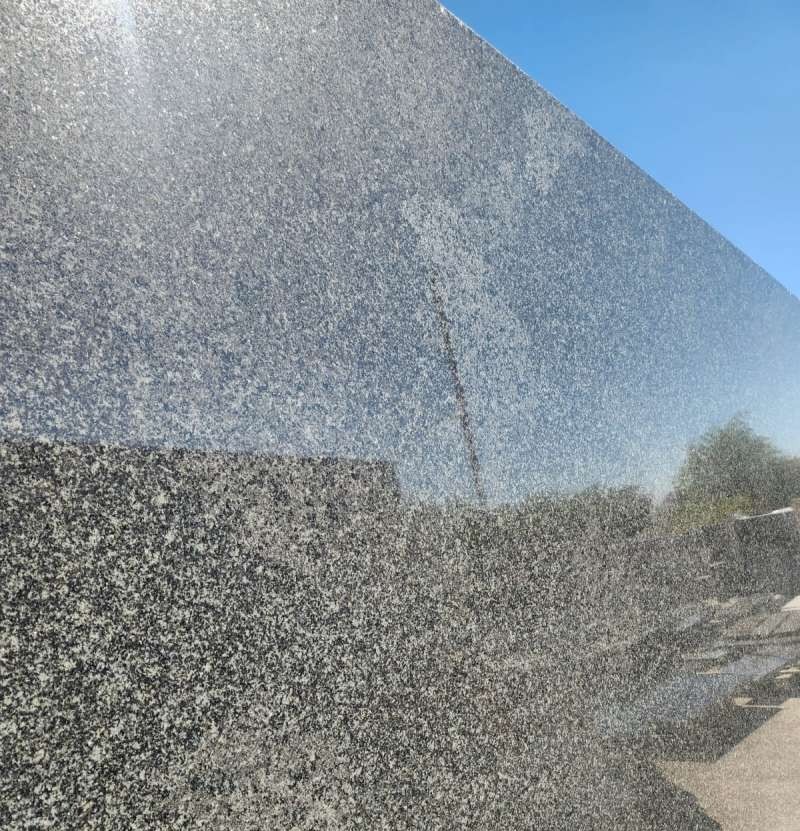
Royal Black M13 Granite features a tightly packed, micro-grain structure that provides faint, sophisticated speckling upon close inspection. This subtle character breaks up the surface tension, giving the stone a softer, more dimensional read than its absolute counterpart. It does not possess the large, reflective metallic flecks seen in alternatives like Black Galaxy Granite; rather, it maintains a calm, consistent dark background with just enough crystalline variation to diffuse light.
This micro-texture makes Royal Black M13 highly forgiving in everyday use. The slight visual movement helps camouflage minor smudges and daily wear, making it an excellent black granite countertops comparison winner for busy hospitality or residential kitchens. The grain also lends a tactile visual quality that prevents large vertical elevations from looking synthetic or glass-like.
Slab Consistency and Batch Stability
When specifying materials for expansive commercial footprints, black granite slab consistency is just as critical as the initial aesthetic. Natural stone inherently varies, but the predictability of that variation dictates how easily a fabricator can execute a large-scale design.
Managing Variation on Large Facades
Absolute Black is generally very consistent, but slight shifts in background dye-lots can occur between different quarry blocks. On a multi-story facade or a 2,000-square-meter floor plan, placing slabs from different blocks side-by-side can sometimes reveal faint greyish or charcoal undertones. Securing a single, massive block of Absolute Black for a sprawling project often requires extensive lead time and precise block-matching coordination with a granite slab supplier.
Block Yield and Predictability
Royal Black M13 Granite is renowned for its exceptional batch stability. The inherent micro-speckle naturally regulates the stone’s appearance, meaning variations between blocks are visually minimized. This predictability makes it a highly reliable choice for phased developments where material might be ordered across multiple fiscal quarters. Specifiers can confidently expand a project knowing the newer Royal Black M13 slabs will seamlessly blend with the earlier installations.
Finish Options and Lighting Response
The chosen finish drastically alters the perceived color and texture of dark granite. Both stones accept a wide range of mechanical finishes, but the resulting black granite finish options read distinctly due to the underlying grain structures.
Polished and Honed Finishes
A polished finish on Absolute Black creates a high-gloss, jet-black surface that maximizes contrast. When honed, Absolute Black takes on a beautiful matte charcoal appearance, but this finish is notoriously sensitive to oils and fingerprints, often requiring regular application of color-enhancing sealers to maintain a uniform look.
Royal Black M13 performs exceptionally well in both polished and honed states. A polished Royal Black M13 slab achieves a deep luster, while the micro-grain diffuses harsh reflections. When honed, the stone’s tight crystalline structure resists oil absorption better than many pure black stones, resulting in a low-maintenance, velvety matte surface that remains visually stable without heavy chemical enhancement.
Leathered, Flamed, and Brushed Textures
Textured finishes are increasingly specified for exterior paving and tactile interior walls. Absolute Black can be flamed and brushed, which softens its starkness and provides necessary slip resistance. However, aggressive flaming can sometimes wash out its deep color, turning it significantly greyer.
Royal Black M13 excels when leathered or flamed. The thermal process interacts beautifully with its subtle grain, creating a rich, undulating texture that retains a strong, dark base tone. This makes it a preferred option for high-end exterior black granite cladding and slip-resistant commercial flooring where both safety and color retention are paramount.
Application Suitability Across Project Types
Choosing between these stones often comes down to the specific physical demands of the architectural application. While both are incredibly dense and durable, their aesthetic and structural nuances lend themselves to different environments.
Commercial Cladding and High-Traffic Flooring
For expansive exterior rainscreen cladding or heavy-traffic lobby floors, Royal Black M13 is frequently the superior choice. The stone’s visual forgiveness hides daily dirt, and its batch consistency ensures a unified elevation. Its ability to maintain a dark read even in a slip-resistant flamed finish makes it a highly versatile tool for commercial hardscaping.
High-End Residential and Detailing
Absolute Black remains a staple for residential projects that demand stark, graphic contrast, particularly in modern kitchens and bathrooms. It is ideal for drop-fascia edge details where the designer wants the stone to look like a solid poured block. Conversely, Royal Black M13 is favored by interior designers who want a warm, organic feel; its subtle speckle makes seam blending on mitered edges highly forgiving for fabricators.
Monumental and Memorial Architecture
Absolute Black is the historical standard for laser-etched monuments, as its lack of grain provides a perfect blank canvas for high-resolution imagery. However, for sculptural, carved, or heavily detailed stonework, Royal Black M13 offers excellent structural integrity. When specifying materials for monuments that rely on shadow play and deep carving rather than surface etching, M13’s slight textural depth enhances the three-dimensional reading of the stone.
Sourcing, Lead Times, and Budgeting
Practical project management requires a thorough understanding of availability, logistics, and cost. Navigating the global supply chain for natural stone means considering where the material originates and how easily it can be procured in volume.
Availability and Logistics
Both materials are prominent Indian black granite varieties, benefiting from mature quarrying and processing infrastructure. However, because Royal Black M13 yields highly consistent blocks in large dimensions, suppliers frequently maintain deep inventories of standard 20mm and 30mm slabs. This robust availability often translates to shorter lead times for massive commercial orders, reducing supply chain friction for fast-tracked developments.
Cost Comparisons for Specifiers
In the context of value engineering, black granite for commercial projects must balance aesthetic impact with budget constraints. Absolute Black often commands a premium price due to the immense market demand for completely flawless, zero-grain slabs. Royal Black M13 generally offers a highly competitive cost-per-square-foot, delivering the visual gravity of a premium dark stone while optimizing the material budget. This cost efficiency, combined with lower fabrication waste due to its consistent pattern, makes M13 an attractive option for large-scale procurement.
Specification Comparison: Royal Black M13 vs. Absolute Black
| Feature | Royal Black M13 Granite | Absolute Black Granite |
| Visual Character | Deep black with tight, subtle micro-speckle | Solid, uniform jet black with minimal to zero grain |
| Light Reflection (Polished) | Diffused reflection, forgiving on glare | High specular reflection, acts as a dark mirror |
| Batch Consistency | Exceptionally high; block-to-block variation is minimal | High, though slight dye-lot shifts can occur across blocks |
| Honed Finish Maintenance | Low to moderate; micro-texture hides fingerprints well | High; pure flat black shows oils and smudges easily |
| Best Edge Profiles | Mitered, eased, bullnose (seams blend easily) | Polished eased, monolithic drop-fascia (requires perfect seams) |
| Primary Applications | Cladding, commercial floors, countertops, textured walls | Ultra-minimalist interiors, laser-etched monuments |
| Cost Range | Highly competitive; excellent for large-scale budgets | Premium; strict grading for pure black increases cost |
Specification Checklist for Architects
When drafting Royal Black M13 specifications or Absolute Black Granite specifications for a project tender, confirm the following details with your supplier:
- Slab Thickness and Tolerance: Confirm standard 20mm or 30mm thickness, and verify the allowable calibration tolerance for large floor plate installations.
- Finish Verification: Request physical control samples of the exact finish (e.g., leathered, flamed and brushed, honed) to evaluate color retention and tactile quality under your project’s specific lighting conditions.
- Block Matching Requirements: If specifying Absolute Black for a large facade, mandate sequential block-matching in the tender to avoid subtle shifts in background tone.
- Edge Detailing Compatibility: Consult with the fabricator to ensure the chosen stone supports the specified edge profile without requiring excessive resin filling or joint manipulation.
- Sealing Protocols: Define the sealing requirements prior to installation, particularly if specifying a honed finish in a high-traffic or food-prep environment.
Frequently Asked Questions
No, Royal Black M13 generally requires less daily maintenance because its faint micro-grain naturally camouflages dust, fingerprints, and minor water spots better than a purely solid black surface.
Yes, it is highly recommended for exterior cladding due to its exceptional batch consistency, thermal stability, and ability to maintain its dark tone even when finished with a slip-resistant flamed texture.
Absolute Black is preferred for laser etching because its complete lack of background grain provides maximum contrast and acts as a pure, uninterrupted canvas for high-resolution imagery.
Both granites share similar, exceptionally high compressive strength and low water absorption rates, making them equally suited for demanding architectural applications and harsh climate zones.
Royal Black M13 is typically more cost-effective for large-scale projects because its high block yield and consistent pattern reduce material waste and command a slightly lower price point than premium-graded Absolute Black.
Yes, polished Absolute Black will sharply reflect the light source like a mirror, whereas the crystalline structure of Royal Black M13 will slightly diffuse the warm light, giving the surface a softer, more dimensional glow.
Evaluating Royal Black M13 alongside Absolute Black requires moving beyond simple color categorization to understand how natural stone performs in the built environment. While Absolute Black remains the definitive choice for stark, uninterrupted, and highly polished planes, Royal Black M13 offers a compelling alternative for projects requiring textural depth, large-scale batch consistency, and everyday visual forgiveness. By aligning the material’s structural and aesthetic traits with the specific demands of the site, specifiers can ensure a flawless, long-lasting installation. To determine the best fit for your upcoming tender, request physical slab samples of both materials, verify current availability for your required thickness, and consult with a supplier on specific block yields for your project scope.