
+91 (988) 774-4007

info@bbvimpex.com
Find Us On






Natural Granite Slabs Supplier from India to European, Middle East and Gulf Countries Buyers
Explore our natural granite slabs designed for demanding residential and commercial projects across Europe, the Gulf countries, and the wider Middle East. Whether you are sourcing granite kitchen worktops, flooring, or exterior facade cladding, BBV Impex offers an extensive selection of colours, custom thicknesses, and specialized surface finishes. Backed by secure international payment terms and reliable bundle packing, we provide transparent support from initial slab photos to safe export delivery. Request a quote or order samples today to discuss your project requirements with our team.
Granite Slabs by Colour
Choosing the right colour and pattern is the first step in specifying natural stone for your interior or exterior project. Granite offers a vast spectrum of shades, from deep uniform tones to striking, highly veined patterns formed by cooling magma. At BBV Impex, we supply a versatile range of granite slabs tailored to international design standards.
Black Granite Slabs
Known for deep, consistent tones and subtle mineral specks, black natural granite slabs provide a sophisticated, uniform surface ideal for modern kitchen worktops, commercial reception desks, and sleek interior flooring.
White and Grey Granite Slabs
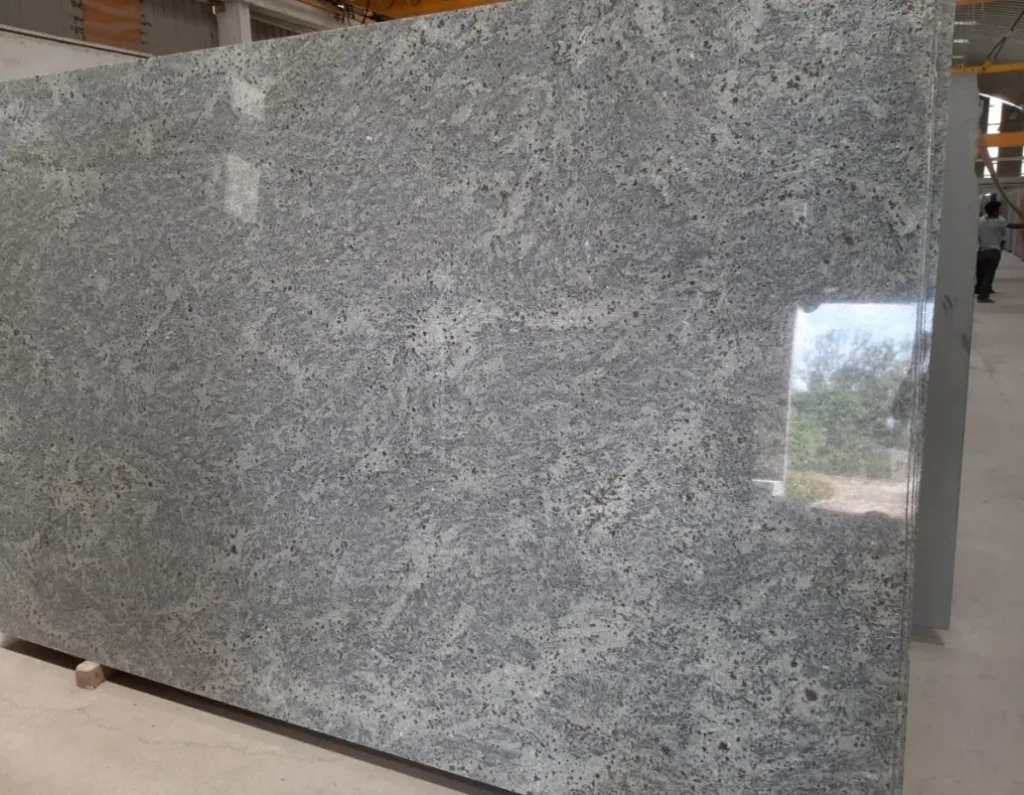
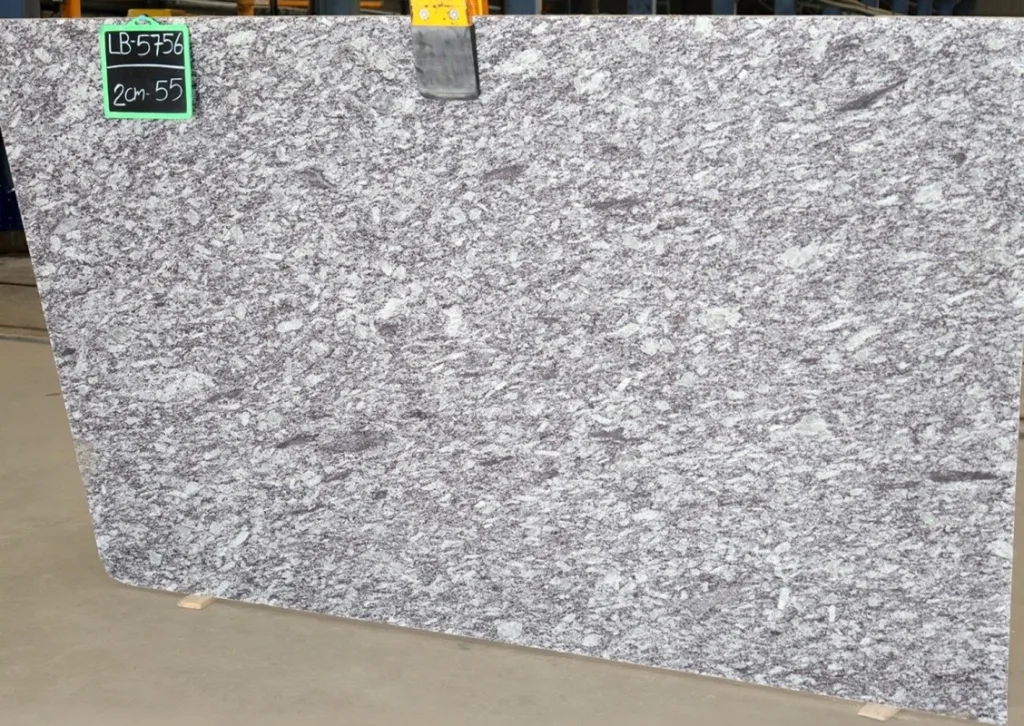
Offering versatile neutral tones with fine or coarse grain structures, white and grey granite slabs brighten interiors, complement minimalist architecture, and perform exceptionally well in high-traffic commercial environments.
Brown and Gold Granite Slabs
Featuring warm earthy undertones, rich movement, and complex crystalline formations, brown and gold granite slabs add warmth and character to luxury hospitality fit-outs, hotel lobbies, and residential kitchen islands.
Red and Pink Granite Slabs
Characterised by distinct feldspar crystals, red and pink granite slabs deliver bold visual impact and exceptional hardness, making them a durable choice for feature wall cladding, steps, and heavy-duty exterior paving.
Green and Blue Granite Slabs
Encompassing rare labradorite minerals and rich botanical hues, green and blue granite slabs create stunning focal points for feature walls, luxury bathrooms, and bespoke reception counters.
Multicolour Granite Slabs
Blending multiple mineral deposits into dynamic, swirling patterns, multicolour granite slabs offer unique visual depth, ensuring each slab carries distinct natural variation for statement architectural designs.
What Is Granite, and How Does It Differ from Marble, Quartz and Quartzite?
Natural granite is an igneous stone formed deep beneath the earth’s crust from slowly cooling magma. This geological process creates a dense, crystalline structure characterised by visible mineral grains, quartz specks, and feldspar crystals. In the commercial stone trade, the term “granite” is also applied broadly to several hard igneous and metamorphic rocks that share similar performance traits, so commercial naming can vary between quarries and regions. Buyers should always check specific technical descriptions rather than relying solely on trade names.
Understanding how granite differs from other common surface materials helps in precise specification. Unlike sedimentary marble, which is composed of calcite and is sensitive to acidic etching, natural granite is formed under extreme heat and pressure, making it significantly harder and less prone to acid corrosion. Compared to engineered quartz, which is a manufactured composite of crushed stone and resin, granite is quarried directly from the earth as raw blocks, meaning every single slab possesses unique natural variation. Finally, while natural quartzite is also a hard geological stone derived from quartz-rich sandstone, true granite originates from molten magma, offering distinct crystal formations and granular textures.
How to Choose the Right Granite Slabs
Selecting the correct natural granite slabs requires careful evaluation of technical and aesthetic factors. Whether you are specifying materials for a commercial high-rise or a residential villa, reviewing key criteria ensures long-term performance.
Colour, Pattern and Natural Variation
Natural stone exhibits inherent variation between blocks and quarries. While some granites offer a uniform grain, others feature dramatic directional movement. Always request high-resolution slab photos or approved physical samples before booking. For large projects requiring consistent appearance, ensure all slabs are sourced from the same production block or lot.
Finish
The surface finish defines both appearance and functional performance. Polished finishes highlight crystalline depth and colour intensity but can show surface marks. Honed and leathered finishes provide a softer, matte texture. Flamed, brushed, and bush-hammered finishes introduce surface texture and enhanced slip resistance, making them essential for exterior paving, wet areas, and steps.
Thickness, Size and Format
Granite slabs are available in standard thicknesses—commonly 20 mm and 30 mm—with custom thicknesses available on request depending on structural needs. Standard slab dimensions suit large kitchen islands and worktops, while cut-to-size pieces, tiles, and paving formats can be custom-fabricated to architectural drawings to minimise on-site waste.
Treatments
To enhance structural integrity or surface performance, many granite slabs undergo factory treatments such as resin-filling for surface micro-fissures, fibre-mesh backing for added strength during transport, or oil- and wax-enhancements to deepen colour. Always confirm which treatments have been applied to your selected slabs.
Grade and Selection
Different suppliers use varying internal grading terminology. Rather than relying on grade labels, ask your supplier to explain their quality criteria and review detailed photos or inspection reports for the specific lot allocated to your order.
What Affects the Price of Granite Slabs
Pricing is influenced by stone rarity, block quality, extraction difficulty, slab dimensions, thickness, and specialized finishes. Additional factors include factory treatments, custom cut-to-size fabrication, protective bundle or crate packing, freight rates, insurance, local import duties, VAT, and on-site installation costs.
Granite vs. Quartz vs. Marble vs. Quartzite vs. Porcelain Slabs
Comparing natural granite with alternative surfacing materials helps specifiers align project requirements with physical properties. Performance depends on the specific stone composition, quality, and correct installation.
| Property / Feature | Granite | Quartz (Engineered) | Marble | Quartzite | Porcelain |
| Look & Natural Variation | Natural igneous grain; high variation | Manufactured consistency; uniform patterns | Sedimentary veining; highly unique | Crystalline quartz grain; flowing movement | Printed photographic designs; repeatable |
| Consistency Between Slabs | Moderate to high variation between blocks | Extremely high batch consistency | High natural variation | Moderate to high variation | Uniform across production runs |
| Scratch Resistance | High; hard mineral composition | High; bound by resin binders | Lower; softer calcium carbonate | High; quartz mineral hardness | Very high surface hardness |
| Heat Tolerance | High; withstands normal kitchen heat | Moderate; resin binders can scorch | High heat resistance | High heat resistance | Exceptional heat and UV resistance |
| Stain Resistance | Moderate; sealed surfaces resist stains | High; non-porous resin matrix | Lower; porous and prone to staining | Moderate; requires appropriate sealing | Non-porous; highly stain-resistant |
| Sealing Required | Yes, depending on stone porosity | No sealing required | Yes, essential protection | Yes, recommended | No sealing required |
| Edge Chipping Risk | Moderate along exposed sharp corners | Moderate under heavy impact | Higher along thin edges | Moderate on sharp profiles | Low impact resistance on thin edges |
| Sun & Outdoor Use | Excellent UV stability; weather resistant | Can discolour or warp under direct UV | Susceptible to weathering outdoors | Excellent weather resistance | Excellent UV and weather stability |
| Typical Uses | Worktops, flooring, cladding, paving | Indoor kitchen worktops and vanities | Interior wall cladding, low-traffic vanities | Luxury worktops, interior flooring | Large-format wall cladding, exterior paving |
Best Uses for Granite Slabs
Natural granite’s robust physical properties make it a versatile choice for diverse architectural applications across residential and commercial sectors.
Kitchen Worktops and Islands
Kitchen worktops represent one of the most popular applications for granite slabs. While granite is generally tolerant of daily kitchen heat, using trivets, applying appropriate sealants, and caring for exposed edges remains essential. Behaviour under heavy use varies depending on the specific mineral composition of the stone.
Bathrooms and Vanities
Granite slabs provide durable, moisture-resistant surfaces for hotel bathrooms, residential vanity tops, and shower surrounds. Proper sealing helps protect lighter stones from cosmetic water marking and soap residue in humid environments.
Flooring and Stairs
For high-traffic public corridors, hotel lobbies, and commercial staircases, granite flooring offers exceptional wear resistance. Selecting the correct finish—such as a honed or brushed texture—is crucial to maintaining adequate slip resistance in public or transition zones.
Wall Cladding and Facades
Granite exterior facade cladding and interior feature walls offer striking visual presence. Because stone cladding panels carry significant weight, fixing methods, anchor specifications, and panel thicknesses must be engineered in accordance with local building requirements and structural load calculations.
Hotels, Retail and Commercial Projects
Commercial fit-out teams require reliable batch consistency and large-scale slab matching. Sourcing all granite slabs from coordinated blocks ensures visual harmony across extensive hotel corridors, retail facades, and multi-unit residential developments.
Where Granite May Not Be the Best Choice
Granite may prove unsuitable for projects requiring perfectly uniform, man-made pattern repetition, or for very large, continuous uninterrupted spans where subtle natural movement is undesirable. Light-coloured granites installed in heavy grease or oil exposure areas require diligent maintenance. Suitability always depends on the specific stone selection and installation context.
Using Granite Slabs Outdoors and in Different Climates
Specifying natural stone for exterior environments requires careful attention to climate exposure, surface texture, and structural support.
Patios, Paving, Steps and Pool Surrounds
Exterior applications such as garden patios, pool copings, step treads, and public paving demand high slip resistance and resistance to weathering. Textured finishes like flamed, bush-hammered, or brushed granite are widely selected for pool surrounds and walkways to improve traction when wet. When used around swimming pools, stone selection should account for potential exposure to pool chemicals and salt water.
Hot and Cold Climates
Granite performs reliably across diverse geographical regions, from the intense solar heat and sand exposure of the Gulf GCC countries to the freezing frost and freeze-thaw cycles of Northern and Central Europe. However, thermal expansion, moisture absorption, and substrate preparation must be managed carefully. For heated interior floors, proper expansion joints and thermal transfer considerations are essential. Suitability always depends on the specific stone type, finish, thickness, and professional installation standards.
How to Check Quality, Test Reports and Documents Before You Buy
Procuring natural stone for international projects requires rigorous quality verification and clear documentation to ensure materials meet project specifications.
Inspecting the Slabs
Before shipment, request high-definition photographs and videos of the actual slab bundles or lots allocated to your order. Check for natural fissures, resin fills, edge chips, or colour variations against your approved physical sample. Inspecting exact lot numbers prevents unwelcome surprises upon container arrival.
Treatments and Colour Enhancement
Many granite slabs undergo factory treatments, including resin impregnation to reinforce micro-cracks, mesh backing for transport stability, or oil/wax enhancements to deepen dark tones. Always ask your supplier whether the slabs have undergone any treatment, as enhanced surfaces may weather differently over time.
Test Reports
Depending on your project’s engineering requirements, laboratory test reports covering water absorption, compressive strength, flexural strength, abrasion resistance, slip resistance, and frost resistance may be requested. Because building codes vary significantly by country, buyers should confirm exact testing requirements with their structural engineer or local authority.
Natural Radioactivity
Natural stone, including certain granites, contains trace amounts of naturally occurring radioactive elements due to its geological origins. Radiation levels vary depending on the specific quarry and stone type. While some countries maintain general guidance for building materials, buyers requiring specific compliance data can request relevant test certificates from their supplier.
Checking on Arrival
Upon container arrival at your port or warehouse, inspect all crates and bundles thoroughly before signing carrier delivery receipts. Document any transit damage immediately with photographs and report claims promptly in accordance with your shipping terms. Store slabs upright on secure A-frames in a protected environment.
Fabrication, Installation and Care
Proper handling, fabrication, and ongoing maintenance protect your investment in natural granite surfaces.
Fabrication Safety
Natural granite contains crystalline silica. Cutting, grinding, and polishing granite slabs generates fine dust that can pose health risks if inhaled. Fabricators must adhere strictly to local occupational safety regulations, utilise wet-cutting systems or certified dust extraction units, and wear approved respiratory protection. Safety standards vary by country and are subject to regular updates, so fabricators should review current safety guidelines before starting work.
Handling and Installation
Granite slabs are heavy and brittle prior to full installation. Professional handling requires specialized lifting equipment, A-frame transport, and experienced stone fabricators. Ensure proper cabinet or structural support beneath kitchen worktops, maintain correct overhang limits, and plan seam placement carefully to preserve structural integrity.
Sealing
While granite is less porous than marble, porosity varies significantly between stone varieties. Some dense black granites require little to no sealing, whereas lighter or more porous granites benefit from penetrating impregnating sealers. Consult your supplier regarding the specific stone’s porosity to determine appropriate sealing protocols.
Daily Care
Routine maintenance requires only mild soap or a pH-neutral stone cleaner diluted in warm water. Wipe up liquid spills promptly, avoid harsh chemical cleaners, bleach, or abrasive scouring pads, and use protective trivets or cutting boards for hot cookware.
Shipping Granite Slabs to Europe and the Middle East
BBV Impex coordinates secure export logistics for international buyers across Europe, the UK, the UAE, Saudi Arabia, Qatar, and the wider GCC region.
Granite slabs are heavy and vulnerable to transit stress if improperly handled. We provide sturdy wooden crate and bundle packing designed for international container transport, incorporating protective interleave materials to prevent surface scratching and edge chipping during ocean or overland freight.
We offer flexible Incoterms—including FOB, CIF, and DAP—tailored to your project logistics. Container loads are optimized by weight and volume, accommodating mixed orders or full container loads (FCL).
Our standard export documentation package includes the Commercial Invoice, Packing List, Certificate of Origin, and Bill of Lading (BL), ensuring smooth customs clearance.
International Ordering Process
- Enquiry: Submit your dimensions, preferred colours, and finish requirements.
- Samples & Photos: Request physical samples and actual slab photos for approval.
- Quote: Receive a comprehensive quotation covering product, packing, and shipping terms.
- Confirmation: Confirm order terms, payment method (Advance, L/C, or SWIFT/TT), and booking.
- Production & Selection: Final slab selection, quality inspection, and export crating.
- Shipping & Delivery: Ocean freight dispatch, document transfer, and port arrival.
Customs regulations, import duties, VAT, and wood-packaging phytosanitary standards vary by destination country. Buyers should confirm all regulatory requirements with their local customs broker before dispatch.
FAQs
What are granite slabs?
Granite slabs are large, flat pieces of natural igneous stone cut directly from quarried blocks. They are widely used as raw material for kitchen worktops, bathroom vanities, flooring, and architectural wall cladding in residential and commercial projects.
Can granite handle high kitchen heat?
Natural granite is formed under extreme geological heat and tolerates normal kitchen temperatures well. However, thermal shock can occur under extreme temperature changes, so using protective trivets and cutting boards remains recommended practice.
Does granite contain natural radioactivity?
Natural stone, including granite, contains trace amounts of naturally occurring radioactive minerals due to its geological formation. Radiation levels vary by origin and stone type. Buyers requiring compliance documentation can request specific test data from their supplier.
Ready to source premium natural granite slabs for your next project? Contact BBV Impex today to request a competitive quote, ask for high-resolution slab photos of current stock, or order physical samples. Let our experienced export team help you secure the ideal granite surfaces for your European or Middle Eastern development.