
When sourcing natural stone for large-scale international projects, dimensional precision is just as critical as aesthetic appeal. Whether a shipment arrives at the Port of Rotterdam for a European commercial build or docks at Jebel Ali Port for a luxury hotel in Dubai, buyers expect absolute structural consistency.
A lack of surface regularity can lead to significant installation failures, increased labor costs, and compromised structural integrity. This makes Flatness Tolerance Standards in Export-Grade Granite Slabs a defining metric of quality control for importers, fabricators, and architects.
Understanding how flatness is measured, what causes deviations during processing, and how regional climates impact stone performance is essential. This guide explores the critical role of surface flatness in the global natural stone trade, providing actionable insights for buyers across Europe, the Gulf, and the broader Middle East.
What is Flatness Tolerance in Granite Slabs?
Flatness tolerance refers to the acceptable limit of deviation across the surface of a processed stone slab. In practical terms, it measures how perfectly flat the stone remains from edge to edge without bowing, cupping, or warping.
When dealing with an export-grade granite slab, achieving precise dimensional stability is paramount. A perfectly flat surface ensures that when multiple slabs are laid together, the joints remain flush. Any deviation beyond acceptable industry limits complicates fabrication and installation, particularly in high-precision commercial applications.
How Finishes Impact Flatness Expectations
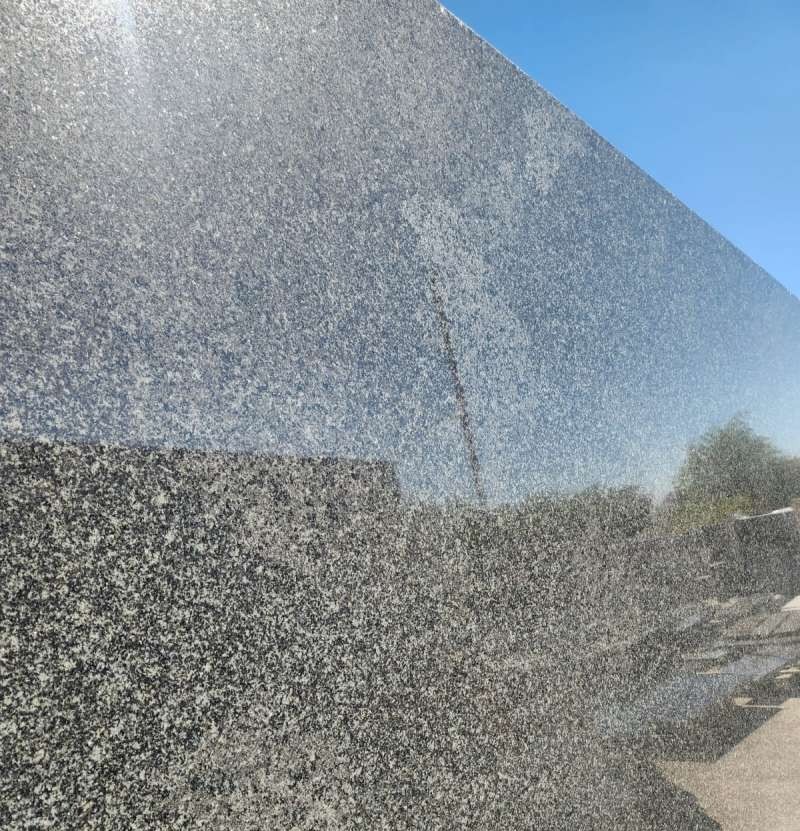
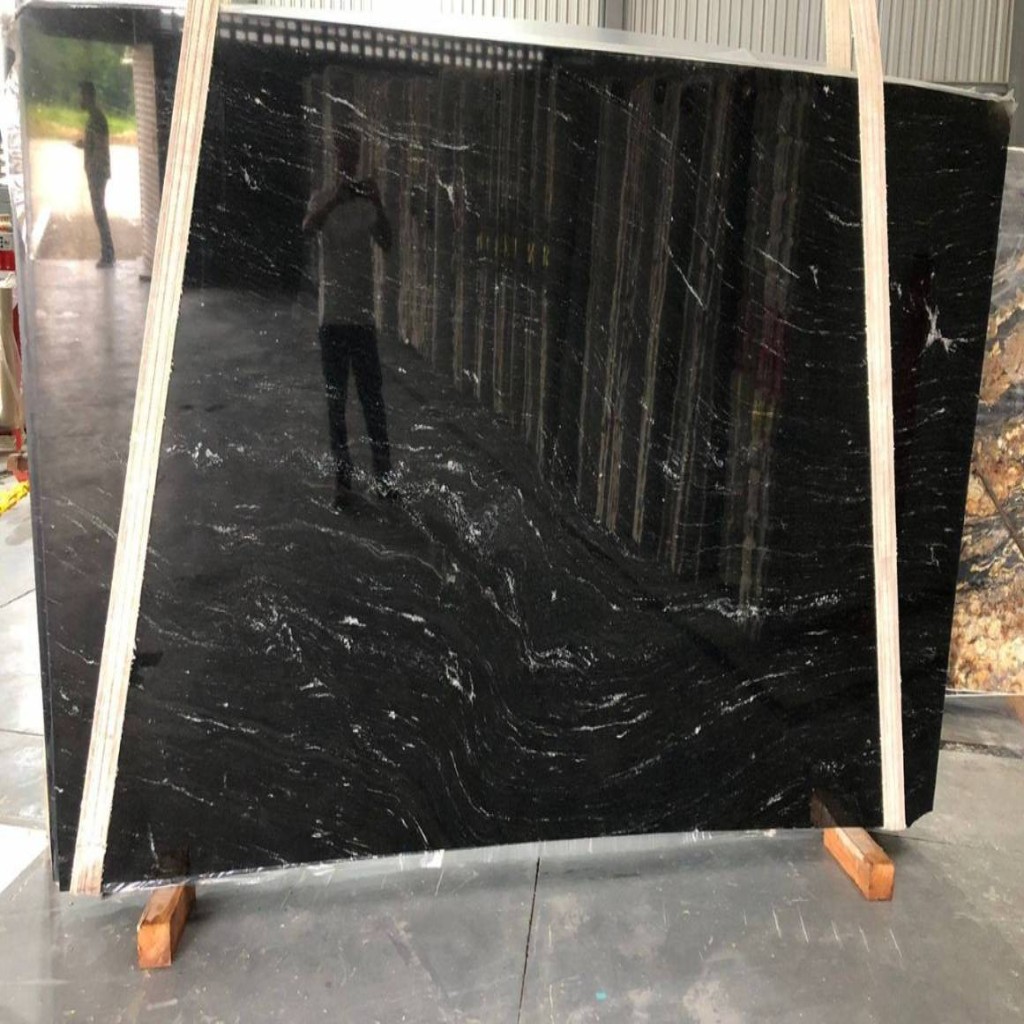
Surface finishes heavily influence both the perception and the technical requirements of granite slab flatness. Highly reflective surfaces highlight even the most minor surface undulations, making strict tolerance adherence crucial.
- Polished Finish: Varieties like Royal Black Granite and Black Galaxy Granite are frequently polished to a high gloss for premium countertops and flooring. A polished surface acts like a mirror, meaning any warping or bowing becomes instantly visible as distorted light reflections.
- Honed Finish: With a matte appearance, honed slabs conceal minor visual imperfections better than polished stone. However, the physical flatness tolerance remains critical to prevent lippage (uneven edges) during floor installation.
- Leathered Finish: This textured finish intentionally introduces surface variation. While the micro-surface is textured, the overall structural plane of the slab must still adhere to export quality baselines to ensure correct installation.
Why Granite Slab Tolerance Matters for Global Markets
The destination and application of an imported granite slab dictate the level of precision required. Mega-projects in the Middle East and rigorous historic renovations in Europe demand flawless execution. Supplying the right granite slab for Europe or the Gulf requires understanding how environmental factors and installation methods interact with stone.
Mega-Projects and Specialized Applications
In the Gulf region, natural stone moves through hubs like Khalifa Port in Abu Dhabi and the Port of Doha to supply massive infrastructural and luxury projects. Building facades, mosque interiors, and sprawling palace floors require large-format slabs. When installing massive wall cladding, even a fractional deviation in granite slab thickness or flatness can result in uneven seams and excessive adhesive consumption.
Similarly, European buyers rely on precision for highly specific applications. Shipments moving through the Port of Genoa or the Port of Marseille often supply materials for historic building restoration or modern commercial transit hubs. Here, natural stone must align perfectly with existing heritage structures or integrate seamlessly with modern glass and steel elements. Furthermore, the precision required for granite monuments and memorials demands perfectly calibrated slabs to ensure precise engraving and jointing.
Climate Factors: Freeze-Thaw vs. Thermal Expansion
The physical environment where the stone is installed heavily influences how flatness impacts longevity.
- Northern and Central Europe: In regions supplied by the Port of Hamburg or the Port of Rotterdam, freeze-thaw cycles are a major concern. If outdoor paving or facade cladding lacks strict flatness tolerance, water can pool in the depressions or seep into uneven joints. When this water freezes and expands, it can crack the stone or break the mechanical anchors.
- The Gulf and Middle East: Slabs arriving at the Port of Jeddah, Port of Dammam, or Port of Sohar face an entirely different extreme. Extreme heat causes significant thermal expansion in building materials. If an installed slab is already bowed, thermal stress will exacerbate the tension, potentially causing the stone to pop off its substrate or crack under pressure.
- Southern Europe: Projects sourcing through the Port of Piraeus face a Mediterranean climate, where intense summer sun combined with coastal humidity requires excellent dimensional stability to prevent long-term facade degradation.
Causes of Flatness Deviation in Granite Processing
Achieving strict flatness tolerance standards in export-grade granite slabs requires meticulous control at every stage of production. From the quarry to the final polish, specific variables determine the slab’s final geometry.
From Granite Rough Blocks to Gang-Saw Processing
The journey begins at the quarry. Sourcing high-quality granite rough blocks is the foundation of a flat slab. If rough blocks contain internal stress fractures or irregular mineral concentrations, the stone can warp as tension is released during cutting.
During processing, gang-saw technology is used to slice blocks into individual slabs. If the gang-saw blades lack proper tension, or if the cutting speed is pushed too high, the blades can deflect. This deflection leads to bowing down the length of the slab and creates noticeable granite slab thickness inconsistencies.
Calibration, Resin Treatment, and Epoxy Fill
Once cut, an Indian granite slab or other imported material often undergoes calibration and resin treatment. Calibration machines use diamond rollers to grind the back of the slab, ensuring uniform thickness. Poorly maintained calibration equipment will fail to correct gang-saw deviations.
Resin treatment and epoxy fill are commonly used to strengthen stone with natural micro-fissures, such as Viscount White Granite. The slabs are coated in epoxy and cured in large ovens. If the heating and cooling cycles are not strictly controlled, the rapid temperature changes can cause the natural stone to warp, permanently compromising its flatness.
Measuring Granite Slab Flatness: Quality Control Methods
Reputable exporters implement stringent quality control measures before shipping to major global ports. Granite slab quality standards are verified using several precise methods to ensure the material meets B2B buyer expectations.
Straightedge, Gauging, and Laser Verification
Inspectors do not rely on the naked eye to verify flatness. Modern processing facilities utilize specialized tools to guarantee dimensional accuracy.
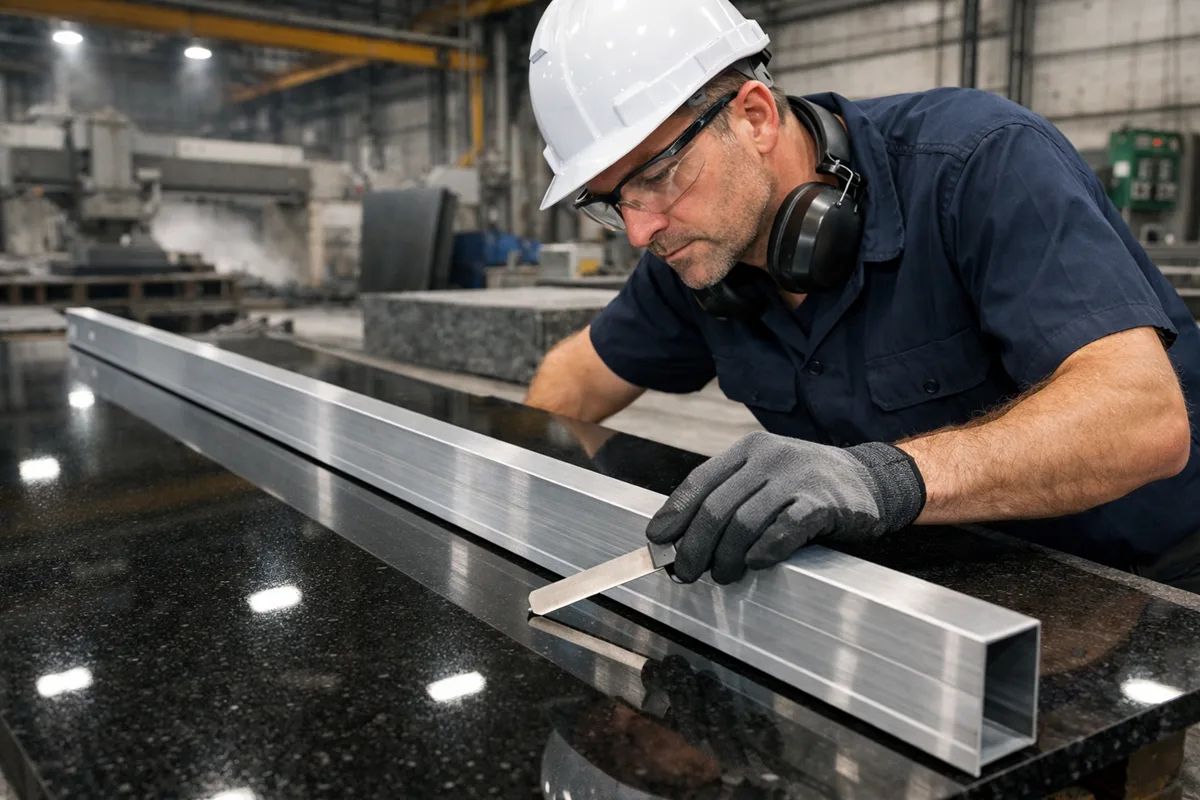
- Straightedge Testing: A heavy-duty, precision-machined aluminum straightedge is placed across the length, width, and diagonal axes of the slab. Feeler gauges are then slid underneath to measure any microscopic gaps, detecting subtle bowing or cupping.
- Laser Scanning: High-end fabrication plants use automated laser scanners over the polishing lines. These lasers map the topography of the slab in real-time, rejecting material that falls outside acceptable international parameters.
- Thickness Gauging: Calipers are used around the perimeter and center of the slab to ensure uniform thickness. A slab that is perfectly flat on top but varies in thickness will still cause significant installation issues.
Material Comparisons: Natural Stone vs. Engineered Stone
It is helpful for buyers to understand how granite behaves compared to other materials. A manufactured quartz slab generally has highly predictable, uniform flatness due to its engineered resin-and-aggregate composition. In contrast, a natural quartzite slab or granite slab carries inherent natural tension. Achieving strict flatness in natural stone requires significantly more expertise and superior processing machinery than producing engineered alternatives.
The Importer’s Inspection Checklist: Verifying Granite Slab Quality Standards
When a container of export-grade granite arrives at its destination, immediate verification is essential. Buyers and quality control agents should perform a standardized inspection to ensure the material meets regional requirements.
Whether evaluating a dense Steel Grey Granite for a European commercial plaza or a vibrant Imperial Red Granite for a Middle Eastern monument, use this checklist to verify granite slab inspection parameters:
- Conduct a Diagonal Straightedge Test: Place a rigid 2-meter straightedge diagonally from corner to corner. This is the most effective way to detect overall slab warping.
- Verify Perimeter Thickness: Measure the thickness at all four corners and the center of the edges. Inconsistent thickness indicates poor calibration and will cause immediate lippage issues during floor installation.
- Inspect Light Reflection on Polished Slabs: View the slab from a low angle under strong, uniform lighting. Wavy or distorted light reflections indicate surface undulations caused by uneven polishing heads.
- Examine Resin Application: Check the edges for excessive resin pooling. Improperly cured epoxy can indicate temperature fluctuations during processing, which is a primary culprit for thermal warping.
- Check for Transport Stress: Slabs that are poorly packed in wooden bundles can warp in transit, especially on long ocean freight routes. Ensure the A-frames or wooden crates hold the slabs perfectly vertical with adequate tension.
Conclusion and Quality Verification
In the competitive global stone industry, surface precision is non-negotiable. Whether you are importing a granite slab for Europe to restore a civic building, or sourcing a granite slab Middle East developers need for luxury skyscrapers, dimensional stability dictates the success of the project.
Strict adherence to Flatness Tolerance Standards in Export-Grade Granite Slabs protects importers from costly installation delays, material waste, and structural failures. From selecting premium rough blocks to utilizing advanced calibration and laser inspection, the production of perfectly flat granite requires profound technical expertise.
Buyers must prioritize suppliers who transparently demonstrate their processing capabilities and quality control protocols. By enforcing rigorous granite slab inspection upon arrival and understanding the environmental demands of their specific region, importers can confidently supply flawlessly calibrated stone for the world’s most demanding architectural applications. Partner with processors who view dimensional precision not as an upgrade, but as the foundational standard for all export-grade natural stone.