
Hassan Green granite — quarried from the Arsikere belt in Karnataka, India — carries a quiet complexity that doesn’t always reveal itself until a block is cut open. The exterior of a freshly blasted block can look sound, even desirable. But inside that block, weathering has often been working for thousands of years. Understanding how that weathering translates into surface texture variation is non-negotiable for anyone buying, processing, or specifying this material at scale.
The Geology Behind the Problem
Hassan Green is a hornblende-biotite gneiss, not a true granite in the strictest petrological sense — but the trade calls it granite, and that’s what matters commercially. Its green-grey tonal character comes from the chlorite and hornblende mineral assemblage. These same minerals, particularly biotite and chlorite along foliation planes, are the first to break down under prolonged weathering.
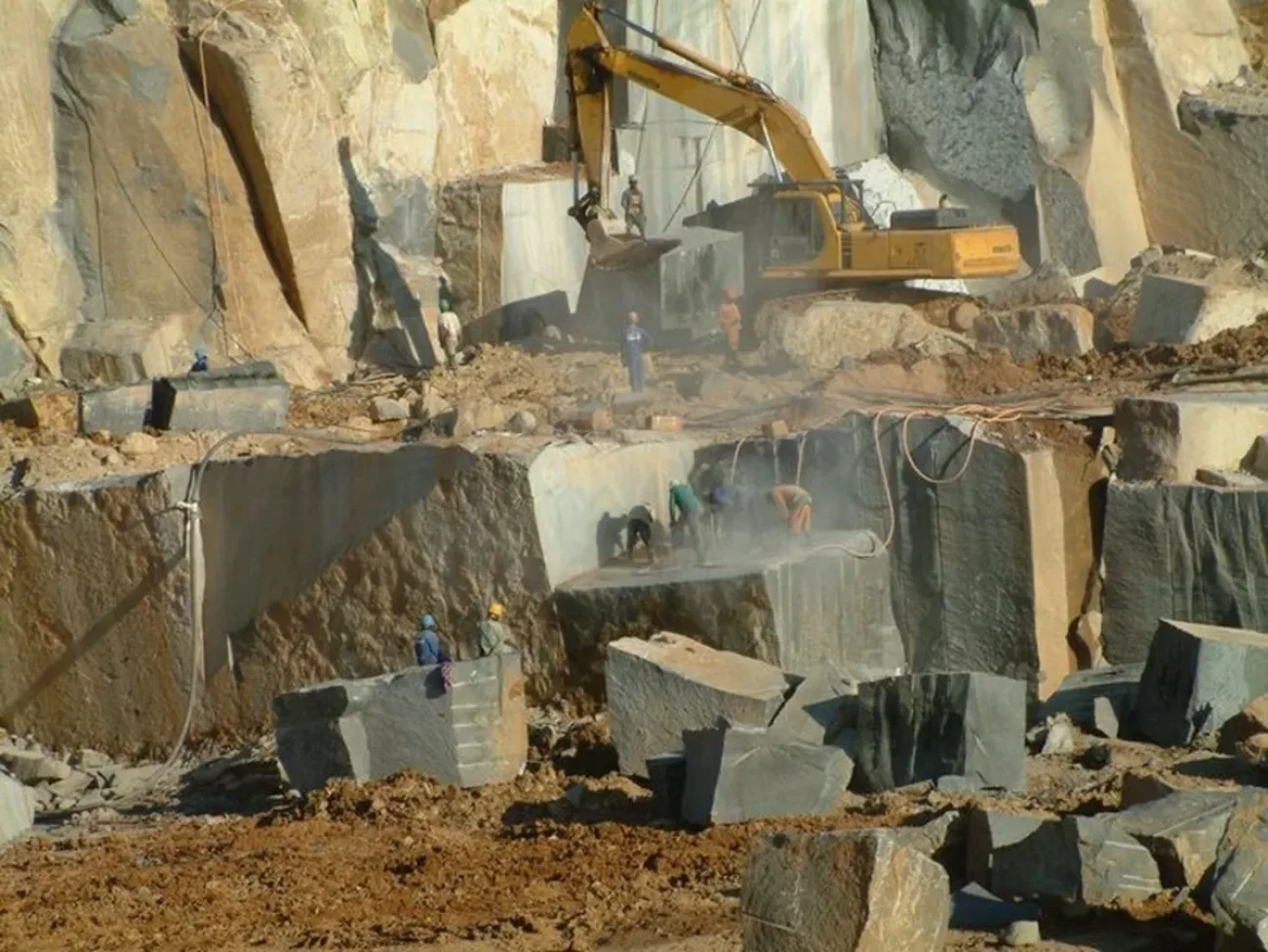
The quarries here operate in a lateritic tropical zone. Seasonal rainfall, groundwater infiltration through joint systems, and decades of surface exposure create a weathering front that penetrates deep into the rock mass — sometimes 15 to 20 meters below the visible surface. That front isn’t uniform. It follows joint planes, fault lines, and mineral boundaries, meaning two blocks extracted three meters apart can have dramatically different internal weathering profiles.
How Weathering Manifests in Surface Texture
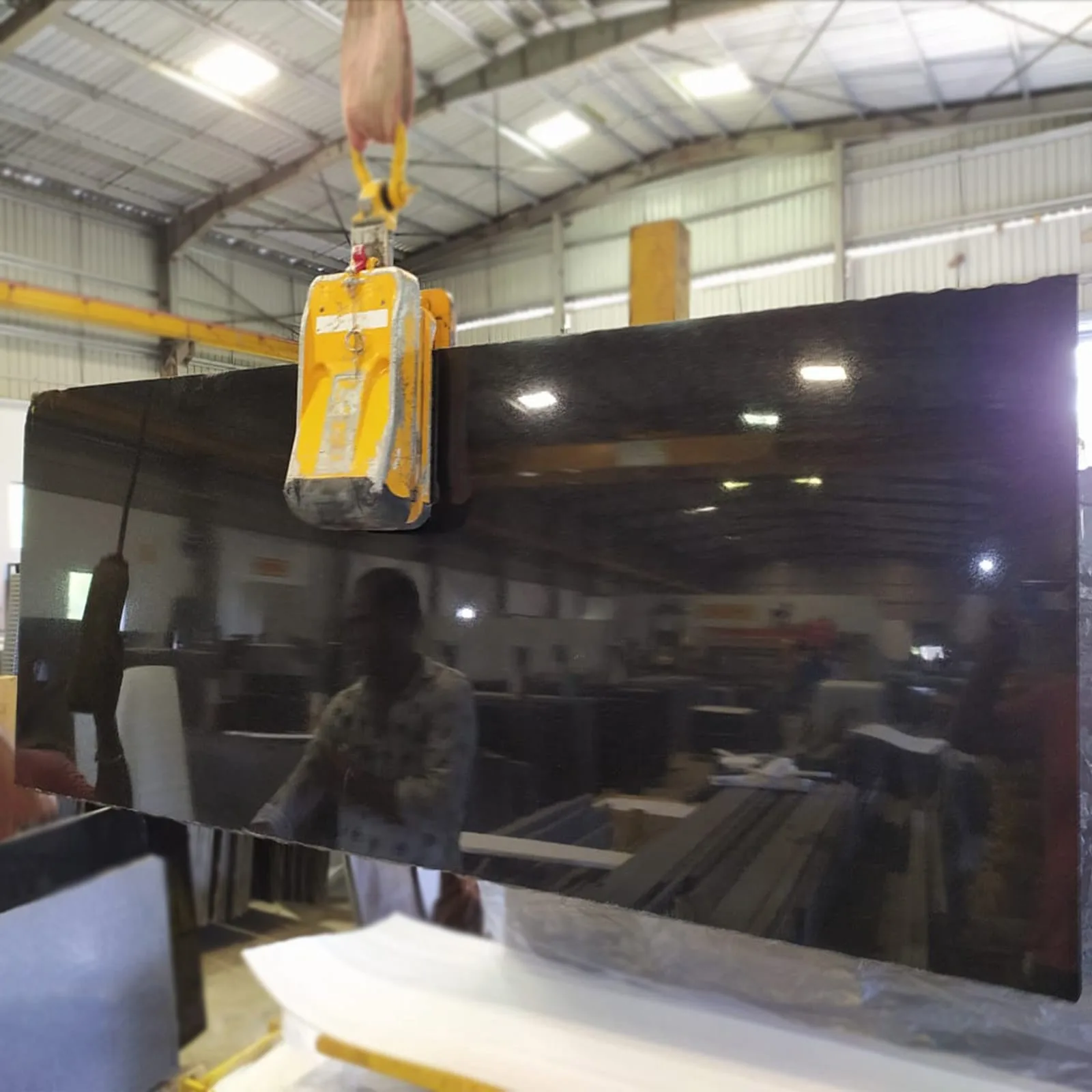
When a weathered or semi-weathered Hassan Green block is gang-sawed and then polished, the surface tells its story clearly — if you know what to look for.
Micro-pitting and Open Grain Biotite breakdown leaves behind micro-voids along cleavage planes. On a polished surface, this reads as fine pitting — scattered matte spots interrupting the reflective finish. Under raking light or gloss meter measurement, these areas register noticeably lower reflectivity. Buyers specifying a minimum 85-gloss finish will see consistent failures in weathered batches if this isn’t screened at the block stage.
Surface Undulation and Calibration Failure Zones with differential mineral hardness — where weathered softer minerals sit adjacent to harder fresh feldspar — cause uneven abrasion during polishing. The result is subtle surface undulation that a flatness gauge will catch but casual visual inspection often misses. When these slabs go into floor applications and are installed on a rigid substrate, the variation becomes apparent under grazing light. This is a category of complaint that damages supplier credibility fast.
Color Inconsistency Within a Single Slab Weathering doesn’t respect slab boundaries. A single 280 x 160 cm slab can carry a fresh green core and a bleached, brownish-grey periphery if the block was cut from a transition zone. The color shift is gradual enough that it passes a quick visual check in a dim processing facility but becomes obvious in natural daylight at the installation site.
Iron Staining Potential Where groundwater has carried dissolved iron through the rock, oxidation halos form around joint surfaces. These rust-toned patches in a Hassan Green slab aren’t always visible before sealing and installation — they can migrate to the surface over months under moisture cycling. For exterior cladding in humid climates, this is a latent liability that surfaces long after delivery.
Block Selection: Where Quality Control Actually Begins
The processing facility and the polishing line cannot fix what the quarry sends. Sound block selection at the quarry face is the only real intervention point.
Experienced block selectors tap blocks with a steel rod — the acoustic response distinguishes tight, sound rock from hollow-sounding weathered zones. This is low-tech but reliable. More systematically, quarries supplying to serious export markets should be maintaining a record of the depth at which each production bench is operating relative to the original surface grade. Blocks from benches still within the weathering front — even if they look acceptable — should be downgraded or rejected for high-specification orders.
Water-jet testing of cut block faces at the quarry is another practical screen. Saturating a freshly cut face and watching how it dries reveals porosity gradients and weathering halos that dry inspection misses.
Processing Adjustments for Weathered Material
When the material has already entered the processing line, there are adjustments that reduce — though don’t eliminate — the surface quality risk.
Slowing down the polishing sequence and increasing the number of intermediate abrasive heads allows more even abrasion across zones of differential hardness. This adds cost per square meter, but it narrows the gloss variation range on borderline material.
Resin filling before polishing addresses open grain and micro-pitting. For Hassan Green specifically, a low-viscosity epoxy resin application under vacuum conditions at the honing stage (typically after 120-grit) closes surface voids before the final polishing sequence. Without this step, the finished surface on weathered material will never achieve consistent reflectivity, regardless of how many polishing heads are run.
The key caveat for export: any resin treatment must be disclosed to the buyer. Buyers in Germany, Italy, the UAE, and the United States are increasingly asking for material processing declarations. Undisclosed filling discovered during third-party inspection — which is standard practice for large hospitality and commercial projects — creates dispute situations that are difficult to resolve and expensive in terms of reputation.
Quality Inspection Standards Relevant to Weathered Batches
For export consignments of Hassan Green, the following inspection parameters become especially critical when weathering is a known variable in the supply batch:
- Gloss level uniformity: Measurement at a minimum of 9 points per slab using a calibrated gloss meter. Weathered material shows >10-point variance between zones.
- Flatness tolerance: For calibrated tiles, thickness tolerance of ±0.3 mm is standard. Slabs for countertop or cladding applications should be checked for bow and warp against a reference straight-edge; a 3 mm deviation over 3 meters is the ceiling for most premium buyers.
- Water absorption: ASTM C97 or EN 13755 testing on sample pieces from the batch. Weathered Hassan Green consistently shows elevated absorption — values above 0.3% should trigger closer scrutiny and likely resin treatment.
- Color consistency grading: Bundles should be assembled and photographed under controlled daylight-equivalent lighting. Weathered transition-zone material should be segregated into a separate grade rather than mixed into premium bundles.
What Buyers Should Be Asking Suppliers
Architects and importers specifying Hassan Green for large projects — particularly flooring, exterior facades, or countertop applications — should be asking their suppliers direct questions that the market has historically been too polite to push on:
At what bench depth are the blocks being extracted? Has the quarry documented its weathering front depth through recent geological assessment? What is the supplier’s rejection rate for unsound blocks, and is that figure consistent across seasons (wet season extraction typically introduces more weathered material)?
Is the polishing line equipped for resin treatment, and is it being applied to this specific batch? Can the supplier provide gloss meter records and flatness calibration reports per bundle, not just per order?
These aren’t unreasonable questions. They’re baseline due diligence for any specification involving natural stone in a visible, high-traffic application.
The Export Reality
The international market for Hassan Green is price-competitive and not always transparent about material grade. FOB pricing from Bangalore often compresses margin to the point where quarry operators cut corners on block selection and processors skip resin treatment to hold their cost structure. The buyer in Rotterdam or Houston receives a container that looks acceptable at the surface — until installation reveals the weathering story the rock was carrying all along.
The suppliers who have built durable export relationships in this material are the ones who have invested in quarry-level quality systems, honest grade segregation, and documentation that travels with the material. Weathered Hassan Green has its own market — it works in certain landscaping, garden paving, and low-specification flooring contexts where the texture variation is acceptable or even desirable. The problem is when it’s sold as premium polished material into applications it cannot perform in.
Knowing the quarry’s geology, controlling the block selection process, adjusting processing parameters for the material’s actual condition, and being transparent about treatment — that’s the chain that produces consistent, defensible quality in Hassan Green granite at export scale.