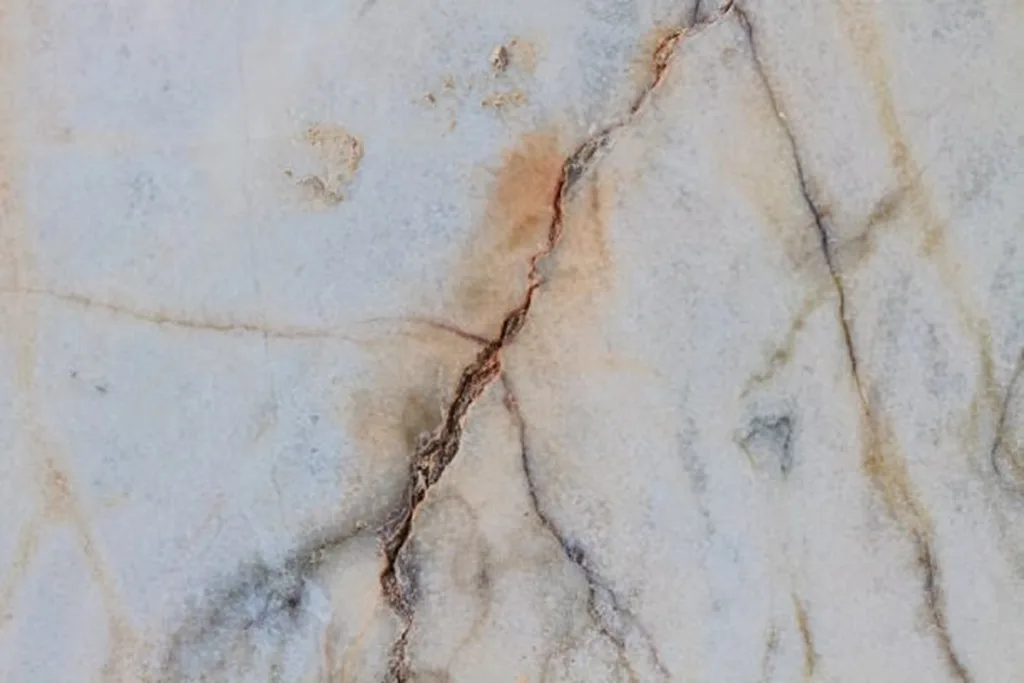

Flatness tolerance is a defining quality parameter in export-grade granite slabs. In international trade, surface plane accuracy directly affects installation performance, fabrication precision, and commercial acceptance. Even minor deviations can result in costly adjustments at the destination site, particularly in projects involving large-format slabs and tight joint alignment.
Flatness is not a visual attribute. It is a measurable structural condition that must fall within defined tolerances over the entire slab surface.
Defining Flatness in Practical Terms
Flatness refers to the permissible deviation of a slab surface from a true plane. Measurement is conducted using calibrated straight edges placed longitudinally, transversely, and diagonally across the slab. The maximum allowable gap between the straight edge and the stone surface determines compliance.
For export-grade polished granite slabs (18–20 mm thickness), typical market expectations are:
- ±0.5 to ±1.0 mm over 1 meter length
- No more than 2–3 mm total bow across full slab length (generally 2800–3200 mm)
Project specifications may require tighter control, especially for façade cladding or book-matched installations.
Applicable International Standards
Flatness tolerance is commonly referenced under standards issued by:
- ASTM International — particularly ASTM C615 for granite dimension stone
- European Committee for Standardization — including EN 1469 and EN 12058
These standards define dimensional and surface regularity tolerances. However, experienced exporters understand that compliance with minimum standard values is often insufficient for architectural projects. Buyers frequently demand tolerances tighter than baseline specifications to reduce installation risks.
Why Flatness Matters in Export Markets
Domestic installations may compensate for minor slab irregularities. Export markets rarely allow such flexibility.
Thin-Set Adhesive Installations
Modern flooring and wall systems use thin adhesive beds. If a slab has crown (center rise) or edge dip, installers must increase adhesive thickness. This compromises bonding consistency and increases labor cost.
Mechanical Anchoring Systems
Ventilated façade systems rely on precise anchoring points. Bowed slabs create stress concentration at fixing anchors, potentially leading to cracking under load.
CNC Fabrication
Fabricators using CNC bridge saws require slabs to rest flat on cutting tables. Surface deviation affects edge squareness and dimensional precision, particularly in kitchen countertop fabrication.
Flatness deviation often becomes evident only after fabrication begins at the destination — at that stage, corrective measures are limited and disputes arise.
Primary Causes of Flatness Deviation
Flatness deviation does not originate from a single process stage. It develops through a chain of factors.
1. Quarry Block Stress Behavior
Granite forms under geological pressure. Internal stress lines are inherent to the material. When a block is extracted, redistribution of stress can occur during cutting. Certain blocks release tension gradually, resulting in slab bow after gang saw processing.
Blocks exhibiting visible stress veins, micro-fracture concentration, or inconsistent mineral compression should be segregated for non-project applications.
2. Gang Saw Calibration and Cutting Dynamics
Inconsistent blade tension, worn guide tracks, or improper spacer alignment during gang saw operation can create subtle thickness variation and surface irregularity.
Granite with heterogeneous mineral composition — especially high quartz concentration zones — offers varying cutting resistance. Without precise calibration, minor wave patterns may form along slab length.
Flatness control requires strict machinery alignment and routine calibration checks.
3. Resin Treatment and Thermal Exposure
Export-grade slabs are typically resin-filled and oven-cured to improve structural integrity and surface finish. Uneven stacking inside curing chambers or inconsistent heat distribution can introduce thermal stress.
Rapid cooling after resin curing increases the risk of slight plane distortion. Controlled heating and gradual cooling cycles are necessary to maintain surface stability.
4. Polishing Line Pressure Distribution
Automatic polishing lines apply downward pressure through multiple abrasive heads. Uneven roller beds or incorrect pressure calibration may cause:
- Center crown formation
- Edge depression
- Longitudinal bow
Flatness verification must occur after polishing, not only after cutting.
Thickness Influence on Flatness Stability
Slab thickness plays a role in structural rigidity:
- 16 mm slabs are more susceptible to flexing
- 18–20 mm slabs offer balanced rigidity for export
- 30 mm slabs provide increased resistance to deformation
However, thickness alone does not eliminate stress-induced bow. Internal mineral structure and processing discipline remain decisive factors.
Allowing freshly cut slabs to rest vertically before polishing can help release residual stress naturally, improving final flatness stability.
Flatness Inspection Procedures in Export Units
Visual assessment is insufficient for export shipments. Structured inspection procedures include:
- 2-meter precision straight edge testing
- Feeler gauge measurement at multiple reference points
- Diagonal plane verification
- Digital thickness cross-checking
Inspection must be conducted before creating. In project shipments, batch-level documentation of flatness compliance is often required by buyers or third-party inspectors.
Packaging and Transit Considerations
Flatness stability extends beyond factory inspection. Improper packaging can worsen minor deviations during sea transit.
Key factors include:
- Level crate base construction
- Uniform slab support along full bottom edge
- Correct A-frame angle
- Controlled steel strap tension
- Shock-absorbing separation materials
Long-distance ocean transport subjects slabs to vibration and temperature fluctuation. Uneven support can gradually amplify stress points.
Commercial Implications of Flatness Non-Compliance
A slab becomes commercially problematic when:
- It cannot rest evenly on fabrication tables
- Joint alignment results in visible lippage
- Installers must compensate using excessive adhesive
- Mechanical anchoring points fail to align
Flatness tolerance is not merely a measurement value; it is a risk control parameter in export transactions. Buyers evaluating suppliers often prioritize flatness consistency over minor aesthetic variations.
Buyer Expectations in Structured Export Projects
Architectural projects, hospitality developments, and public infrastructure works commonly require:
- Defined flatness tolerance per meter
- Maximum allowable total bow
- Inspection records before shipment
- Compliance with ASTM or EN reference standards
Suppliers unable to provide clear flatness tolerance specifications often face rejection during pre-shipment inspections.
Flatness tolerance in export-grade granite slabs represents the combined result of quarry discipline, calibrated processing, controlled thermal treatment, structured inspection, and correct packaging. In international stone trade, consistent plane accuracy reduces fabrication delays, minimizes site corrections, and strengthens long-term commercial reliability.
About BBV Impex
BBV Impex is a leading marble and granite exporter & supplier known for its honesty, consistency, and deep understanding of natural stones. We source our materials directly from trusted quarries and deliver carefully processed slabs and blocks to clients worldwide. Our team believes in long-term relationships built on trust, quality, and commitment. From classic marbles to durable granites, every stone we supply carries the mark of fine craftsmanship and natural beauty. At BBV Impex, we don’t just trade stones — we help builders, architects, and homeowners bring their design ideas to life.