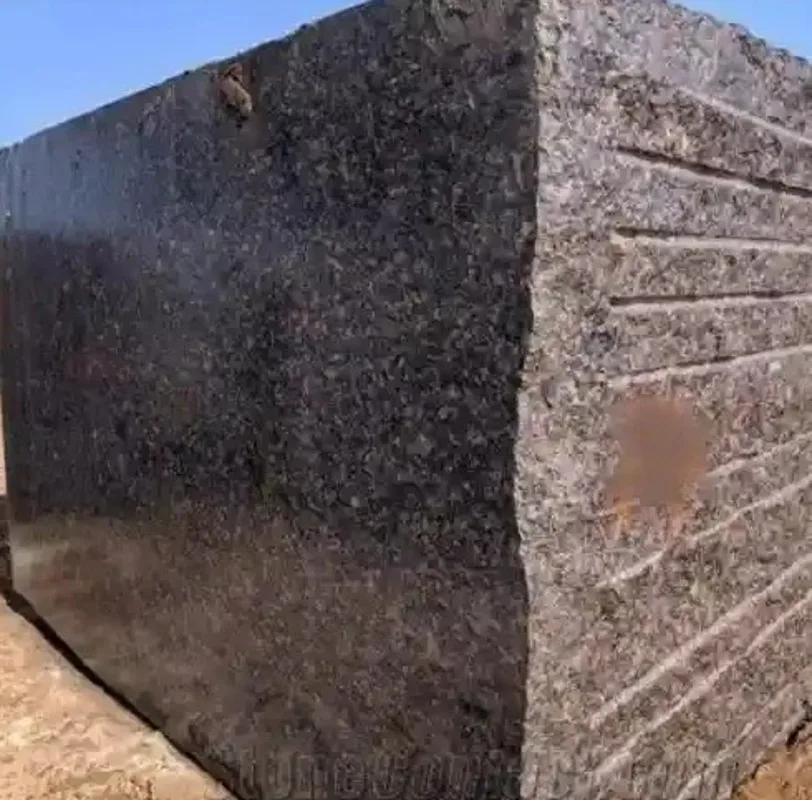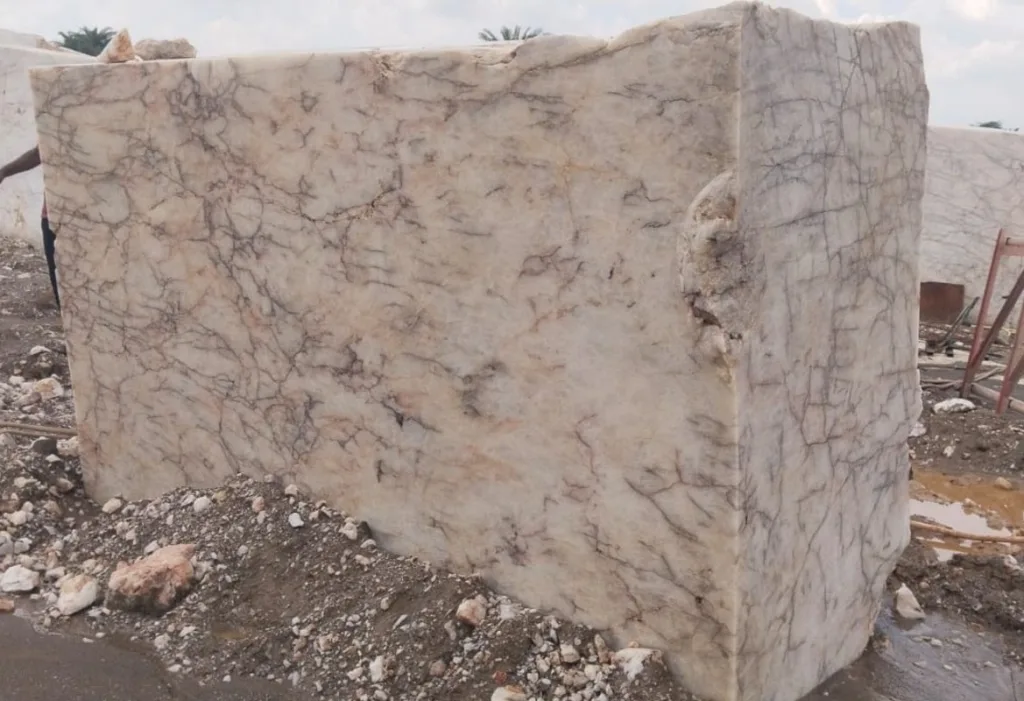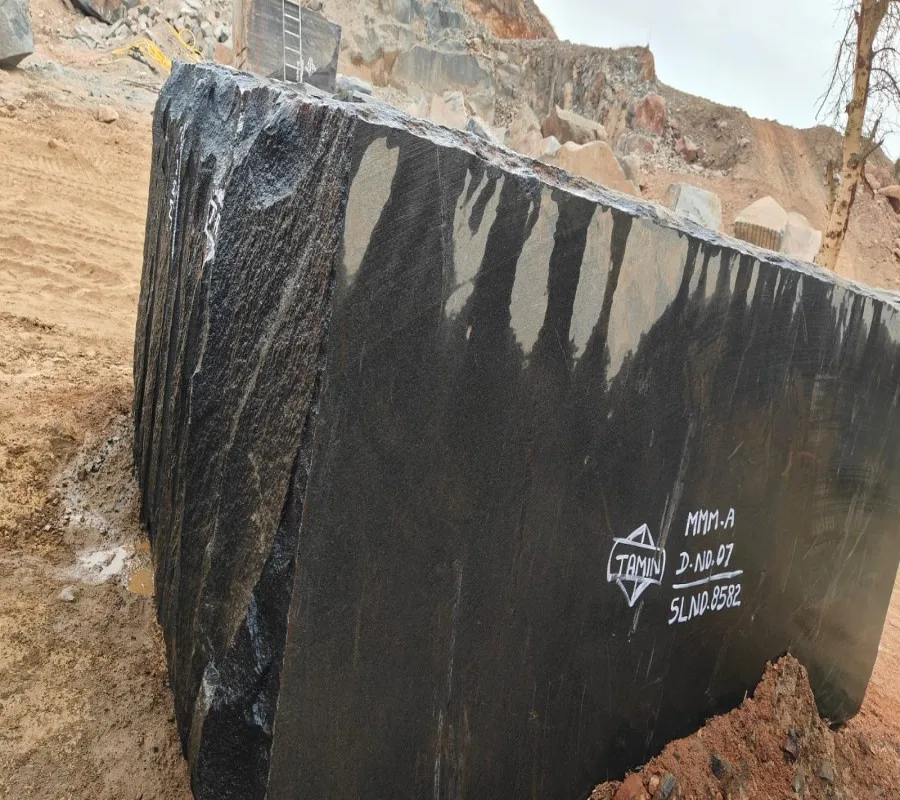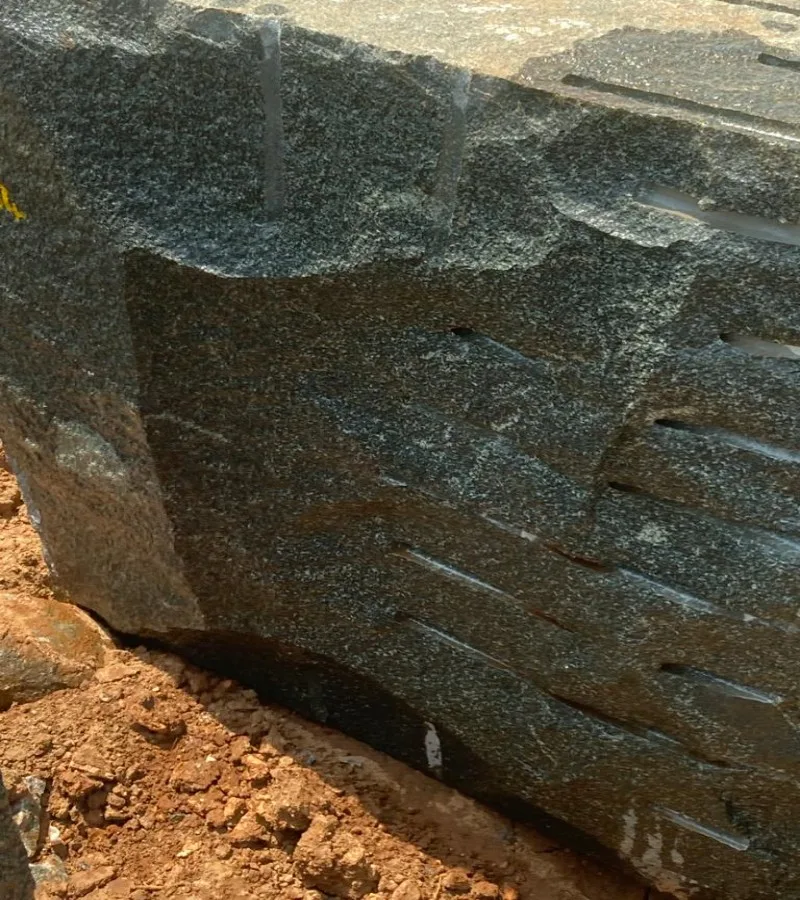
Imperial Red Rough Granite Blocks
Imperial Red Rough Granite Blocks are natural stone materials quarried for large-scale construction, monument fabrication, and architectural cladding projects. They offer high compressive strength and distinctive red coloration with minimal processing requirements.
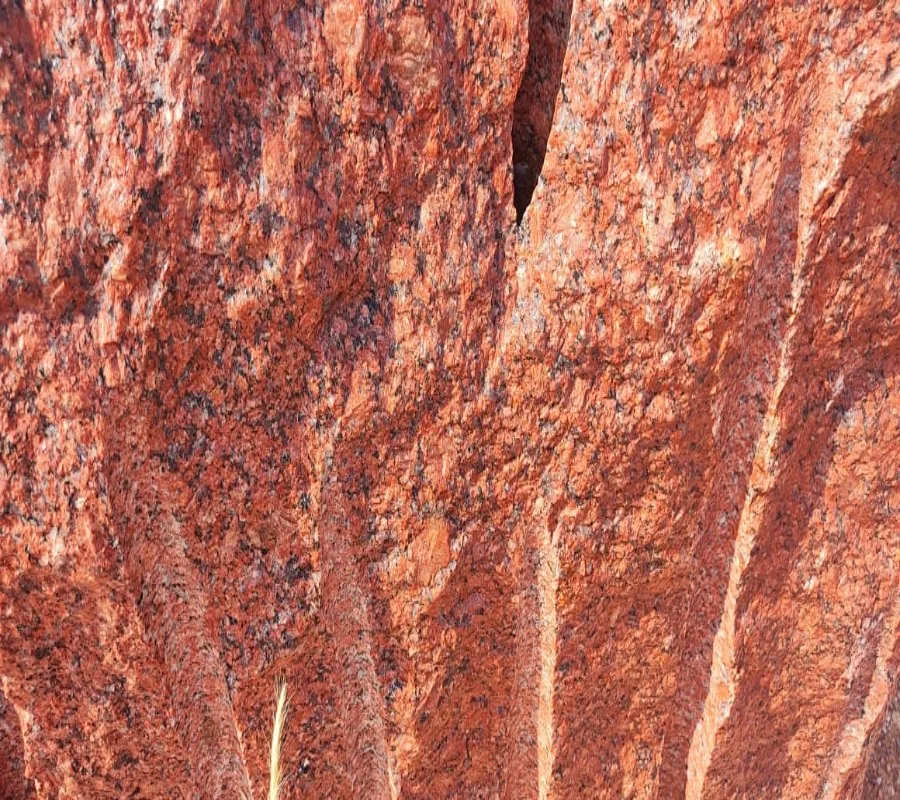
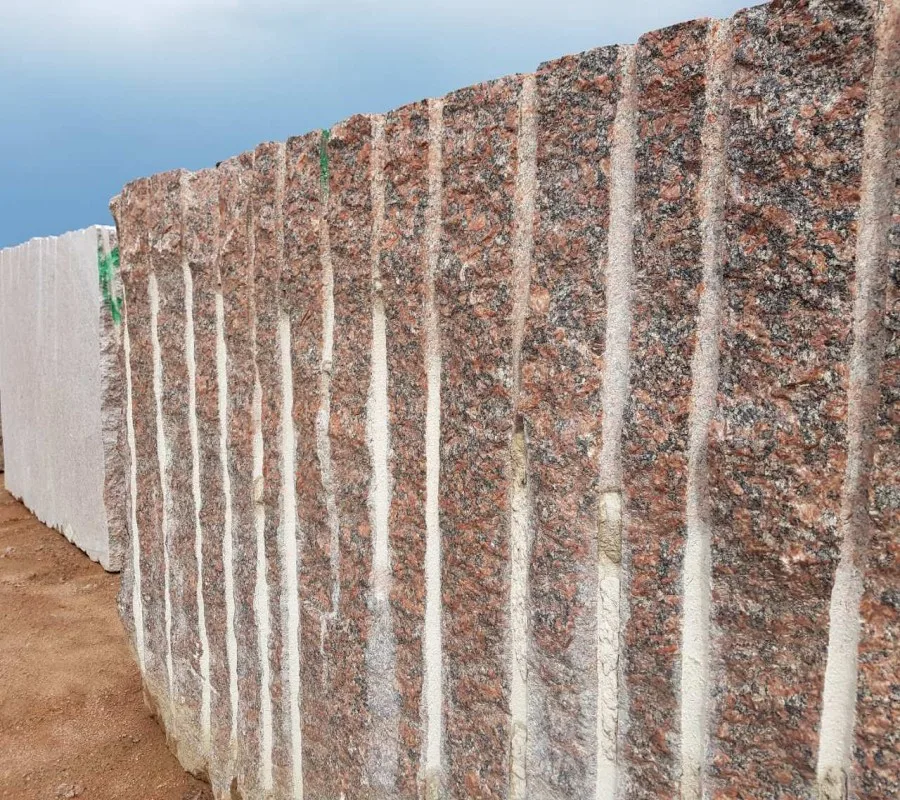
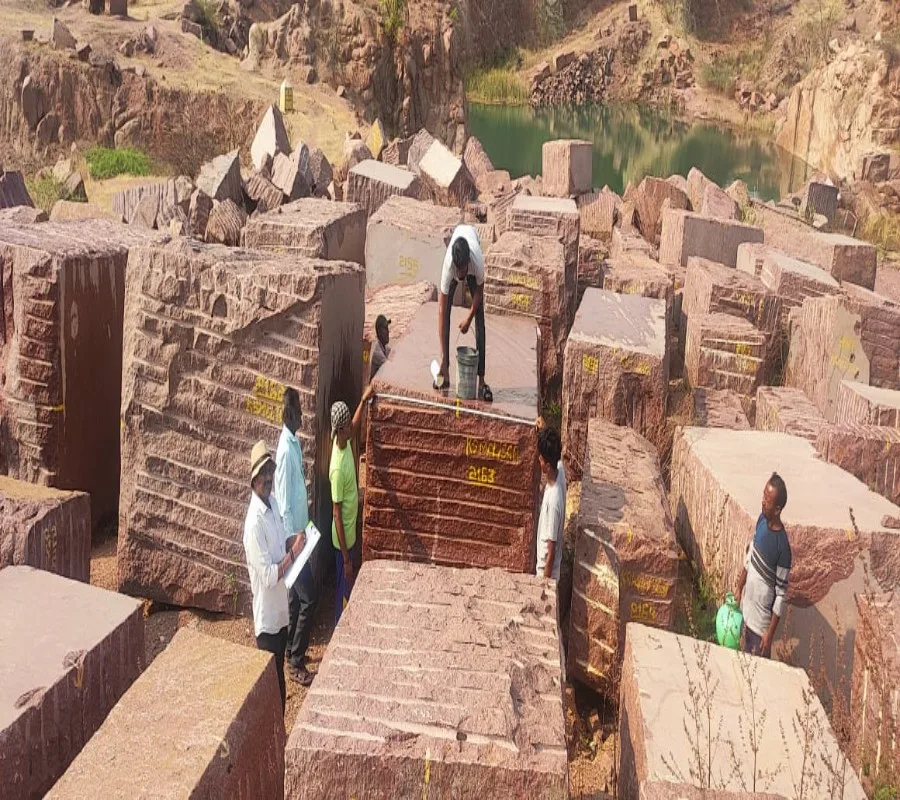
Imperial Red Rough Granite Blocks represent raw, unprocessed material extracted directly from South Indian quarries, predominantly sourced from Andhra Pradesh and Tamil Nadu regions. These blocks showcase deep red to burgundy coloration with black and gray mineral flecks distributed throughout the matrix. The rough-cut format preserves the stone’s natural quarry face, displaying unrefined edges and surfaces that reveal the granite’s authentic geological character. Block dimensions typically range from large commercial sizes suitable for industrial processing to smaller architectural units. This material serves as the foundation for granite block export from India, supplying international stone fabricators, monument manufacturers, and processing facilities requiring premium-grade raw granite for downstream production.
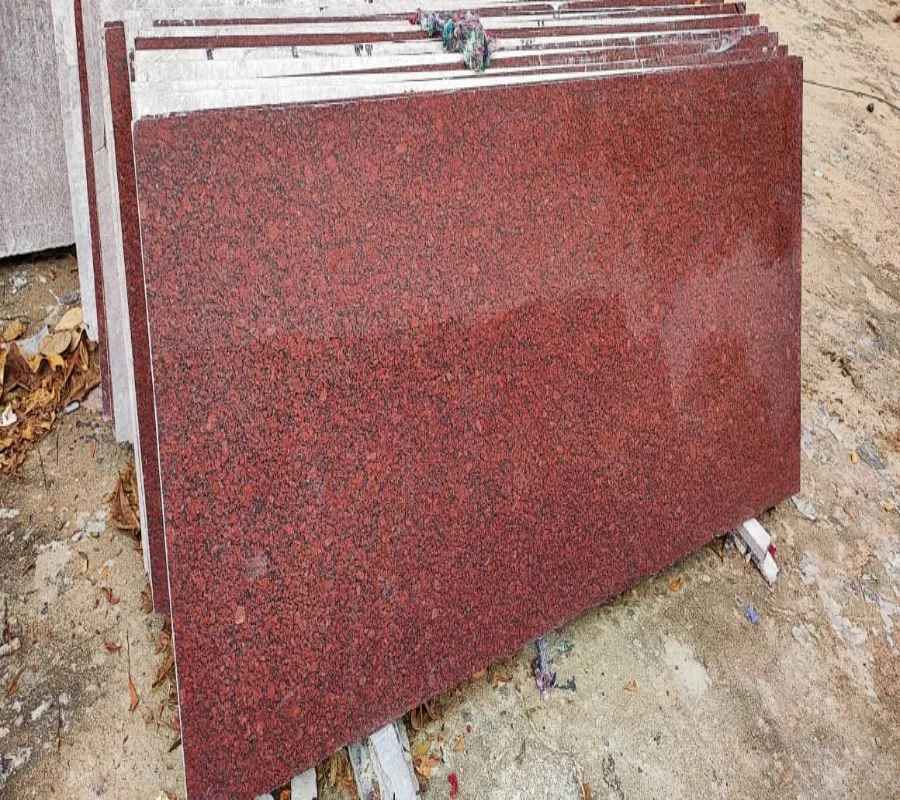
Imperial Red Rough Granite Blocks are primarily selected for converting into Imperial Red Granite slabs and tiles where rich color consistency is essential.
Imperial Red Granite Blocks, Red Rough Granite Blocks, Indian Imperial Red Granite Blocks, Natural Red Granite Rough Blocks, Deep Red Granite Blocks, Red Granite Rough Blocks etc.
Buyers sometimes evaluate Imperial Red Rough Granite Blocks alongside New Imperial Red Granite to assess tone variation and finishing outcomes.
180upx60up, 200upx100up, 200upx120up, 260upx160up etc.
For infrastructure and export orders, Imperial Red Rough Granite Blocks are often planned with G20 Bengal Black Rough Granite Blocks to balance color ranges.
Since these are rough, unprocessed blocks, finish options apply only after fabrication:
Polished – Applied post-cutting to achieve glossy reflective surfaces
Honed – Produced through grinding processes after block processing
Flamed – Thermal finishing applied to cut slabs from blocks
Bush Hammered – Mechanical texturing performed on processed surfaces
Sandblasted – Abrasive treatment following dimensional cutting
Natural Split – Maintains the quarried texture on select faces
Processors compare Imperial Red Rough Granite Blocks with Royal Black Granite Blocks when selecting rough material for high-load applications.
Imperial Red Rough Granite Blocks serve as source material for:
Monument and memorial production requiring large single-piece construction
Custom slab cutting for countertops, flooring, and wall cladding projects
Tombstone and headstone manufacturing with consistent color requirements
Landscape boulder and architectural feature stone
Industrial tile production through gang saw processing
Dimensional stone cutting for export to international markets
Custom sculpture and artistic stonework requiring substantial material volume
Paving stone fabrication for commercial and municipal projects
Imperial Red Rough Granite Blocks and Red Multi Granite Blocks are frequently reviewed together for projects requiring bold, durable red stones.
Purchasing rough blocks offers distinct commercial and practical advantages over finished products. Block format allows fabricators complete control over final dimensions, reducing material waste through optimized cutting plans. The unprocessed state eliminates pre-finishing costs, enabling buyers to select surface treatments matching specific project requirements. Large block sizes support projects demanding uniform color and pattern consistency across extensive installations. Direct block import provides cost advantages for high-volume operations compared to purchasing pre-cut slabs. The dense composition and minimal fracturing in premium blocks ensure maximum yield during processing. Color saturation remains consistent throughout block depth, unlike surface-treated alternatives. Indian granite blocks export typically includes rigorous quality grading, ensuring structural integrity for mechanical processing.
Design teams often shortlist Jhansi Red Granite with Imperial Red Rough Granite Blocks to maintain continuity between finished slabs and raw material sourcing.
Rough block maintenance focuses on storage and handling rather than surface treatment. Store blocks on level ground with adequate drainage to prevent water accumulation and potential freeze-thaw damage in cold climates. Position blocks to minimize direct ground contact using timber supports or concrete pads. Cover exposed surfaces during extended outdoor storage to reduce weathering and organic growth. Inspect blocks periodically for developing cracks or structural weaknesses before processing. When transporting, use appropriate rigging equipment rated for block weight—Imperial Red blocks can exceed several tons depending on dimensions. Warehouse storage should maintain consistent temperature and humidity to prevent thermal stress. Prior to cutting, rinse blocks to remove quarry dust and assess true coloration.
Imperial Red Rough Granite Blocks are sometimes paired with Steel Grey Granite Blocks in large developments to introduce contrast without compromising strength.
Property | Details |
| Origin | India (primarily Andhra Pradesh and Tamil Nadu states); also known from Telangana region |
| Color | Deep red to burgundy background with black, gray, pink, and white mineral crystals; rich, dramatic appearance; medium to high variation |
| Mineral Composition | Quartz (20-30%), Feldspar – orthoclase and plagioclase (50-60%, red/pink coloration), Biotite mica (10-15%), Amphibole (hornblende), iron oxide minerals (red coloration) |
| Classification | Igneous rock – Plutonic granite (medium to coarse-grained with high feldspar content) |
| Density | 2,650 – 2,800 kg/m³ (2.65 – 2.80 g/cm³) |
| Porosity | Low to moderate: 0.6 – 1.4% (by volume) |
| Water Absorption | Low to moderate: 0.25 – 0.60% (by weight) per ASTM C97 |
| Compressive Strength | 1,500 – 2,200 kg/cm² (147 – 216 MPa / 21,300 – 31,300 psi) |
| Flexural Strength | 110 – 210 kg/cm² (11 – 21 MPa / 1,595 – 3,045 psi) per ASTM C880 |
| Mohs Hardness | 6 – 7 (hard, scratch-resistant) |
| Frost Resistance | Excellent – suitable for exterior use in all climates including freeze-thaw environments |
| Acid Resistance | Good – resistant to most household acids; better than marble or limestone |
| Heat Resistance | Excellent – withstands high temperatures (up to 250°C / 482°F continuous); avoid sudden thermal shock |
| Abrasion Resistance | High: 24 – 31 on Hardness Abrasion (HA) scale per ASTM C241 |
| Stain Resistance | Good – moderate porosity requires sealing; sealed surface resists most stains effectively |
Our direct quarry partnerships guarantee access to freshly extracted blocks with optimal color saturation and minimal natural defects. BBV Impex conducts multi-point structural evaluation before export approval, rejecting blocks with internal fractures or inconsistent composition. We accommodate custom block sizing based on your processing equipment and project volume. Export documentation includes origin certificates, dimensional specifications, and photographic records of actual inventory. Container loading employs engineered bracing systems preventing transit damage across international shipping routes.
Frequently Asked Questions
What grading system determines block quality in granite exports?
Industry standards evaluate color uniformity, structural soundness, and defect presence. Premium grades show consistent coloration with minimal veining interruption, while commercial grades accept greater natural variation.
How do transportation costs impact block purchasing compared to finished slabs?
Blocks offer better shipping economics for large volumes since you’re not paying for processing waste. However, buyers need in-house fabrication capabilities to realize these savings.
Can blocks be purchased in mixed container loads with other granite varieties?
Mixed loads are feasible when block dimensions and total weight align with container capacity. This requires careful coordination between quarry extraction schedules and shipping timelines.
What moisture content should blocks maintain during storage?
Blocks contain natural moisture from quarry extraction. Excessive drying can cause micro-cracking, while prolonged wetness may encourage efflorescence. Covered outdoor storage with air circulation works effectively.
Do rough blocks require special customs classification for import?
Unprocessed granite blocks fall under specific HS codes distinct from finished stone products. Proper classification affects duty rates and documentation requirements in destination countries.
How much slab yield should fabricators expect from premium-grade blocks?
Yield depends on cutting technology and desired slab thickness. Premium blocks typically achieve 75-85% usable material, with remaining portions utilized for smaller cuts or tile production.
Are block dimensions standardized across Indian granite quarries?
No universal standard exists. Block sizes vary based on quarry equipment, geological formation, and market demand. Specify required dimensions when ordering to ensure compatibility with your processing machinery.
How do I prevent rust staining on installed granite?
Use stainless steel anchors and fasteners. Galvanized or carbon steel hardware can cause rust leaching onto the stone surface.