

Water absorption is not a laboratory statistic reserved for technical datasheets. In exterior stone projects, it directly influences durability, structural stability, staining risk, freeze–thaw resistance, anchoring performance, and long-term appearance. For exporters supplying granite, marble, and quartzite into global markets, controlling and documenting water absorption is a non-negotiable quality benchmark.
Exterior exposure amplifies every weakness. Rain, groundwater migration, humidity cycles, and temperature variation continuously test the internal density of the stone. If absorption limits are not clearly defined at procurement stage, problems appear years later — often in another country, under another contractor, but traced back to material selection.
Why Water Absorption Matters in Exterior Installations
Exterior cladding, paving, landscape elements, steps, coping, and facades are exposed to:
- Continuous wetting and drying cycles
- Freeze–thaw conditions in cold regions
- Salts from de-icing or marine environments
- Atmospheric pollutants
- Substrate moisture migration
When stone absorbs water beyond acceptable thresholds, the risks include:
- Micro-cracking due to freeze expansion
- Rust staining from internal iron minerals
- Warping in thin panels
- Efflorescence
- Adhesive bond failure
- Increased biological growth
In export business terms, high absorption translates to claims, rejected shipments, and damaged reputation.
Acceptable Water Absorption Ranges by Stone Type
Absorption values vary significantly by geology. Exterior suitability must be judged accordingly.
Granite
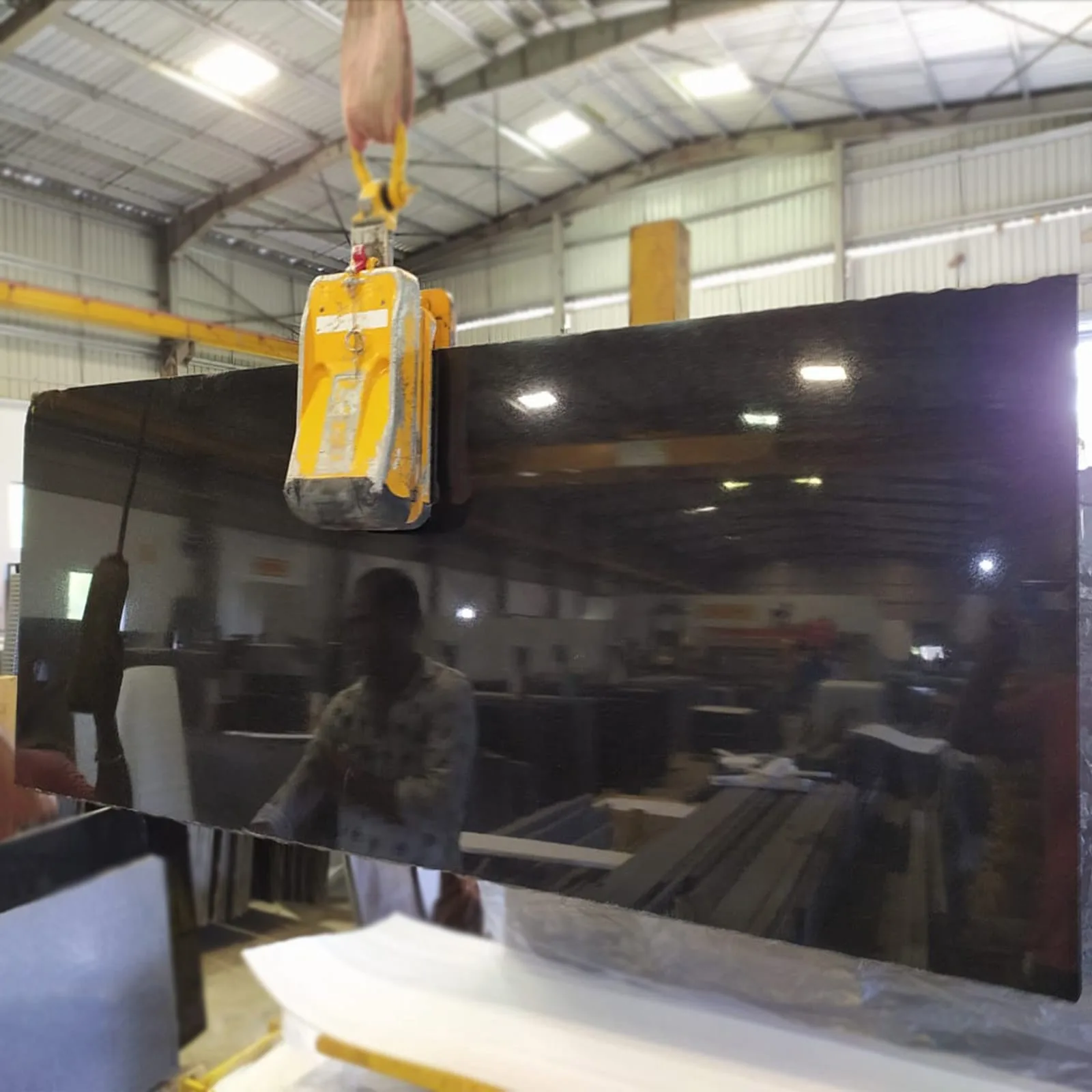
Dense granites typically show water absorption below 0.5% by weight, often ranging between 0.1% and 0.4%. For high-exposure facades and cold climates, professional buyers often demand values below 0.3%.
Granite with absorption above 0.6% requires deeper evaluation, especially if used in freeze–thaw regions.
Quartzite
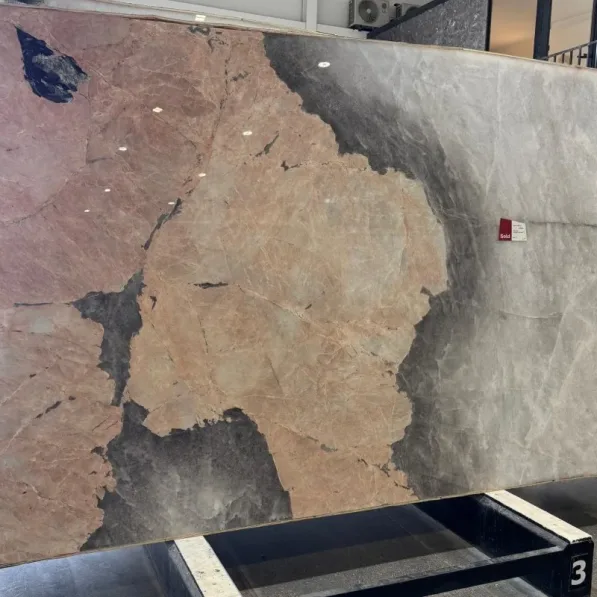
True quartzite generally performs similarly to granite, often under 0.5%. However, some commercially labeled quartzites behave more like metamorphosed sandstones and may exceed 0.7%. Each quarry source must be verified independently.
Marble
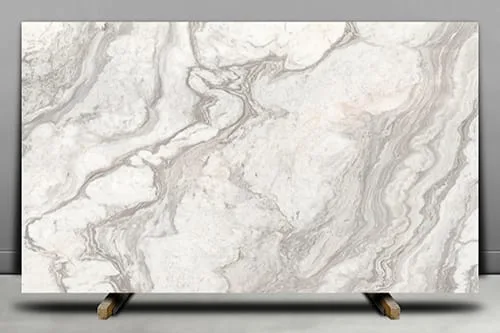
Marble is more variable. Absorption can range from 0.2% to over 1.0% depending on density and micro-fissures. For exterior cladding, experienced buyers typically prefer marble under 0.5%, and even then, only after freeze–thaw testing.
Any marble exceeding 0.8% absorption requires careful application analysis and climate compatibility assessment.
International Testing Standards and Compliance
Reputable export shipments rely on recognized testing protocols such as:
- ASTM C97 – Standard Test Methods for Absorption and Bulk Specific Gravity of Dimension Stone
- EN 13755 – European method for determining water absorption at atmospheric pressure
Serious importers request third-party lab reports referencing these standards. Test samples must represent actual quarry blocks used for production, not hand-selected premium pieces.
Documentation must match the shipment batch. Mismatched lab certificates are a frequent cause of customs delays in Europe and North America.
Quarry-Level Control of Absorption
Absorption control begins at block selection, not at slab polishing stage.
Key factors at quarry:
- Visible micro-cracks or open grain structure
- Mineral intrusions
- Weathered zones near surface extraction
- Hairline fractures caused by uncontrolled blasting
Blocks extracted from deeper, stable zones generally show lower absorption and better density consistency.
Export-grade block selection must exclude outer-weathered layers, even if visually acceptable. Surface appearance alone does not indicate internal porosity.
Processing Impact on Absorption Behavior
While water absorption is primarily geological, processing influences how moisture interacts with the material.
Resin Treatment
Vacuum resin filling can seal micro-pores, but it does not reduce intrinsic absorption value reported in lab testing. Buyers must not confuse surface treatment with structural density.
For exterior cladding in humid or cold climates, heavy resin dependency raises long-term UV degradation concerns.
Surface Finish
- Flamed surfaces slightly increase open porosity exposure.
- Bush-hammered finishes open capillaries further.
- Polished finishes reduce surface permeability but do not alter internal absorption.
When exporting textured exterior pavers, stricter absorption control is recommended because surface roughness allows greater moisture retention.
Climate-Specific Performance Expectations
Absorption limits must align with project geography.
Freeze–Thaw Regions (Canada, Northern USA, Northern Europe)
Low absorption is critical. Even stones below 0.5% must pass freeze–thaw cycle testing. Micro-fractures invisible during inspection may expand under freezing moisture.
Tropical and Coastal Regions
Salt crystallization becomes the dominant risk. Higher absorption increases salt penetration, leading to surface scaling over time.
Arid Climates
Although freeze risk is low, high absorption stones can suffer from staining due to irrigation water and mineral migration.
Export documentation must clearly match destination climate requirements.
Thickness and Anchoring Considerations
Higher absorption stones are more vulnerable in thin applications.
Exterior ventilated facade panels at 20 mm thickness require stricter density and absorption control than 30 mm paving slabs.
Moisture expansion, even minimal, can stress anchor points in mechanically fixed systems. Anchoring tolerance calculations should account for potential moisture-related dimensional change in stones with higher porosity.
Professional importers often request combined data:
- Water absorption
- Flexural strength
- Density
- Freeze–thaw resistance
Absorption in isolation does not tell the full structural story.
Batch Consistency in Bulk Export Orders
One of the most overlooked risks in export supply is variation between blocks from the same quarry.
Absorption can vary between extraction zones. Mixing blocks without density verification can create inconsistent performance across a single facade.
Best practice in bulk export:
- Group slabs by mother block
- Test representative samples per lot
- Maintain traceability from quarry bench to container
Container loading documentation should correlate batch numbers with lab reports. Large developers increasingly audit this traceability.
Inspection Before Shipment
Pre-shipment inspection should verify:
- No excessive open veins
- No moisture staining prior to packing
- Proper drying after cutting
- Moisture content below safe packaging thresholds
Shipping stone with internal retained moisture can distort absorption testing perception at destination.
Proper crate ventilation and fumigation compliance also prevent condensation build-up during sea transit.
Buyer Expectations in International Trade
Professional buyers do not only look at a single percentage number. They assess risk profiles.
Key expectations include:
- Third-party certified test reports
- Clear quarry origin disclosure
- Climate suitability confirmation
- Consistency across shipment
- Transparent communication if material exceeds typical absorption norms
In premium architectural projects, consultants often impose maximum absorption thresholds written directly into tender specifications. Failure to meet them leads to outright rejection at port.
When Higher Absorption May Be Acceptable
Not all exterior applications demand ultra-low absorption.
Acceptable scenarios may include:
- Thick landscape blocks
- Non-structural garden elements
- Covered exterior zones
- Regions without freeze–thaw cycles
However, pricing must reflect performance classification. Exporters who position mid-density material as premium exterior grade create long-term liability.
Risk Management in Exterior Stone Supply
Water absorption limits are part of broader export risk management. Proper control includes:
- Geological understanding of quarry source
- Controlled extraction practices
- Accurate lab testing under recognized standards
- Climate-matched application guidance
- Batch-level documentation
- Pre-shipment inspection discipline
Exterior stone failure rarely results from one dramatic defect. It develops from small overlooked parameters— and water absorption is one of the most critical among them.
In international stone trade, density is durability. Absorption numbers are not paperwork. They define whether a facade performs for decades or becomes a replacement project within years.