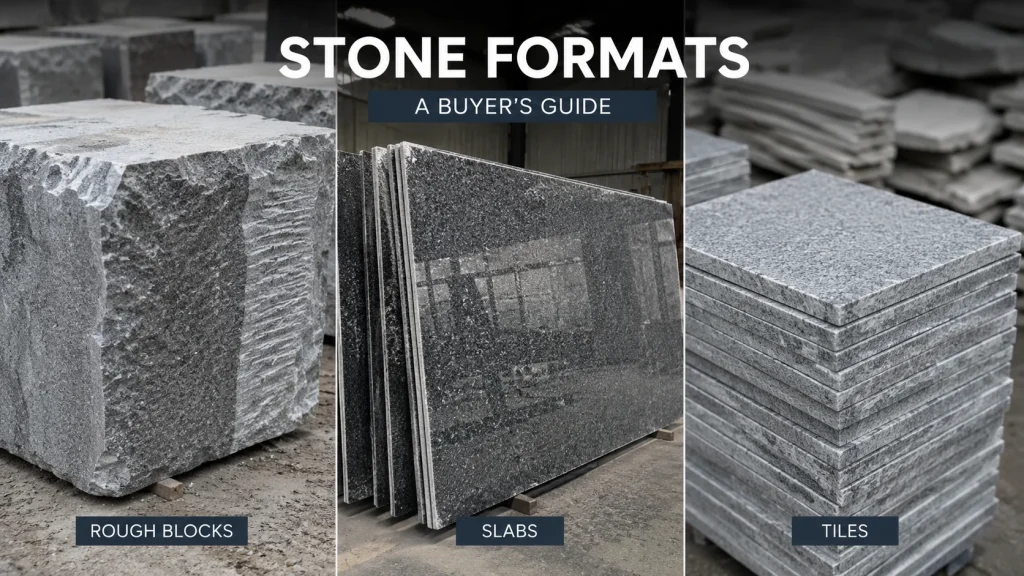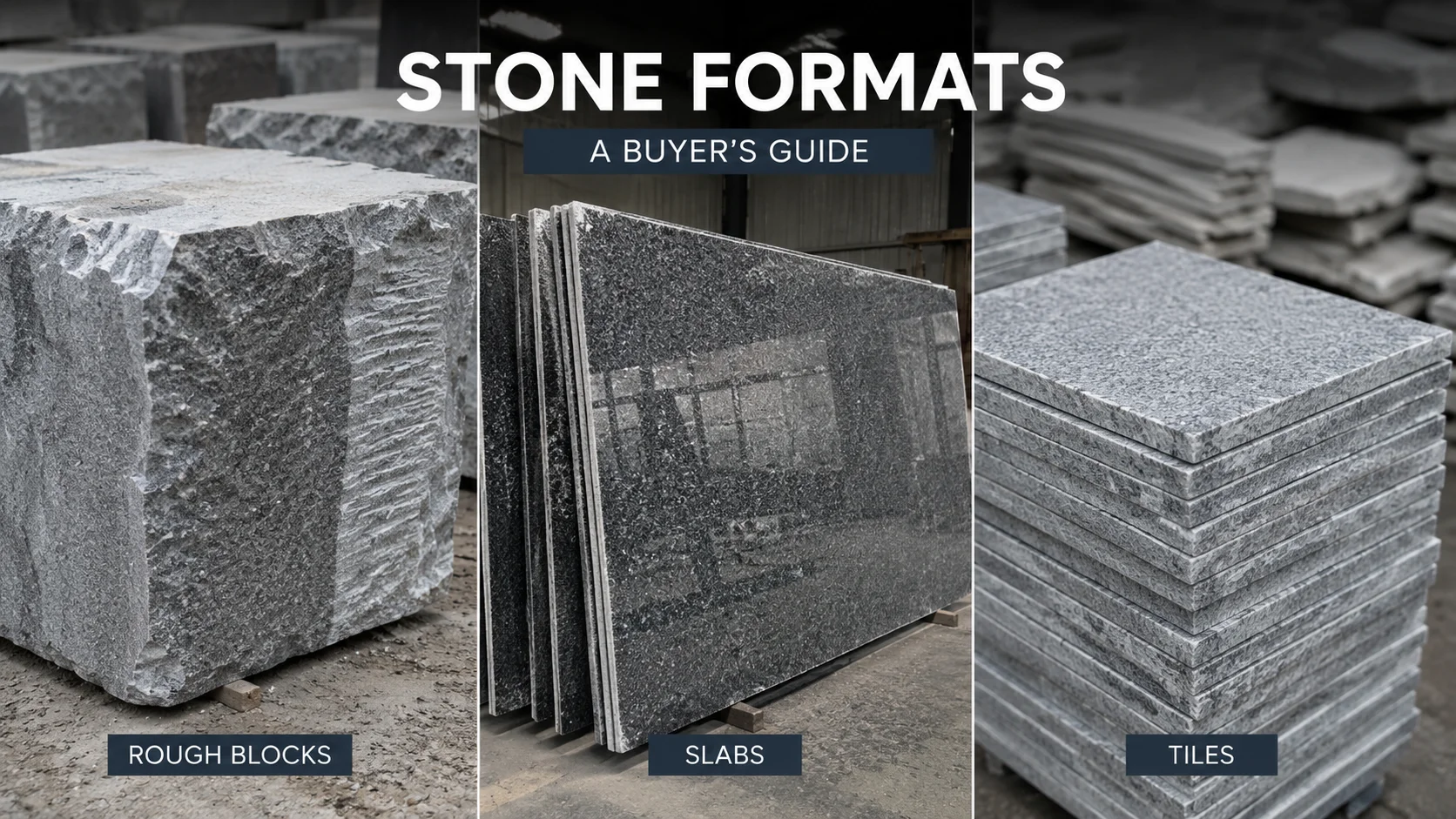
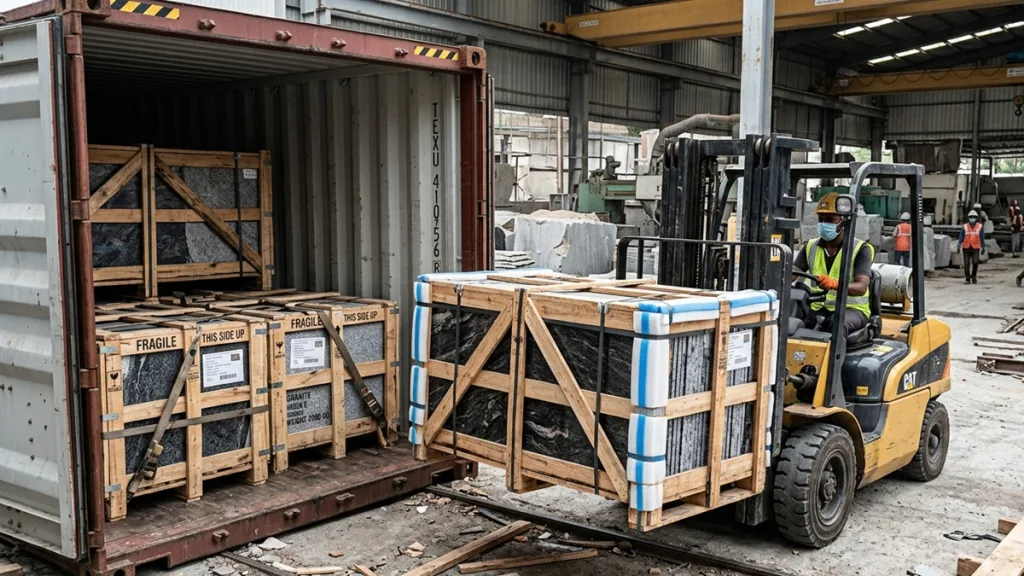
Breakage claims are among the most expensive and reputation-damaging issues in the international stone trade. Once a container travels thousands of miles across multiple ports and handling points, even a small weakness in packaging, slab structure, or loading strategy can turn into cracked material at destination. Importers rarely accept explanations related to transit handling. The exporter is usually held responsible.
Avoiding breakage claims requires strict control across the entire chain— from block selection at quarry level to final container sealing. Each stage directly affects how well the granite survives long ocean transit, port handling, and inland trucking at the destination country.
Start With Structurally Stable Blocks
Breakage risk often begins long before slab processing. Blocks extracted from fractured quarry zones frequently contain hidden stress lines that polishing cannot reveal completely. During ocean transport, these weak areas can release tension, leading to sudden cracking.
Reliable export material begins with careful block inspection:
- Avoid blocks showing natural seams, healed cracks, or quartz stress veins.
- Reject blocks with inconsistent grain density, especially in darker granites.
- Check soundness through hammer testing across multiple faces.
- Inspect moisture penetration around quarry fissures.
Blocks selected only for appearance but not structural integrity often become the source of breakage claims months later.
Maintain Correct Slab Thickness Consistency
Thickness variation is a common cause of transport damage. Slabs that measure 18 mm on one side and drop to 15 mm or less on another side cannot distribute stress evenly during crate compression.
Export-grade stone slab tolerance must remain tightly controlled:
- 20 mm slabs should remain within 19–21 mm tolerance
- 30 mm slabs should remain within 29–31 mm tolerance
Calibration machines must run correctly before polishing. Uneven calibration leads to stress concentration points when slabs are stacked vertically in bundles.
Thin spots become fracture points during container vibration.
Identify Micro Fractures Before Packing
Micro cracks are often invisible under normal factory lighting. However, during shipping vibration and crate compression, these hairline defects can propagate rapidly.
Professional inspection uses angled LED lighting or reflected strip lighting across the polished surface. This reveals hairline fractures that would otherwise pass unnoticed.
Particular attention should be paid to:
- Sink cutout areas
- Narrow slab sections
- Corners weakened during trimming
- Areas near quartz clusters
Slabs containing structural micro fractures should never be packed for export, even if the crack is visually minimal.
Use Export-Grade Wooden Bundles
Packaging quality is one of the biggest determining factors in breakage prevention. Lightweight or poorly designed bundles collapse under container stacking pressure or forklift handling.
Export bundles must meet structural standards:
- Hardwood or reinforced pine framing
- Minimum 30–35 mm thick support beams
- Strong vertical side columns to prevent slab movement
- Proper cross-bracing to absorb vibration
Each bundle must support the total slab weight without bending or twisting during lifting.
Weak bundles are responsible for a large portion of breakage disputes.
Protect Slab Edges and Corners
Granite is extremely strong under compression but vulnerable at edges. Most breakage occurs at corners or along edges due to impact or vibration.
Effective edge protection includes:
- Plastic edge guards
- Rubber strip separation
- Foam sheets between polished surfaces
- Reinforced cardboard corner protectors
Without edge protection, even small shocks during port handling can chip slab corners, which importers often classify as breakage damage.
Control Slab Position Inside Bundles
Incorrect slab stacking creates internal stress during shipping. Slabs leaning unevenly inside a bundle create pressure points that lead to fractures.
Professional exporters follow strict stacking rules:
- Slabs must sit perfectly vertical
- Equal pressure across all slabs
- No empty gaps inside the bundle
- Larger slabs placed at the back for structural support
If the center of gravity shifts during container movement, slab vibration increases significantly.
Secure Bundles Properly Inside the Container
Many breakage claims occur because bundles move inside the container during ocean transit. Even small movements can create impact force between heavy bundles.
Standard container securing practices include:
- Wooden blocking between bundles
- Nail-fixed container floor anchors
- Strong nylon or steel straps
- Anti-slip rubber mats
Bundles must become part of the container structure itself. Any possibility of movement increases breakage risk.
Prevent Excessive Container Weight Imbalance
Improper weight distribution places excessive pressure on certain bundles. Containers loaded with uneven weight tend to experience structural flexing during lifting and stacking at ports.
Best practice includes:
- Distributing bundles evenly from front to rear
- Avoiding heavy concentration near container doors
- Keeping weight centered along the container floor axis
Balanced loading reduces vibration stress throughout the voyage.
Avoid Overloading the Container
Granite exporters often try to maximize container utilization. However, exceeding safe weight limits increases internal pressure on bundles and container flooring.
Typical safe loading ranges:
- 20 mm slabs: around 25–27 tons
- 30 mm slabs: around 26–28 tons depending on slab size
Overloaded containers experience higher vibration intensity and structural strain during transport.
Ensure Proper Forklift Handling at the Factory
Many slabs are already weakened before shipping due to poor forklift operation. Sudden lifting or uneven fork placement causes hidden stress fractures that appear later during shipping.
Correct handling practices include:
- Using wide fork spacing for stability
- Lifting bundles slowly without shock
- Avoiding dragging bundles across factory floors
- Maintaining balanced fork positioning
Damage during factory handling often remains unnoticed until the importer opens the container.
Document Packing and Loading Process
Professional exporters document packing operations carefully. Clear visual records protect against unfair breakage claims.
Recommended documentation includes:
- Photos of slab condition before packing
- Bundle construction photos
- Container loading sequence
- Final container sealing
These records demonstrate that export standards were followed before shipment.
Understand Importer Expectations
International buyers expect granite shipments to arrive in sellable condition. Even minor cracks can lead to rejection or heavy compensation claims.
Experienced importers evaluate shipments based on:
- Percentage of broken slabs
- Edge damage severity
- Structural crack presence
- Usable yield after cutting
A shipment with high breakage not only results in financial loss but also damages long-term supplier credibility.
Avoiding breakage claims is not the result of one precaution but the result of disciplined control across quarry selection, slab processing, packaging, and container loading. Exporters who maintain strict technical standards at every stage dramatically reduce the risk of disputes at destination and build stronger trust with international buyers.